Finding the best coffee beans for home roasting depends on your personal taste and willingness to experiment. Choose between single-origin beans for regional character or versatile blends for balance. If you want a reliable, all-purpose bean, look at Coffee Bean Direct Colombian; if you want to explore many different flavor profiles, the Bodhi Green Coffee Sampler is the clear choice.
As an Amazon Associate, we earn from qualifying purchases. This post contains affiliate links – if you buy through them, we may earn a commission at no extra cost to you.
1. Coffee Bean Direct Unroasted Colombian Supremo

Best for: Someone who wants a consistent, versatile bean for daily roasting.
This Colombian Supremo is a great choice if you enjoy a medium-bodied cup with a sweet, aromatic character. Because these beans are high-grade and large, they perform well whether you prefer a light, bright roast or a dark, bold French roast.
The 5-pound bag is ideal for someone who has found their favorite roast profile and wants to stick with it for a while. It isn’t the best pick if you’re looking to discover new, exotic flavor notes or if you only roast in very small, experimental batches.
Good if:
- You want a reliable, classic coffee flavor.
- You roast in larger quantities to last a few weeks.
- You enjoy experimenting with different roast levels on the same bean.
Skip it if:
- You’re looking for intense, unique floral or citrus notes.
- You want to sample multiple different coffee origins at once.
2. Bodhi Green Coffee Sampler

Best for: A first-time roaster who wants to explore different global regions.
This sampler provides five different types of coffee, allowing you to discover how beans from places like El Salvador, Tanzania, and Sumatra differ in the roaster. It’s a perfect way to identify your personal preferences without committing to a massive bag of one single type.
The specialty-grade beans are graded by licensed Q Graders, ensuring you’re working with high-quality material. This isn’t for the roaster who has already perfected their favorite bean and wants to buy in bulk for a lower unit count.
Good if:
- You’re a beginner wanting to learn about coffee origins.
- You enjoy changing your morning cup frequently.
- You want to compare the results of different processing methods.
Skip it if:
- You have already decided on your favorite coffee region.
- You prefer to buy your beans in large, single-origin quantities.
3. Smokin Beans Ethiopia Yirgacheffe

Best for: The enthusiast who loves bright, floral, and citrusy coffee notes.
Ethiopian Yirgacheffe is famous for its clean, juicy acidity and notes of Meyer lemon, floral scents, and toffee. These heirloom beans are grown at high altitudes of 2,100 meters, which contributes to their distinct and complex flavor profile.
This bean requires careful attention during the roasting process to preserve those delicate floral notes. It isn’t the right choice if you prefer a heavy, earthy, or chocolate-forward cup, as this bean is defined by its acidity and light, juicy finish.
Good if:
- You enjoy coffee with a complex, tea-like finish.
- You want a high-altitude, specialty-grade coffee bean.
- You appreciate beans that are hand-picked and sun-dried.
Skip it if:
- You prefer a dark-roasted, heavy-bodied cup of coffee.
- You’re looking for a base bean for a milk-heavy drink.
4. Champion Espresso Green Beans

Best for: Someone who specifically wants to roast beans for home espresso.
This signature blend is designed to be hearty and bold, featuring notes of earthy tobacco and chocolate. It’s sourced from Indonesia, Asia, and South America to provide the richness and body needed for a great espresso shot.
These beans are specialty grade and store well for up to 12 months in a cool, dark place. This isn’t for a user who prefers a light, fruity drip coffee, as the profile here is specifically tailored for a rich, bold espresso experience.
Good if:
- You use a home espresso machine regularly.
- You like a full-bodied, low-acidity coffee profile.
- You want a blend that stays fresh for a long time.
Skip it if:
- You’re looking for bright, floral, or citrus notes.
- You primarily brew your coffee using a light-roast pour-over method.
5. Fresh Roasted Brazil Beans
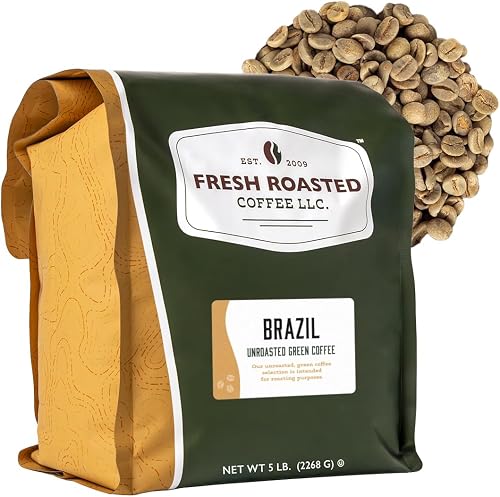
Best for: The roaster who wants a bulk supply of a classic, reliable bean.
These Brazilian beans are a solid, high-quality option that works well for those who roast frequently. The company is Kosher certified, and the beans are sustainably sourced, making them a straightforward, honest choice for your home roasting hobby.
Because they’re a standard Brazilian origin, they offer a consistent flavor profile that’s easy to roast. This isn’t the best choice if you’re looking for rare varietals or highly experimental processing methods.
Good if:
- You want a large, consistent supply of green beans.
- You prioritize sustainability and Kosher certification.
- You want a dependable bean that’s easy to roast.
Skip it if:
- You’re looking for wild, exotic, or highly acidic notes.
- You want a complex blend of different coffee origins.
6. Smokin Beans Sumatra Mandheling

Best for: Fans of low-acidity, heavy-bodied, and earthy coffee.
Sumatra Mandheling is known for its distinct dark chocolate, clove, and molasses notes. The wet-hulled processing method creates a dark-hued bean that offers a very full body, making it a great candidate for those who find high-acidity coffees too sharp.
The beans are grown in volcanic soil at 1,250 meters, which gives them a deep, mineral-dense character. This isn’t for someone who loves the bright, citrusy acidity found in African or Central American beans.
Good if:
- You enjoy a heavy, syrupy body in your coffee.
- You prefer low-acidity beans for your morning brew.
- You enjoy earthy, spicy, and chocolatey flavor notes.
Skip it if:
- You find heavy, earthy coffees to be too intense.
- You’re looking for a light, fruity, or acidic flavor profile.
7. Smokin Beans Costa Rica Tarrazu
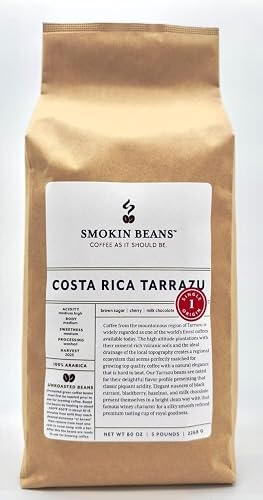
Best for: Someone who enjoys a balanced, smooth, and memorable cup.
These Tarrazu beans offer pleasant notes of milk chocolate, black currant, and hazelnut. Being strictly hard beans grown at 1,750 meters, they’re dense and high quality, providing a clean, invigorating experience that’s very satisfying to roast.
The washed process ensures that the inherent quality of the bean shines through clearly. Those seeking wild, experimental, or “funky” flavor profiles may find this classic, balanced coffee a bit too traditional for their palate.
Good if:
- You want a high-altitude, specialty-grade coffee bean.
- You enjoy a balanced mix of sweetness and moderate acidity.
- You like smooth, chocolatey, and nutty flavor notes.
Skip it if:
- You want a highly intense, earthy, or fermented flavor profile.
- You prefer a very dark, oily roast over a medium roast.
8. Smokin Beans Tanzania Peaberry

Best for: A roaster looking for the unique shape and profile of a peaberry.
Peaberry beans are a natural mutation where only one seed develops inside the coffee cherry instead of two. This results in a dense, round bean that often offers a more concentrated and complex flavor profile, including lime, cherry, and a buttery body.
This is a premium, high-altitude coffee that requires a careful hand during the roast.
Good if:
- You want to try the unique characteristics of peaberry beans.
- You enjoy bright citrus acidity and a clean finish.
- You like high-altitude, hand-picked specialty coffee.
Skip it if:
- You prefer a heavy, dark-roasted, and low-acidity cup.
- You’re looking for a simple, everyday base bean.
9. Natural Vietnamese Robusta

Best for: Someone who wants a high-caffeine option or a bold, bitter base.
Robusta beans are naturally different from Arabica, offering a much bolder, more intense, and often bitter flavor profile. These vacuum-sealed beans are perfect if you want to experiment with a different kind of intensity or if you’re interested in traditional Vietnamese coffee styles.
This isn’t for the person who is accustomed to the smooth, sweet, and acidic profiles of specialty Arabica beans. If you’re a beginner, note that Robusta has a very different behavior in the roaster and the cup compared to Arabica.
Good if:
- You want a very bold, high-intensity flavor.
- You’re interested in traditional Vietnamese-style coffee.
- You want to experiment with the differences between Robusta and Arabica.
Skip it if:
- You’re sensitive to bitterness or intense, harsh notes.
- You’re looking for the sweet, fruity profiles of Arabica beans.
10. Finca Nextlalpa Mexican Beans

Best for: A roaster who wants a balanced, versatile, and well-rounded coffee.
These beans from the Chiapas region offer notes of caramel, dark chocolate, and baking spices. They’re grown at 1,200–1,400 meters and processed using the washed method, making them a very reliable and balanced choice for most home roasters.
They work well as a standalone cup or even as a base for espresso. This isn’t for the person who wants a highly acidic, light-roast experience, as these beans really shine when taken to a medium or medium-dark roast level.
Good if:
- You enjoy a balanced, well-rounded cup of coffee.
- You like chocolatey and nutty notes with a hint of spice.
- You want a versatile bean for both drip and espresso.
Skip it if:
- You’re looking for extreme, high-acidity, or floral notes.
- You prefer a very light, bright, and citrus-forward roast.
Choosing the best home roasting coffee beans
Many of the beans here, such as the Coffee Bean Direct Colombian, the Fresh Roasted Brazil Beans, and the Finca Nextlalpa Mexican Beans, offer a similar “classic” profile. They’re generally balanced, chocolatey, and versatile, making them great for everyday roasting. The differences between them are subtle, often coming down to the specific regional soil or slight variations in processing. You’ll likely be happy with any of these if you enjoy a standard, reliable cup of coffee. In contrast, the Smokin Beans Ethiopia Yirgacheffe and the Tanzania Peaberry are genuinely different, as they focus on bright acidity and complex floral notes that stand far apart from the heavier, more traditional blends.
Still Not Sure?
How often will I really use it?
If you plan to roast every week for your daily coffee, choose a larger, consistent bean like the Coffee Bean Direct Colombian. It provides enough volume for a steady supply, and its reliable flavor profile ensures you won’t grow tired of it. If you only roast once a month, start with the Bodhi Green Coffee Sampler.
What do I already own that this has to work with?
If you have a dedicated espresso machine, you should look at the Champion Espresso Green Beans or the Finca Nextlalpa Mexican Beans. These are structured to handle the pressure and intensity of espresso brewing. If you use a simple pour-over or drip machine, the Smokin Beans Ethiopia Yirgacheffe will be a better fit.
What am I most likely to regret choosing?
You’re most likely to regret choosing a bean with a flavor profile that’s the opposite of your preference. If you hate acidity, avoid the Smokin Beans Ethiopia Yirgacheffe. If you crave bright, fruity notes, stay away from the Smokin Beans Sumatra Mandheling, as its heavy, earthy profile will likely disappoint you.
Most home roasters find that starting with a versatile, balanced bean like the Coffee Bean Direct Colombian makes the process enjoyable and rewarding. If you feel ready to explore the vast world of global coffee profiles, the Bodhi Green Coffee Sampler is the perfect next step.
Frequently Asked Questions
Do I need special equipment to roast these beans?
Yes, you need a coffee roasting device, such as a home air roaster or a drum roaster, to turn these green beans into drinkable coffee. According to the U.S. Food and Drug Administration, raw agricultural commodities like coffee beans aren’t meant to be consumed without processing or roasting.
How do I store green coffee beans after opening the bag?
Store your green coffee beans in a cool, dark, and dry place, such as a pantry or a sealed container away from direct sunlight. Most of these beans are stated to have a storage potential of at least 12 months, provided you keep them away from moisture and heat.
Can I mix different types of green coffee beans together?
You can definitely experiment by mixing different beans, but it’s usually best to roast them separately first. Different beans have different densities and moisture levels, so they may require different roast times. Once you understand how each bean roasts individually, you can try blending them to create your own unique roast.
How do I know when the beans are finished roasting?
You’ll need to watch the color change and listen for the “cracks.” The first crack is a popping sound indicating the beans are becoming light-to-medium roast, while the second crack signals a darker roast. Experience with your specific roasting equipment is the best way to master your preferred roast level.
Conclusion
Once you’ve picked your first batch, don’t be afraid to tweak your roasting times to see how the flavors change. You’ll soon discover which profiles make your mornings better. Grab a small bag of green beans this weekend and start your journey—it’s a rewarding hobby that’ll transform your daily cup.