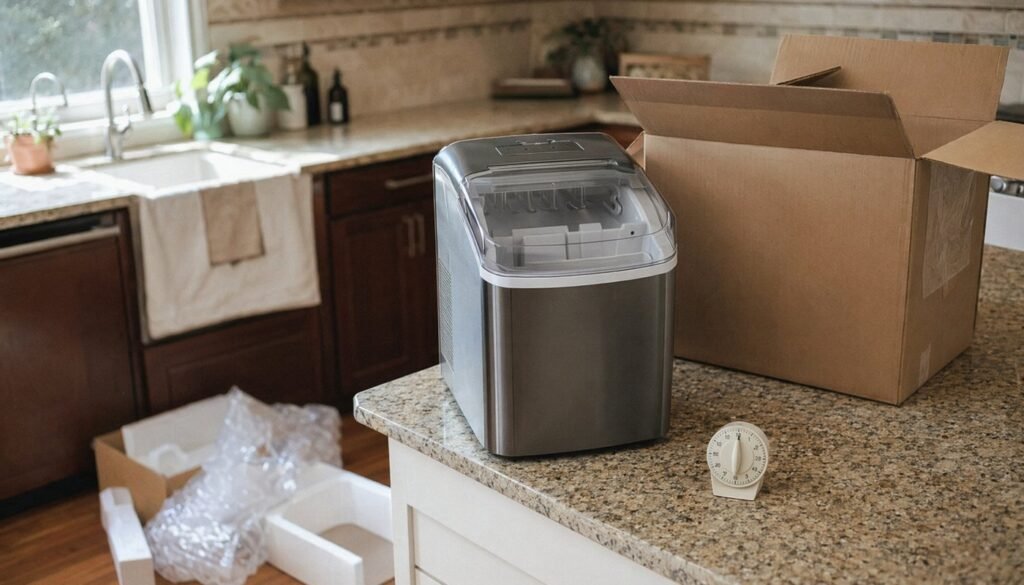
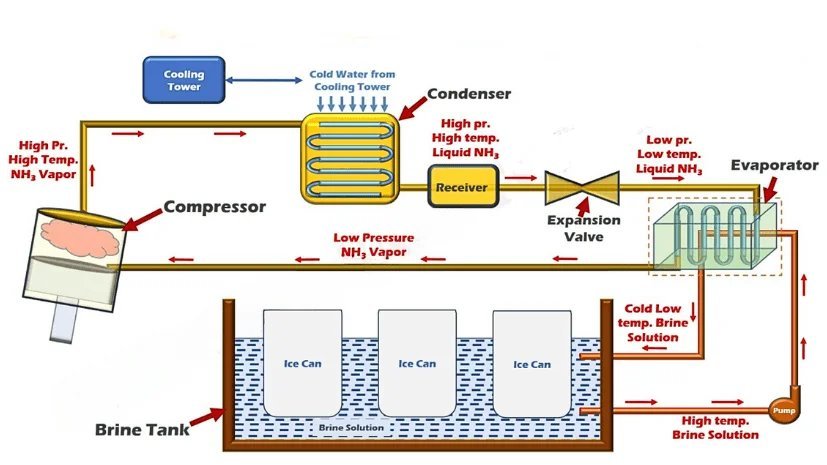
If you wonder how does a mini ice maker work, it uses a refrigerant cycle to cool metal prongs that freeze water into cubes. The device chills water until it solidifies, then melts it slightly to release the ice into a storage basket.
How does a mini ice maker work?
| Part or input | What it does | What you notice when it goes wrong |
|---|---|---|
| Water reservoir | Holds liquid for cycles | Water leaks or fails to fill |
| Evaporator prongs | Freeze the water | Ice stays liquid or too thin |
| Refrigerant lines | Carry heat away | Machine runs but never cools |
| Harvest heater | Warms prongs to release ice | Ice sticks to the prongs |
| Ice sensor | Detects full basket | Machine stops or overflows |
| Cooling fan | Removes heat from unit | Unit gets hot and shuts off |
If the ice is cloudy or brittle, the evaporator prongs likely have mineral buildup. You can test this by cleaning them with a vinegar solution. If the ice remains thin after cleaning, the refrigerant lines may have a slow leak.
The most common mistake is ignoring the cooling fan’s intake. If you place the unit within three inches of a wall, the fan can’t vent heat properly. This forces the compressor to run continuously, which can lead to premature component failure.
Use this rule to diagnose your issue: if the machine makes a loud hum but produces no ice, check the fan. If the machine is silent and the lights are off, the issue is electrical. If the machine runs but produces slush, focus your repair on the harvest heater or the evaporator prongs.
What happens, step by step
- You pour cold water into the reservoir until it reaches the fill line, which is usually marked inside the plastic basin.
- The pump pushes water from the reservoir up to the freezing tray, where it flows over the cold evaporator prongs.
- The compressor circulates refrigerant, lowering the temperature of the prongs to freezing levels over the next 6 to 12 minutes.
- Once the ice reaches the desired thickness, the machine stops the pump and activates the harvest heater to warm the prongs.
- The warming effect loosens the ice cubes, allowing them to slide off the prongs and into the storage basket below.
- A mechanical arm or sensor checks if the basket is full; if not, the cycle repeats automatically until the water runs out.
Why this matters when something goes wrong
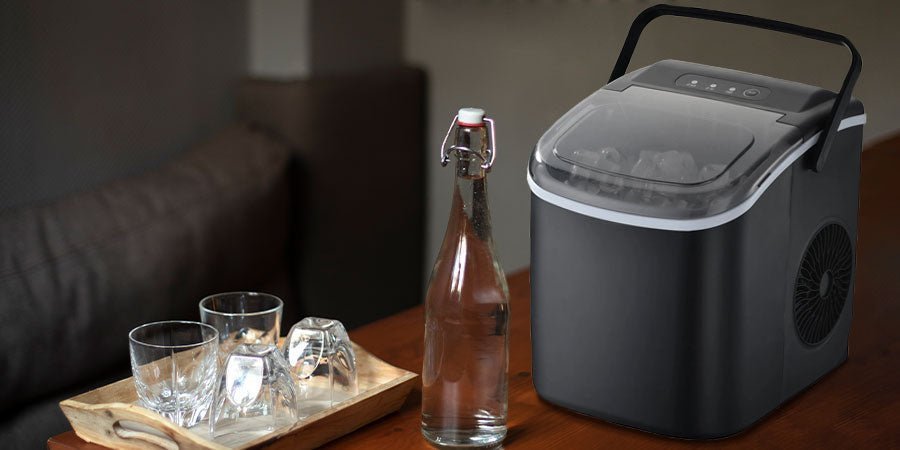
Troubleshooting a mini ice maker requires knowing whether a problem comes from the cooling system or the mechanical parts. If your unit runs but the water never freezes, the issue is likely a leak in the refrigerant lines or a failed compressor. These parts are sealed at the factory, so they can’t be fixed by an ordinary user. Conversely, if the machine makes ice but the cubes are thin, the water pump might be failing or the reservoir could be blocked by mineral buildup. If the machine simply stops, check the ice sensor first, as it often gets stuck or covered in frost.
What you can change, and what you cannot
Things you control
- Clean the reservoir regularly to prevent mineral scale buildup.
- Keep the unit in a cool, shaded area for better performance.
- Use filtered water to reduce how often you need to descale.
- Ensure the ventilation gaps remain clear of dust and debris.
Things fixed by design
- The cycle time is determined by the internal thermostat settings.
- The size of the ice cubes is set by the prong shape.
- Refrigerant levels can’t be adjusted without specialized HVAC equipment.
Getting more out of it
Efficiency depends on the starting temperature of your water. If you use room-temperature water, the machine takes longer to reach freezing, so adding a few ice cubes to the reservoir first can speed up the process.
Always empty the ice basket when the machine isn’t in use to prevent the cubes from melting and re-freezing into a solid block. This simple habit prevents the ice from melting and refreezing into a solid block.
If you notice a drop in output, check the intake filter at the bottom of the reservoir for debris. A buildup of mineral deposits here acts as a bottleneck for water flow.
Most models perform best when the ambient room temperature stays between 50 and 90 degrees Fahrenheit. If your kitchen is hotter, expect the machine to produce about 20 percent less ice per hour. If your unit is placed near a heat-generating appliance like an oven or dishwasher, move it at least six inches away to maintain peak cycle times.
Related guides