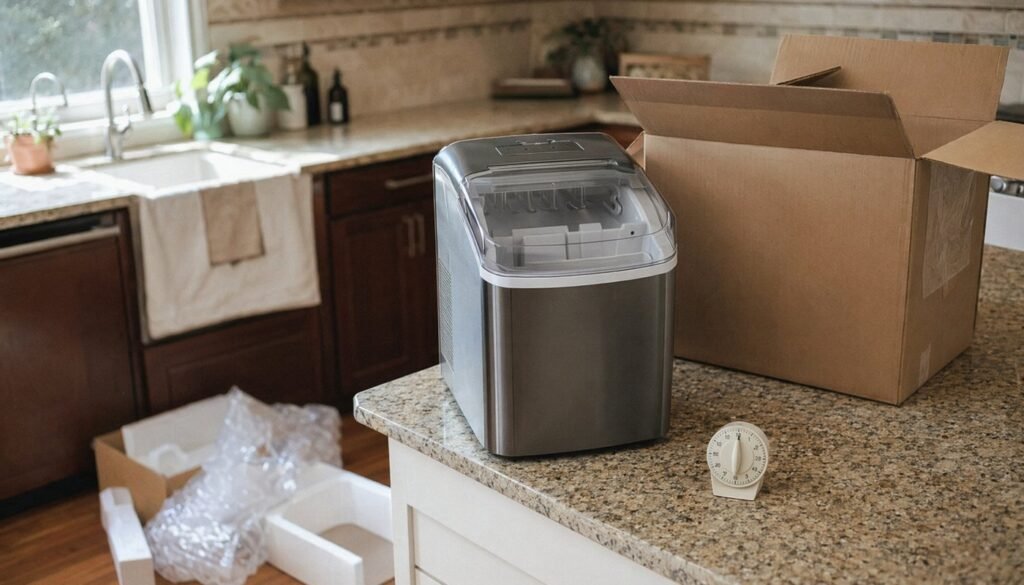
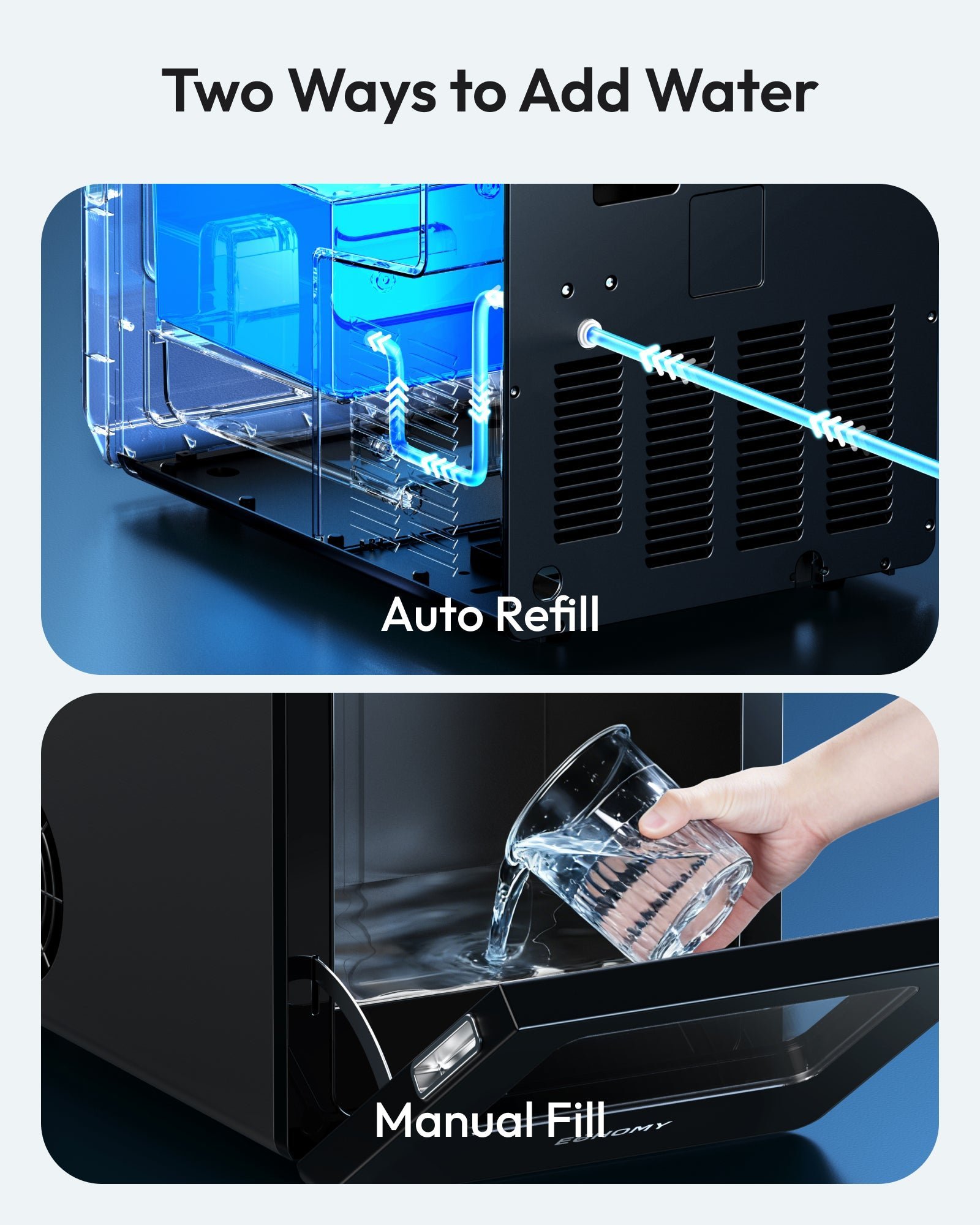
You can manually fill your ice maker with water by pouring a small amount of clean, cold water directly into the mold tray during the harvest or fill cycle. This five-minute task is simple if you’re steady. Use a narrow-spout measuring cup or pitcher, but first check your appliance manual to ensure your model allows manual filling, as some sensors may trigger errors if they detect water while the inlet valve is closed.
Supplies to manually fill your ice maker
| Item | How much | Why it’s needed | A substitute |
|---|---|---|---|
| Measuring cup | 4 to 8 ounces | Controls water flow | Small plastic pitcher |
| Clean water | 4 to 8 ounces | Makes the ice | Bottled water |
| Flashlight | One unit | See into the mold | Phone light |
| Towel | One piece | Catch spills | Paper towels |
| Safety glasses | One pair | Prevent splashes | none — don’t swap this |
Before you start
- Turn off the ice maker switch or lift the wire shut-off arm to the “off” position.
- Clear all loose ice cubes from the bin to prevent overflow or freezing issues.
- Check the water line connection at the back; if it leaks, stop and call a plumber.
- Wipe the area dry to ensure you can see where the water level sits.
- Never overfill the mold, as excess water will freeze into a solid block, damaging the ejector motor.
How to manually fill ice maker with water
- Locate the ice mold tray, which is usually a small plastic U-shaped container inside the ice maker unit.
- Ensure the appliance is level; if it sits at an angle, the water will spill out before it freezes.
- Use a narrow-spout measuring cup to pour approximately 2 ounces of cold water into the mold tray, or fill only to the level of the mold dividers.
- Watch the tray to ensure the water doesn’t overflow the edges and drip into the lower bin.
- Wait 90 to 120 minutes for the water to freeze completely, depending on your freezer temperature setting.
- Push the wire shut-off arm back down or flip the power switch to the “on” position.
- Observe the ice maker for one full cycle to confirm the ejector arms move freely without hitting the new ice.
- Remove the first batch of ice if the water wasn’t filtered, as it may contain impurities.
How to know it worked
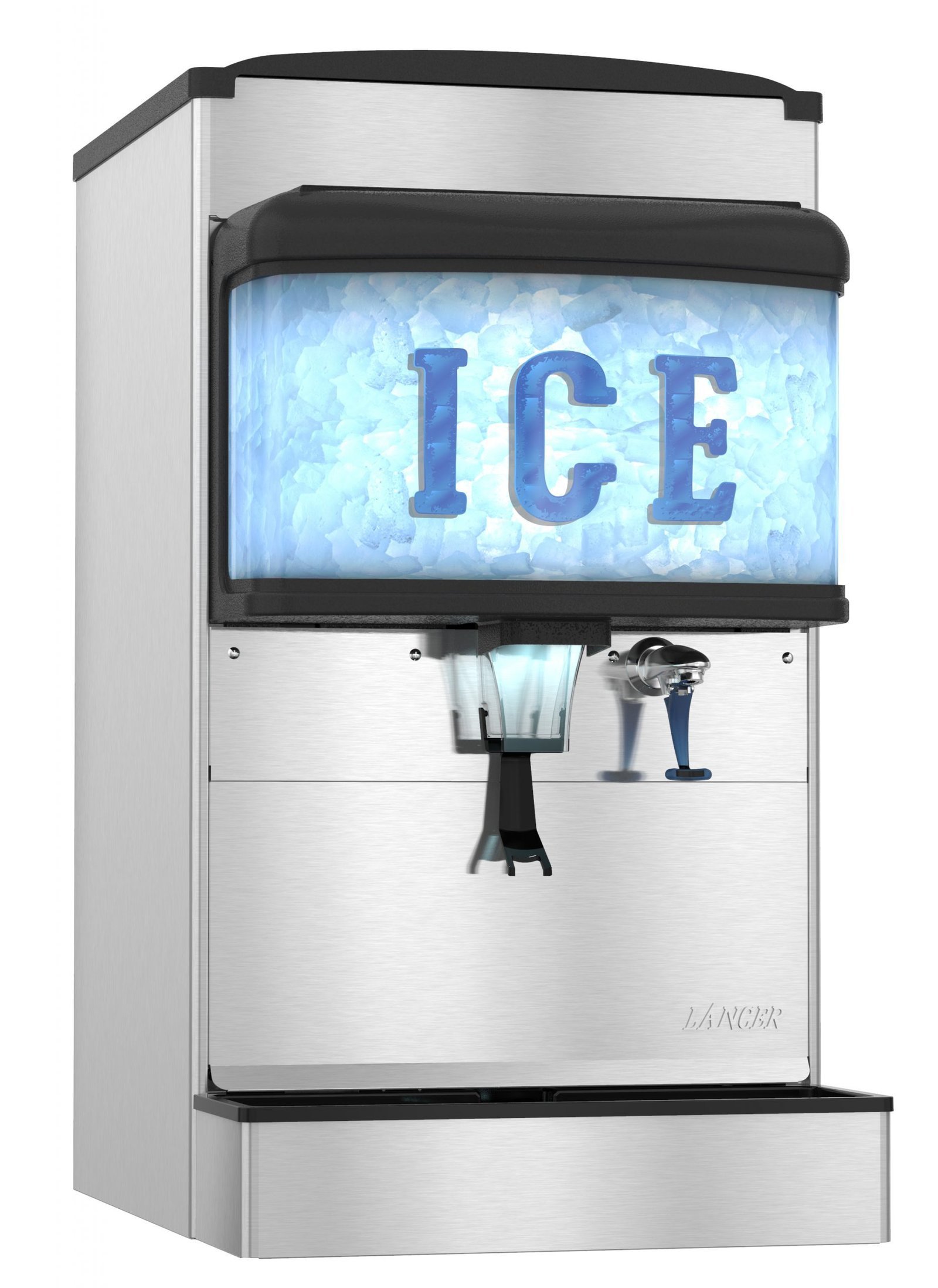
Success is confirmed when you hear the ice maker motor activate and the ejector arms successfully push the new ice cubes into the bin. You should see clear, solid cubes that are roughly the same shape as the mold compartments. If the tray remains full of slushy water after two hours, your freezer temperature may be set too high or the unit isn’t cooling properly. Always check the internal temperature using a thermometer to ensure your appliance is cooling correctly.
If something goes wrong
| What happened | Why | What to do |
|---|---|---|
| Water spilled | Overfilled the mold | Use less water |
| Stuck ejector | Ice is too thick | Melt with warm air |
| No ice made | Power is still off | Reset the switch |
| Frost buildup | High humidity | Seal the freezer door |
| Water leaks | Cracked mold tray | Replace the unit |
How often to do this
You should only perform a manual fill if the automatic water inlet valve has failed or if you’re testing the unit after a repair. This isn’t a permanent solution for a broken water line. If you do this regularly, you risk damaging the internal sensors or the ejector motor, which leads to costly repairs. Check the water supply line for clogs or kinks first, as these are the two most common reasons for an ice maker to stop filling automatically.
Frequently asked questions
Can I use warm water to speed up the process?
No, you should use cold water to ensure the ice freezes in a timely manner.
How much water is too much?
Is it safe to pour water directly on the sensors?
No, you should never pour water directly onto the electrical sensors or the motor housing, as this can cause a short circuit or permanent damage to the control board.
What happens if I overfill the tray?
Excess water will freeze into a solid block that prevents the ejector arms from rotating, which can strip the plastic gears inside the ice maker motor.
Does the ice taste different when filled manually?
It might taste different if you use tap water instead of the filtered water your refrigerator’s internal system provides, as the filter is bypassed during a manual fill.
Why is my ice maker not filling automatically?
It usually means the inlet valve is clogged, the water line is frozen, or the water pressure is too low to trigger the internal switch for the fill cycle.
Final Thoughts
If you find yourself needing to do this often, it’s likely time to have a professional inspect your water line for clogs or leaks. Don’t wait for the ice to run out completely; addressing the root cause now will save you plenty of effort and keep your drinks perfectly chilled all summer.
Related guides