
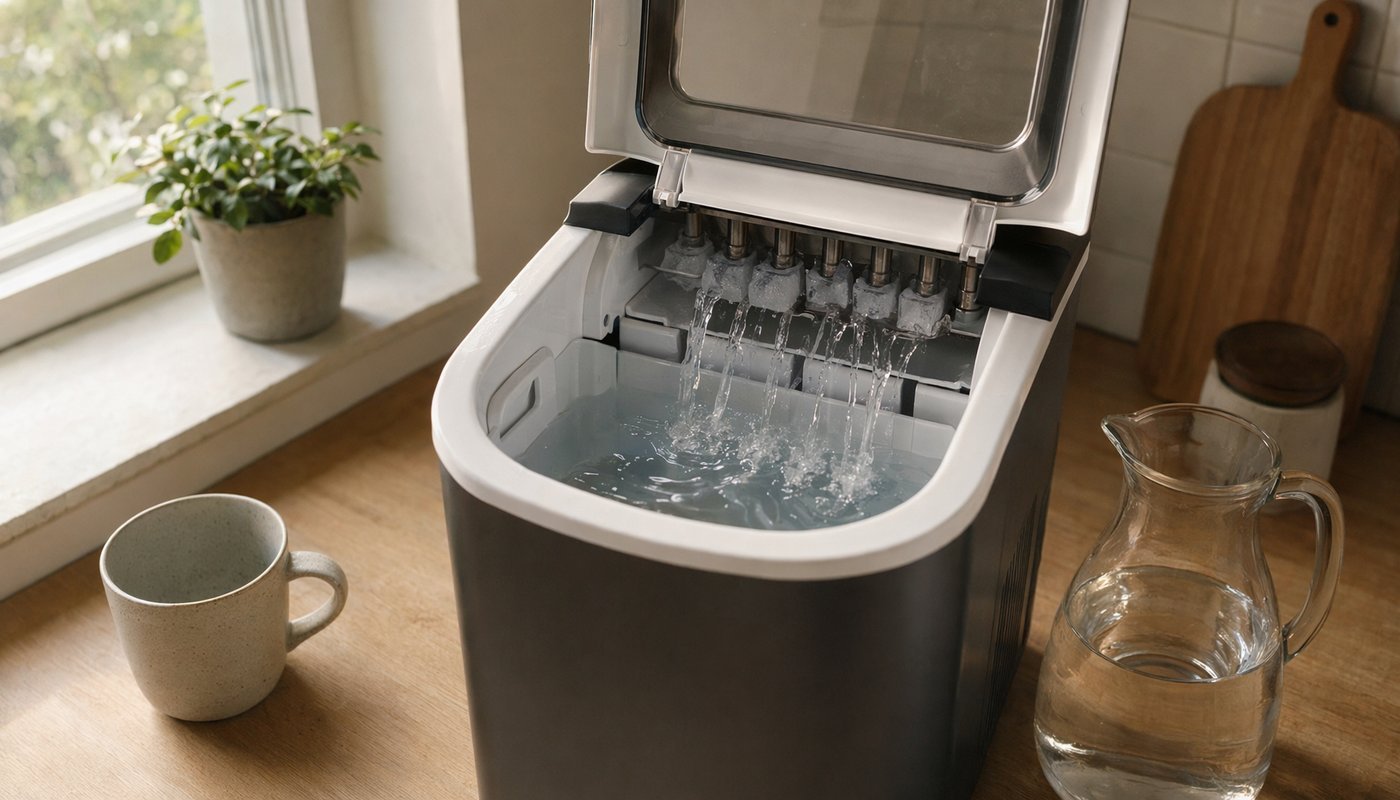
If you wonder how do countertop ice makers get water, the answer is a manual refill process where you pour liquid into an internal reservoir. A small pump then moves that water into the freezing tray, meaning you do not need a permanent plumbing line.
How countertop makers pull in water
| Part or input | What it does | What you notice when it goes wrong |
|---|---|---|
| Water reservoir | Holds the liquid supply | Water leaks onto your counter |
| Internal pump | Moves water to tray | No ice production occurs |
| Freezing prongs | Form the ice cubes | Ice is thin or slushy |
| Water sensor | Detects fill levels | Machine stops before it’s full |
| Drain plug | Empties the reservoir | Stale water smell develops |
What happens, step by step
- You pour fresh, cold water into the internal reservoir until it reaches the marked maximum fill line inside the machine’s basin.
- The internal pump activates to pull water from the reservoir and pushes it up into the freezing tray located above the basin.
- Cold metal prongs dip into the water, and the refrigeration cycle begins to freeze the water into solid cubes around them.
- The machine detects the ice formation and triggers a harvest cycle, which warms the prongs slightly so the cubes drop off.
- A plastic shovel pushes the finished ice into the storage basket, and the remaining water drips back into the reservoir below.
- The cycle repeats automatically as long as there’s enough water in the reservoir and the storage basket isn’t full.
Why this matters when something goes wrong
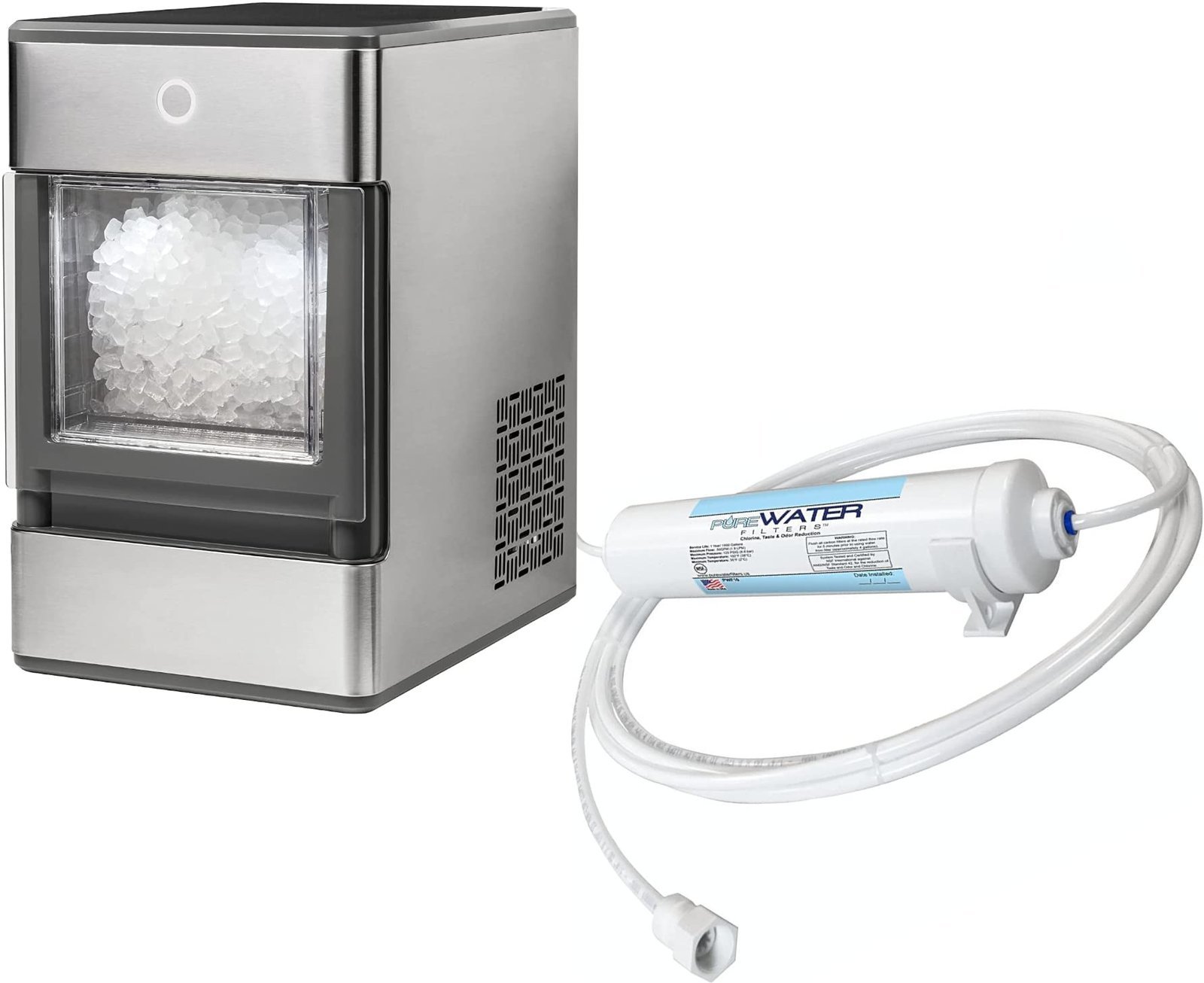
The mechanism inside these machines is surprisingly simple, but it relies on a precise balance of water volume and heat exchange. Because you’re manually filling the tank, the most common issue is a sensor failure caused by mineral buildup or debris blocking the path from the reservoir to the freezing tray. If the sensor can’t see the water level, the machine will stop running even if the tank is full. To ensure the water remains safe for consumption, you must follow the FoodSafety.gov cold food storage guidance regarding clean containers and sanitary handling. If you ignore the cleaning schedule, the pump can become clogged, which forces the motor to work harder and eventually causes it to fail. This error is a classic mistake; people often assume the machine is broken when it only needs a manual rinse to clear the lines.
What you can change, and what you cannot
What you control
- The temperature of the water you pour in at the start.
- How often you wipe out the internal reservoir and basket.
- The type of water used to prevent heavy mineral deposits.
- The frequency of the drain plug maintenance to remove old water.
What is fixed by design
- The speed of the freezing cycle, which depends on the compressor.
- The size and shape of the ice cubes produced by the prongs.
- The maximum volume the reservoir can hold before it overflows.
Note: If the internal pump or electrical board fails, you should contact the manufacturer’s authorized repair center, as opening these units often voids the warranty and carries a risk of electrical shock.
Getting more out of it
Using cold, filtered water helps the machine reach the freezing point faster, which increases your hourly yield. If you notice the ice is melting too quickly, ensure the lid remains closed to keep the cold air inside the basket. You should drain the reservoir completely if you plan to leave the machine unused for more than 48 hours to prevent mold growth. If the ambient room temperature is above 85 degrees Fahrenheit, the machine will take longer to cycle, so moving it to a cooler spot on your counter will improve performance. Always check the manufacturer’s manual for your specific model to see the exact recommended water capacity.
Frequently asked questions
Can I put juice in the reservoir?
No, you should only use fresh water in these machines. Sugary liquids like juice or soda will leave a sticky residue that clogs the internal pump, ruins the freezing prongs, and is nearly impossible to clean out of the narrow tubes.
How do I know when to add more water?
Most models have a light on the front panel that turns on when the sensor detects the water level is too low. You can also visually inspect the reservoir basin to see if the water level has dropped below the intake screen.
How long does one batch of ice take?
A single batch typically takes between 7 and 15 minutes to complete. This time varies by model, the starting temperature of the water, and how hot the air is in your kitchen, so check your specific product manual for the manufacturer’s estimated cycle time.
Is it safe to leave the machine on all day?
Yes, the machine is designed to cycle automatically until the storage basket is full or the water runs out. It will enter a standby mode once the basket is full, so it doesn’t need constant supervision while you’re home.
Why is my ice maker making loud noises?
Loud noises usually mean the pump is struggling to draw water or the fan is obstructed by dust. Check that the unit is on a flat surface and ensure the air vents aren’t blocked by walls or other kitchen appliances.
How often should I clean the machine?
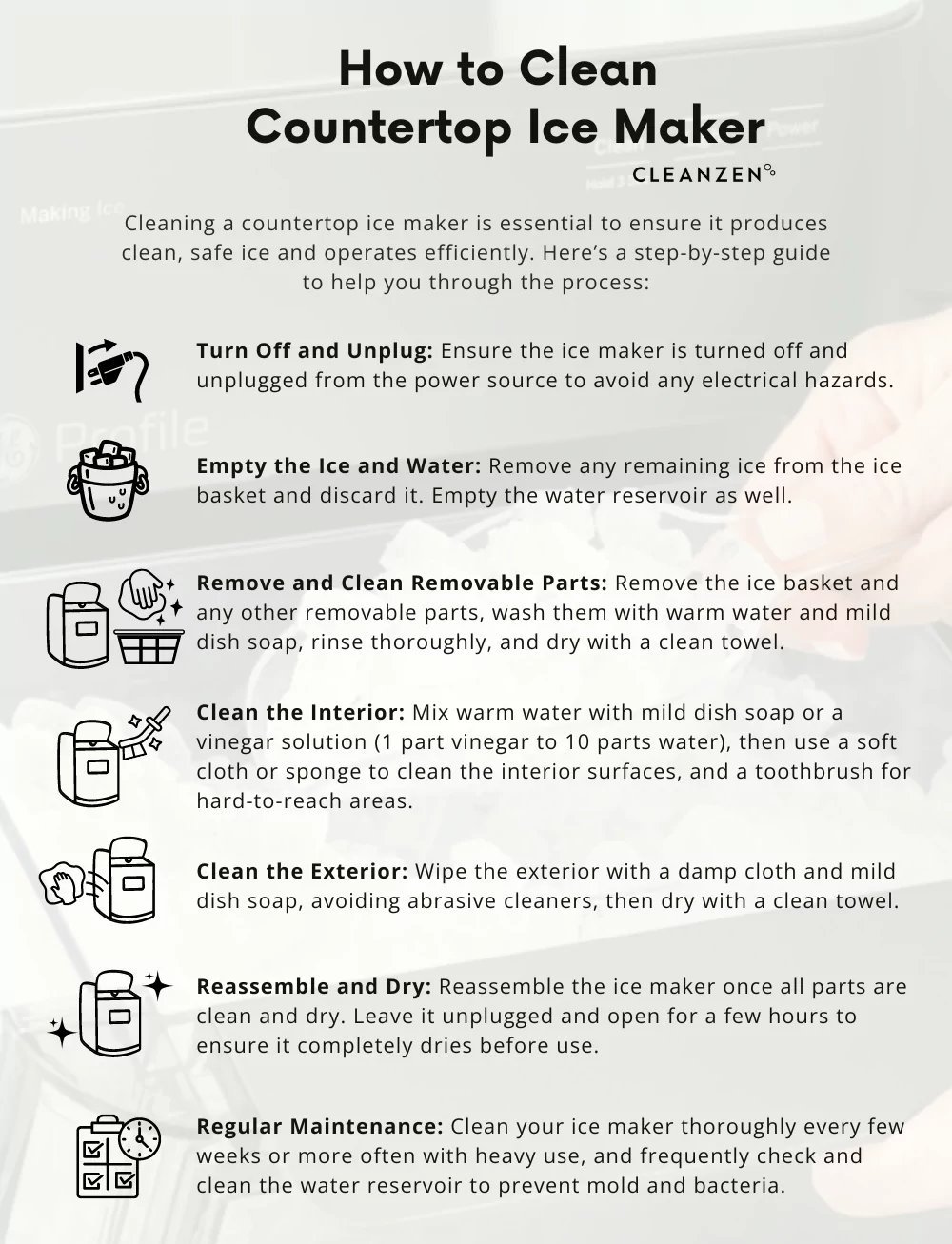
You should perform a deep clean at least once a month if you use it daily. Use a mixture of water and a small amount of mild vinegar to run a cycle, then rinse it thoroughly with clean water to remove any vinegar taste.
Final Thoughts
Since these machines don’t need a water line, you’ll enjoy the freedom to place yours anywhere there’s a nearby outlet. Just remember to use filtered water to keep your ice tasting fresh and your machine running smoothly. It’s a great way to ensure you’ve always got a cold drink ready for guests.
Related guides
Pingback: How to Fill Countertop Ice Maker Units Safely and Correctly