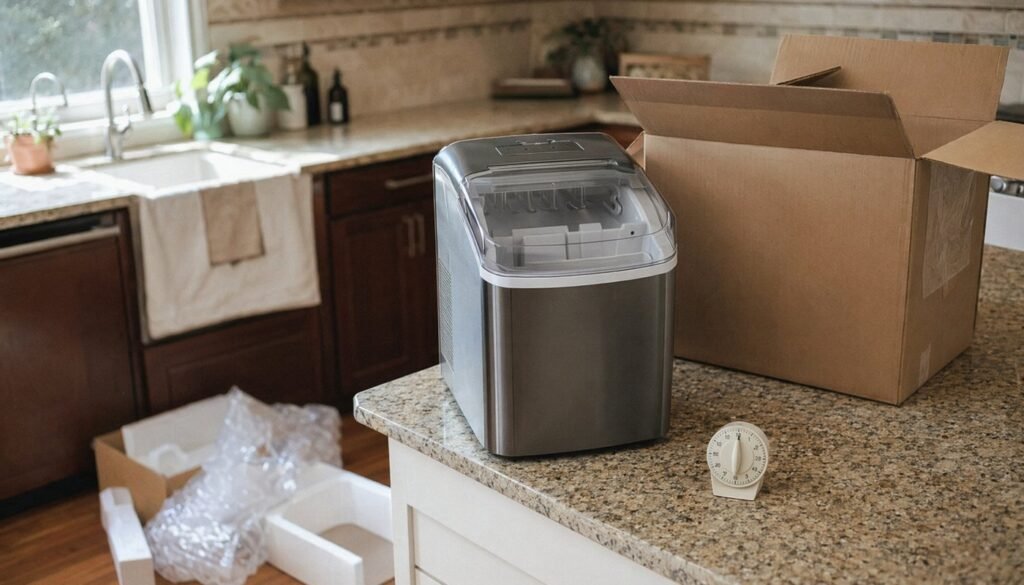
Water runs over a freezing metal plate to create ice, building it layer by layer while washing away minerals. The machine then warms the plate briefly, drops the ice into the bin, and stores it in an insulated container.
How the undercounter maker does its work
| Part or input | What it does | What you notice when it goes wrong |
|---|---|---|
| Water inlet valve | Lets fresh water fill the reservoir pan | No ice forms, or water overflows into bin |
| Circulation pump | Pushes water continuously over the freezing plate | Thin cubes, hollow shapes, or no ice production |
| Evaporator plate | Freezes running water into a solid sheet | Ice won’t release, or machine freezes into block |
| Hot gas valve | Sends warm refrigerant to release the ice | Harvest cycle runs forever without dropping ice slabs |
| Drain line or pump | Removes melted runoff water from the bin | Standing warm water pools inside the bottom bin |
What happens, step by step
- The water inlet valve opens for roughly 20 to 60 seconds, filling the lower internal reservoir pan with fresh water.
- The water pump switches on and sends a steady stream of water over the tilted evaporator plate for 15 to 30 minutes.
- The compressor circulates cold refrigerant through the plate, freezing pure water against the metal while minerals wash into the drain below.
- A thermostat detects that the ice sheet reached its standard thickness, which measures about half an inch on most residential models.
- The hot gas bypass valve opens for roughly one to three minutes, warming the metal plate so the frozen slab slides free.
- Ice cubes fall into the unchilled storage bin, where an acoustic sensor or shutoff arm stops production when the bin fills completely.
Why this matters when something goes wrong

Every step in this process depends directly on the step before it. If the circulation pump fails, water won’t flow over the cold plate, leaving you with bare metal and zero ice. If you notice thin, cloudy, or hollow ice, the water flow rate is usually too low or scale buildup is blocking heat transfer.
A common mistake is assuming the bin keeps ice frozen like a kitchen freezer. These machines store ice in an unchilled bin so cubes don’t freeze together into a giant boulder. The trade-off is that ice constantly melts at the bottom, which requires an open gravity drain or an active drain pump. If water pools in the bin, your drain is clogged.
For commercial kitchens, sanitation standards matter just as much as hardware; the NSF food equipment standards outline specific cleanability requirements for commercial ice-making surfaces to prevent bacterial contamination.
What you can change, and what you cannot
What you control
- Clean mineral scale with nickel-safe ice machine cleaner regularly.
- Change the inline water filter cartridge according to the manufacturer’s recommended schedule to keep cubes clear.
- Clear dust from the front condenser grill as part of your usual clean using a soft brush.
- Level the appliance legs so water flows evenly across the evaporator surface.
Fixed by design
- The harvest cycle timing and factory refrigerant charge inside sealed copper tubing.
- The unchilled storage bin design, which allows cubes to slowly melt over time.
If the refrigeration lines leak or the compressor stops pumping, you can’t fix this with basic tools. Handling refrigerant requires an EPA Section 608 certified technician by federal law.
Getting more out of it
If your water measures above 7 grains of hardness, install a dedicated polyphosphate filter; if your water is soft, a standard carbon block filter is plenty. Don’t skip cleaning the front air condenser: ignoring it costs you a dead compressor, which usually means replacing the entire machine.
This machine isn’t for people who want cold, dry freezer storage or zero maintenance. Keep ambient room temperatures between 50°F and 90°F. Ice production drops significantly if the room rises above 80°F—this varies by model, so check the label inside the door frame.
Frequently asked questions
Why does an undercounter ice maker melt ice?
Yes, this is normal design. Undercounter units keep bins unchilled so individual cubes don’t freeze together into a solid block, letting water continuously melt and drain away.
How long does a single ice cycle take?
Between 15 and 30 minutes. Cycle length depends on incoming water temperature and ambient room heat, with warmer rooms adding several minutes to every freeze cycle.
Can an undercounter ice maker work without a drain?
No, it can’t operate without a drain. The continuous melting process requires either a floor gravity drain line or an internal mechanical pump to remove wastewater safely.
Is clear ice cleaner than cloudy refrigerator ice?
Yes, because running water freezes gradually. Pure water molecules freeze first at 32°F, while dissolved air and minerals wash down the drain instead of trapping inside cubes.
What happens if you use regular vinegar to clean it?
The acid can strip the protective nickel plating off the copper evaporator plate. Once bare copper is exposed, ice sticks to the plate, ruining the entire harvest cycle.
Does water pressure affect ice machine operation?
Yes, low pressure below 20 PSI prevents the reservoir from filling in time. When the machine doesn’t get enough water, it shuts down to prevent freeze-ups.
Final Thoughts
Keeping your machine clean is the best way to ensure it stays in great shape for years. You’ll want to wipe down the interior and descale the water lines every few months to prevent buildup. It’s a simple routine that’ll keep your ice tasting fresh and your drinks perfectly chilled.