
A commercial ice machine generally lasts between seven and ten years when it’s cleaned and serviced every six months. If you ignore maintenance, the internal components will fail in half that time, as scale buildup forces the compressor to work harder than its design allows.
How long a commercial machine lasts
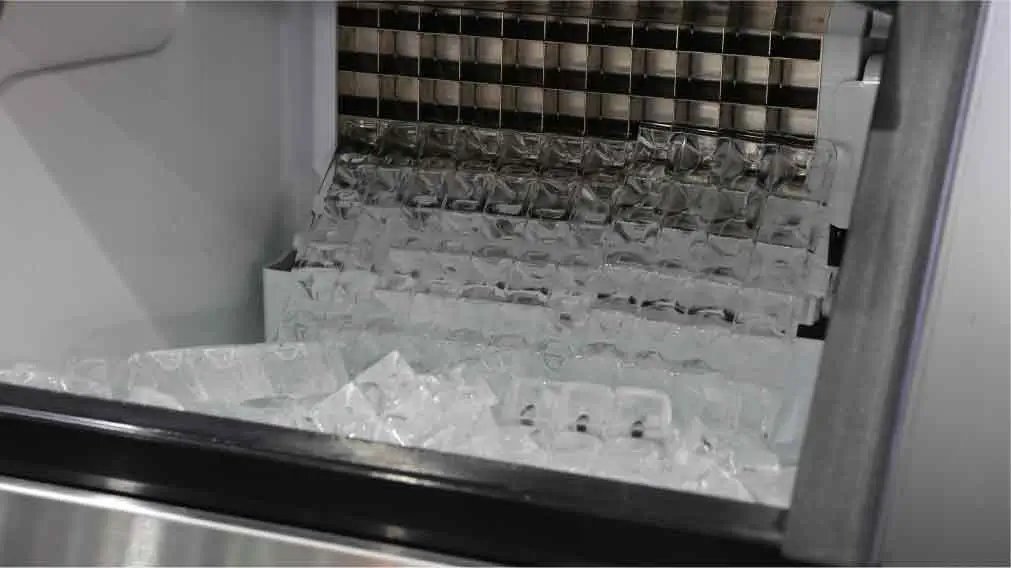
Results of skipping service
Skipping regular maintenance leads to a predictable decline in performance that starts with ice quality and ends with total hardware failure. When you neglect the machine, mineral deposits from your water supply begin to coat the evaporator plate. This layer acts as an insulator, which forces the cooling system to run longer cycles to reach the same temperature. This extra work creates heat, which causes the compressor to overheat repeatedly.
After several months of this stress, the mechanical parts start to wear out. You’ll notice the ice becomes cloudy or small, and the machine may cycle on and off more often than it should. If you continue to ignore these signs, the compressor will eventually seize. To verify the specific cleaning schedule for your model, always check the official maintenance manual provided by the manufacturer.
Signs your machine is failing
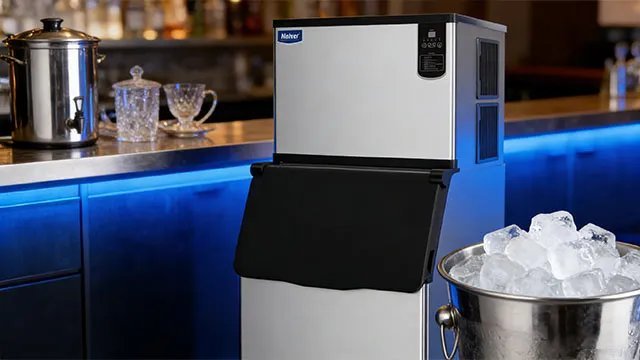
Ice cubes are soft or slushy rather than solid. This indicates your refrigerant levels are low or the condenser coils are clogged with dust.
The machine makes a loud grinding sound during cycles. If you hear this metallic screeching, the water pump or auger motor bearings are likely failing.
Water leaks appear around the base of the unit. Check the drain line for clogs first. If the line is clear, the internal pump seal has cracked, which risks shorting out the electrical components.
The evaporator plate shows visible pitting or corrosion.
Requirements for each cleaning
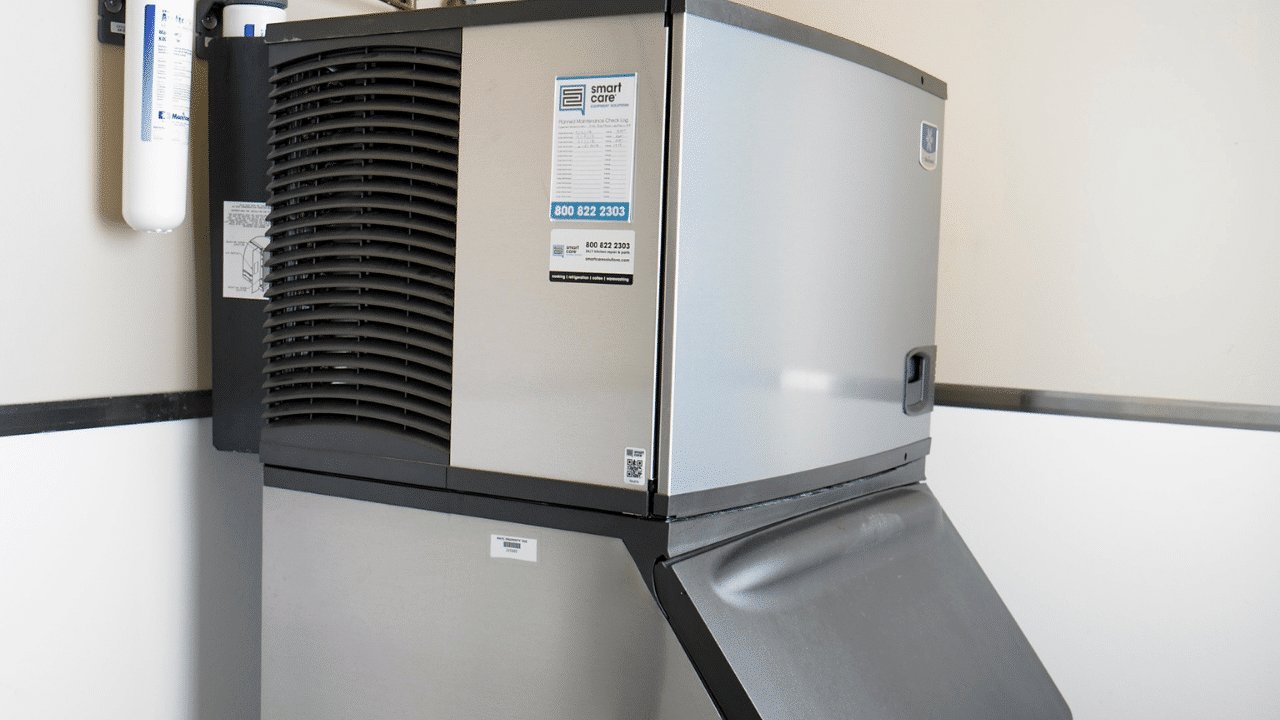
Cleaning a commercial ice machine requires about two hours of labor, a manufacturer-approved descaling solution, and a soft nylon brush. You must empty the bin, remove the water distribution tubes, and circulate the cleaner through the system to break down scale buildup. This is a manual task that needs careful attention to the manufacturer’s specific chemical concentrations. If you use a cleaner that’s too strong, you risk damaging the nickel plating on the evaporator, which leads to permanent ice contamination. Always consult your unit’s label for the correct dilution ratios before pouring any liquid into the water trough.
Habits to extend equipment life
- Install a high-quality water filtration system to remove sediment.
- Clean the air-cooled condenser coils monthly to prevent overheating.
- Keep the area around the unit clear of boxes or heat sources.
- Check the water pressure regulator to ensure it matches the machine’s requirements.
Can I fix a broken ice machine myself?
No, you shouldn’t attempt to repair internal electrical or refrigeration components yourself. A capacitor can hold a lethal charge even when the unit is unplugged, and work on the sealed system requires a licensed refrigeration technician to avoid voiding your warranty.
Why is my ice machine making small cubes?
Your ice machine is likely producing small cubes because of a restricted water flow or a dirty evaporator plate. Check your water filter first, as a clogged filter is the most common cause of low water volume reaching the mold.
Is it safe to use ice from a dirty machine?
No, it isn’t safe, as standing water and scale provide a perfect environment for bacteria and mold growth. If the machine hasn’t been cleaned in over six months, you must sanitize the entire water path before serving ice.
What happens if I don’t change the water filter?
If you don’t change the water filter, scale will build up rapidly on the internal sensors and the evaporator. This forces the machine to work harder, shortens the life of the compressor, and makes the ice taste like your local water supply.
Does it matter where I place the ice machine?
Yes, it matters significantly because high ambient temperatures force the compressor to run constantly. You must ensure the machine has at least six inches of clearance on all sides to allow proper airflow for the cooling system to function correctly.
How often should I sanitize the bin?
You should sanitize the ice bin at least once a month to prevent slime and mold from forming. Use a food-safe sanitizer, wipe down all interior surfaces, and rinse thoroughly with clean water to ensure no chemical residue remains on the bin walls.
Start by checking your water filter and the air intake vents for dust buildup. You should see a return to normal production levels within one cycle after a proper cleaning. If the machine still fails to produce ice or makes unusual noises, call a certified refrigeration technician immediately.
Related guides
Pingback: How Much Does an Ice Machine Business Cost: Startup Guide
Pingback: How Much Money Do Ice Machines Make: Profit Estimates