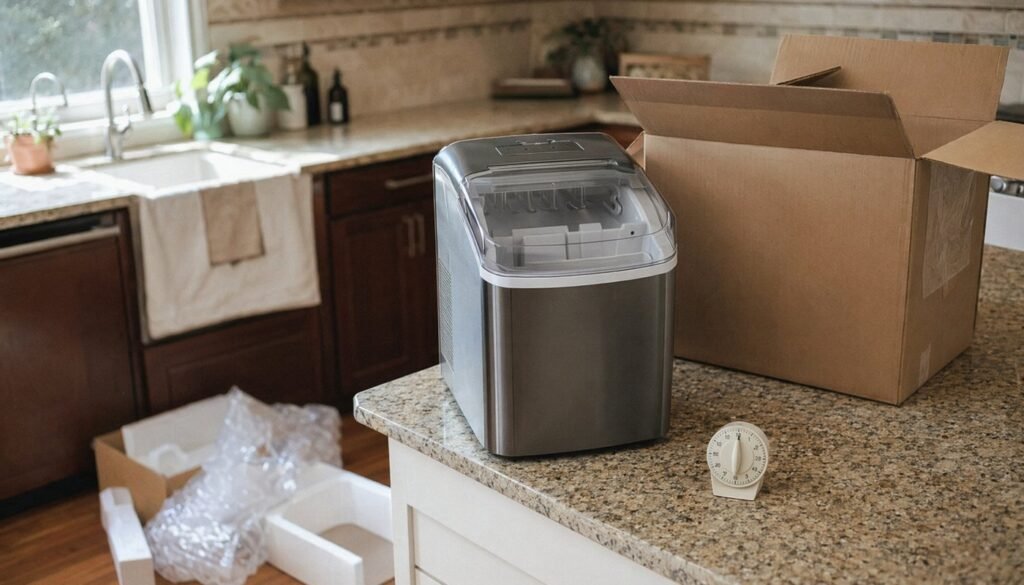
If you are asking what is the smallest ice maker, the answer is a compact countertop model, typically 9 to 10 inches wide. This size fits under most cabinets, though you should check your counter height to ensure proper ventilation.
What is the smallest ice maker?
- Standard countertop units produce about 20 to 26 pounds of ice per day, depending on the ambient room temperature.
- Most small models require a manual water refill, as they lack a direct plumbing connection to your home water supply.
- A typical cycle takes 6 to 10 minutes to produce the first batch of bullet-shaped ice.
- You must keep the unit on a flat, level surface to prevent internal water pump errors.
- If your kitchen air temperature exceeds 90 degrees Fahrenheit, the ice production speed will slow down significantly.
- Always check the requirements for commercial-grade units if you need high efficiency, though most portable consumer models aren’t rated by any program.
Why small ice machines have limits
The cooling mechanism inside a portable unit relies on a small compressor and a heat exchanger. These parts are designed to work in short bursts rather than continuous, heavy-duty operation. When you turn the machine on, the compressor chills the metal evaporator prongs. Water flows over these prongs, freezing into ice bullets over several minutes. This process generates significant heat, which the machine vents out of the sides. If you block these vents with nearby walls or appliances, the unit can’t release that heat. The internal temperature rises, which forces the safety sensors to shut down the compressor to prevent damage. This is why you must leave at least 4 to 6 inches of space on all sides of the unit for proper airflow. Because these units lack internal refrigeration, they don’t store ice for long periods. You must move the ice to a freezer or use it immediately, as the storage bin isn’t insulated.
When the answer is different
| Situation | What changes | What to do instead |
|---|---|---|
| High ice demand | Production capacity | Buy a standalone under-counter unit |
| Limited counter space | Machine footprint | Use dedicated ice trays |
| Permanent installation | Water supply | Choose a plumbed-in model |
| Frequent travel | Portability | Use a portable insulated cooler |
| Quiet environment | Operating noise |
How to do it properly
- Place your new machine on a flat, stable surface at least 6 inches away from walls to ensure the cooling vents remain clear.
- Wash the interior reservoir with a solution of 1 part white vinegar and 10 parts warm water before your first use of the day.
- Fill the reservoir with fresh, filtered water up to the “Max” fill line to avoid splashing during the ice-making cycle.
- Plug the unit directly into a grounded 120-volt wall outlet, avoiding extension cords that can cause voltage drops and motor strain.
- Press the “Power” button and select your preferred cube size; wait 10 minutes for the first cycle to complete the initial harvest.
- Empty the ice basket frequently, as the sensors will stop production once the ice level blocks the infrared or mechanical bin-full sensor.
- Drain any remaining water from the bottom plug once a week to prevent mineral buildup and keep the internal pump clean.
The mistakes that ruin it
- Using distilled water prevents the conductivity sensors from detecting the water level, which causes the machine to incorrectly signal that it’s empty.
- Leaving the lid open during operation lets cold air escape, which increases the cycle time and wastes electricity.
- Adding heavy ice scoops into the basket can crack the plastic tray, leading to leaks that damage the internal electronics.
- Failing to clean the condenser coils regularly causes the motor to overheat, shortening the lifespan of the machine.
Frequently asked questions
Can I leave the ice maker on all day?
No, it isn’t designed for 24-hour operation. Most portable models are intended for short-term use during parties or events, and leaving them on constantly leads to premature wear on the compressor and water pump components.
Is it safe to drink the ice?
Yes, it’s safe if you use clean, drinkable water. Always check the manual for specific cleaning instructions, as stagnant water left in the reservoir can grow bacteria if the machine sits unused for more than two days.
How long does the ice last in the bin?
The ice lasts about 30 to 60 minutes in the bin before it begins to melt. Because these machines don’t have refrigerated storage, you must move finished ice to your freezer immediately to keep it frozen.
Does it matter what water I use?
Yes, you should use filtered or bottled water for the best results. Hard tap water causes mineral deposits to build up on the evaporator prongs, which eventually prevents the machine from forming ice properly.
Why is my ice maker making loud noises?
It’s likely sitting on an uneven surface or the internal fan is hitting debris. Check that the unit is level and ensure there’s no plastic wrap or dust stuck in the side ventilation grates.
What happens if I move it while full?
Water will likely spill into the electrical components, which can cause a short circuit or permanent damage. Always drain the reservoir completely through the bottom plug before you attempt to move or transport the unit.
Final Thoughts
Choosing the right machine will make hosting friends much easier throughout the year. Once you’ve measured your available counter space, you’ll be ready to pick a color that matches your kitchen’s style. You’ll definitely enjoy having fresh ice on demand whenever you’re craving a cold drink on a hot afternoon.