
Yes, you can leave a countertop ice maker on all night if it has an automatic shut-off feature. That safety switch is the one thing that flips the answer from safe to risky. Check your owner’s manual right now to see if yours has it before you go to sleep.
When to leave your ice maker running
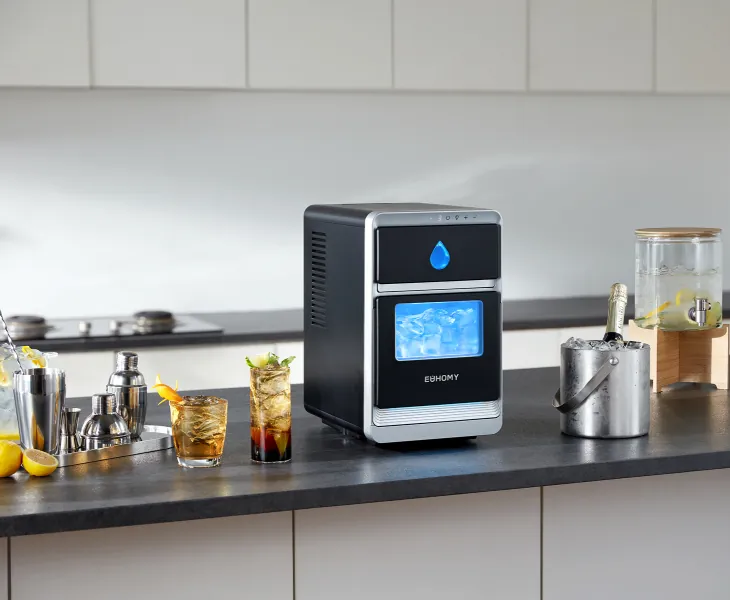
The answer changes based on the machine you own and where it sits in your kitchen. Here is how your setup decides what happens overnight.
| Your situation | Answer | Why |
|---|---|---|
| Machine has auto shut-off | Yes | It stops when the bin fills up. |
| Placed near a bedroom wall | No | The compressor hum disrupts sleep. |
| Running completely empty | No | The pump burns out without water. |
| UL-listed model on a flat counter | Yes | Certified parts handle long run times safely. |
| Older unit with frayed cord | No | Heat builds up and risks a fire. |
What actually controls overnight safety
The auto shut-off sensor decides if your machine survives the night. This small switch sits inside the ice bin. When ice pushes the sensor arm up, it cuts power to the compressor and the water pump.
A second factor is heat. The compressor warms up as it freezes water, and it needs clear space around the vents to cool down. If you push the machine flush against a wall or hide it inside a closed cabinet, the trapped heat forces the motor to work harder. That extra strain shortens its life and raises the chance of a failure while you sleep.
Power matters too. A dedicated outlet handles the electrical load better than a crowded power strip shared with a microwave or toaster. You can read your exact power draw on the rating sticker on the back of your specific unit. If your machine shuts off when the bin is full and the vents stay clear, then leave it on; if it lacks that sensor or sits boxed in, then turn it off before bed.
Steps for running it through the night
Follow these steps to keep the machine safe while you sleep. Each one prevents a specific problem that happens during long run times.
- Fill the reservoir to the max line. Use cold tap water so the first cycle finishes faster. You’ll know it worked when the “add water” light stays off.
- Place it six inches from any wall. The rear and side vents need open air to release compressor heat. Feel the air moving freely behind the unit to confirm this.
- Plug it directly into a wall outlet. Skip extension cords, which add connection points that can loosen or overheat under continuous use. The plug should feel cool to the touch after an hour.
- Empty the drip tray underneath. Standing water breeds mold if it sits for eight hours. A dry tray means you did this right.
- Confirm that your model has an automatic bin-full shutoff. Not every model has a button for this; some do it by default. Check your owner’s manual to confirm your model is intended for unattended use.
- Listen to the first full cycle. It takes about 7 to 15 minutes depending on your room’s temperature. A steady hum without rattling means the compressor is seated properly.
Leaving the water tank empty
Running the machine without enough water is the fastest way to ruin it. The pump pushes liquid into the freezing tray every cycle. When the tank runs dry, that same pump spins against nothing, building up friction and heat.
Replacing a burned-out pump is inexpensive relative to the alternative, plus the time spent waiting for parts. Avoid this by checking the water level right before you go to bed. If the indicator light is already blinking, fill the tank to the marked line instead of hoping there’s enough left to last until morning.
When to call someone else
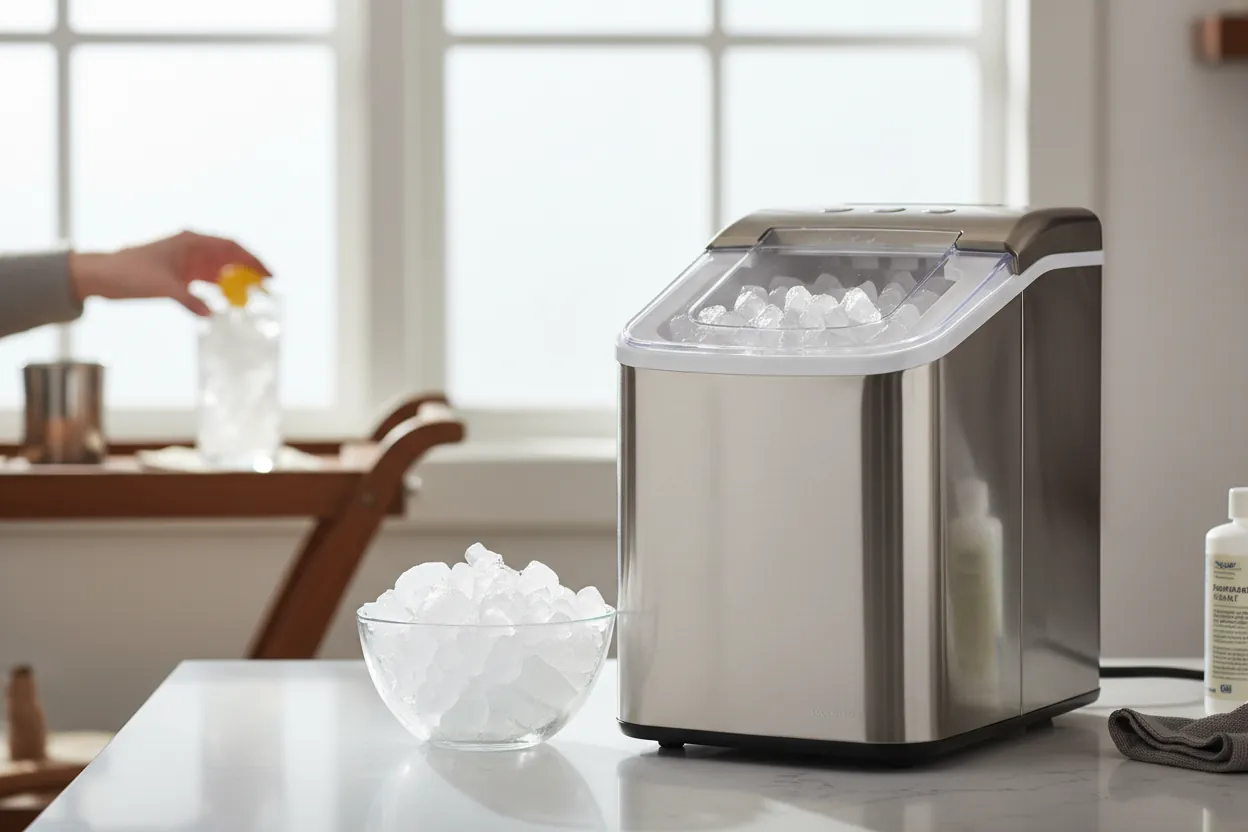
Stop letting the machine run unattended and get help if you notice these signs:
- A burning plastic smell coming from the vents, because the motor insulation is melting. Call an appliance repair technician.
- Water pooling under the unit despite a sealed tank, since internal hoses have split. A repair shop handles this.
- The power cord feels hot to the touch, meaning the wiring can’t handle the current. An electrician must check your outlet.
- Loud grinding noises replacing the normal hum, showing the compressor bearings are failing. Contact the manufacturer for warranty service.
Opening the casing to fix internal wiring voids your warranty and risks a shock. Leave those repairs to licensed professionals.
Frequently asked questions
Can I leave my ice maker plugged in but turned off?
Yes, leaving it plugged in uses no power when the switch is off. But unplugging it protects the circuit board from power surges during storms.
How long does a full batch of ice take?
About 7 to 15 minutes per cycle, assuming your room is near 70°F. Warmer kitchens push that closer to 20 minutes.
Is it safe to run it on a power strip?
No, not overnight. Ice makers draw continuous current that heats cheap strips. Plug directly into a grounded wall outlet instead.
Why does my ice melt inside the bin?
Countertop units aren’t freezers. They hold ice for a few hours before it softens. Move finished batches to your kitchen freezer.
Does running it all night raise my bill much?
It adds roughly 1 to 2 kilowatt-hours per day, depending on the model’s wattage printed on the back label. That’s a small increase.
What happens if the water runs out while I sleep?
If your model lacks auto shut-off, the pump runs dry and overheats. Machines with sensors stop automatically when the tank empties.
Do I need to clean it before overnight use?
Run a vinegar rinse if you haven’t cleaned it in two weeks. Dirty tanks grow slime faster when water sits warm between cycles.
Setting up your ice maker tonight
Move your machine away from the wall and plug it straight into the outlet. Expect a full bin of ice by morning if your model has an auto shut-off sensor, which you’ll hear click when the basket fills. If you smell hot plastic or see water leaking onto the counter, unplug it immediately and contact a repair technician.