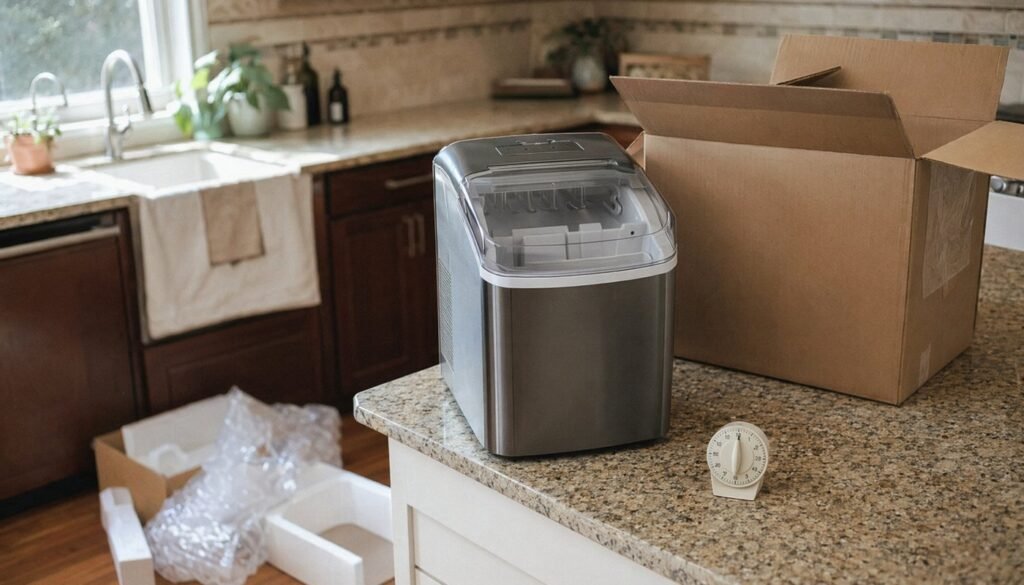
To understand how does counter top ice maker work, consider that it pumps water into a chilled metal tray to freeze, then briefly heats the tray to release ice into a bin. This process uses a small compressor and refrigerant to remove heat from the water.
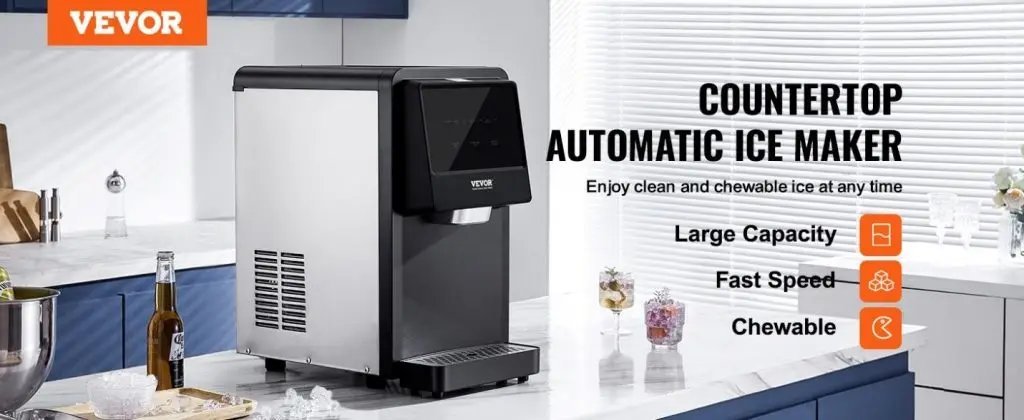
How does counter top ice maker work: The components
| Part or input | What it does | What you notice when it goes wrong |
|---|---|---|
| Water reservoir | Holds liquid supply | Leakage or low water warning |
| Evaporator pins | Collects frozen ice | Ice stays thin or cloudy |
| Compressor | Circulates cold refrigerant | Machine runs but stays warm |
| Ice sensor | Detects full bin | Ice overflows or stops early |
| Control board | Manages timing cycles | Lights blink or error codes |
What happens, step by step
- You pour water into the bottom reservoir until it reaches the fill line, which is usually marked inside the machine’s plastic casing.
- The water pump moves a set amount of water into the freezing tray, which typically takes about 30 seconds to fill completely.
- Cold refrigerant flows through the evaporator pins, causing the water to freeze around them into individual cubes over 7 to 15 minutes.
- The machine stops the cooling process and activates a heating element for roughly 60 seconds to loosen the ice from the pins.
- A plastic tray tilts or a pusher bar moves to drop the freshly made cubes into the ice basket below the unit.
- The cycle repeats automatically until the sensors detect that the basket is full, which stops the machine from making more ice cubes.
Why this matters when something goes wrong
Knowing the cycle helps you find the fault when your machine stops working. If the machine runs but no ice forms, the compressor or refrigerant system is likely failing, and this isn’t a user-serviceable repair. If the machine makes ice but the cubes are small or thin, the cooling system may be underperforming or the evaporator pins may have mineral buildup. Many owners try to fix these issues by adjusting settings, but most counter top models have fixed cycles. A failure to cycle usually means the sensors are blocked by scale or debris, which you can clean yourself.
What you can change, and what you cannot
Things you control
- The ambient room temperature where you place the unit.
- The quality of the water you pour into the reservoir.
- How often you wipe out the interior water tank.
- Removing mineral buildup from the evaporator pins regularly.
Things fixed by design
- The speed of the freezing cycle for each batch.
- The shape and size of the ice cubes produced.
- The internal cooling capacity of the compressor system.
If the internal compressor fails, you must contact the manufacturer’s support team, as opening the cooling system voids the warranty and carries risks.
Getting more out of it
Use filtered or distilled water to keep the internal sensors and tubes free of mineral scale, which slows down the freezing process. Keep the unit at least 6 inches away from walls to allow the compressor to vent heat efficiently. If you aren’t using the machine for more than 24 hours, drain the reservoir completely to prevent bacteria from growing in stagnant water. During hot summer months, the machine will work harder; if the ice comes out slushy, move the unit to a cooler room to help the cycle finish correctly. This varies by model — check the label for the recommended operating temperature range.
Frequently asked questions
Can I use tap water in my ice maker?
Yes, you can use tap water, but it often contains minerals that build up inside the machine. Using filtered water helps the machine last longer and prevents the ice from tasting like your local water supply.
How long does it take to make the first batch?
About 15 to 20 minutes is typical for the first batch after you turn the machine on. The unit needs time to chill the evaporator pins before the water can freeze into solid cubes.
Is it safe to leave the ice maker on all day?
Yes, it’s safe to leave it plugged in, as the internal sensors will stop the cycle once the storage basket is full. Always ensure the unit has enough space around it for airflow.
Why is my ice maker making loud noises?
This usually happens if the machine isn’t level or if the fan is blocked by dust. Check that the unit sits flat on the counter, then clear any debris from the back vents.
What happens if the water reservoir runs dry?
The machine will stop the cycle and show an “Add Water” indicator light on the control panel. It won’t restart until you pour more water into the reservoir and press the button.
Does it matter if the room is hot?
Yes, a hot room makes the compressor work much harder to move heat away from the water. If the room exceeds 90 degrees Fahrenheit, the ice production rate will drop significantly.
How do I clean the inside of the machine?
Use a mixture of warm water and mild dish soap to wipe the interior surfaces. Never use harsh chemicals or abrasive scrubbers, as these can damage the plastic and the delicate freezing pins.
Final Thoughts
Keeping your machine clean is the best way to ensure your ice always tastes fresh. You shouldn’t forget to wipe down the interior and run a vinegar cycle every few months. Once you’ve set up a simple maintenance routine, you’ll enjoy chilled drinks without any hassle for years to come.
Related guides