
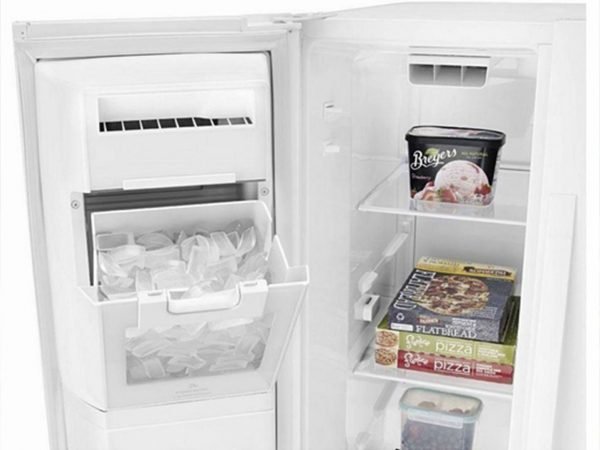
If you wonder how does a ice maker work, it turns liquid water into solid cubes by cycling refrigerant through cooling coils. This process mirrors your kitchen freezer, which keeps food solid by pulling heat away.
The parts that do the work
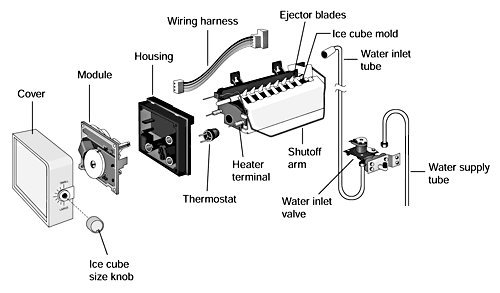
| Part or input | What it does | What you notice when it goes wrong |
|---|---|---|
| Water inlet valve | Opens to fill the tray | No ice production at all |
| Mold or tray | Holds water while freezing | Ice cubes are misshapen |
| Evaporator coils | Cools the tray surface | Ice takes too long to form |
| Thermostat | Detects when ice is solid | Ice maker never shuts off |
| Ejector blades | Pushes ice into the bin | Ice stuck inside the tray |
What happens, step by step
- The water valve opens for about 5 to 10 seconds, depending on the pressure, to fill the ice mold with fresh water.
- The cooling system starts, circulating refrigerant through the evaporator coils to lower the mold temperature to below freezing, usually within 30 minutes.
- A bimetallic thermostat or sensor monitors the mold temperature; when it hits the target, it signals that the water has frozen solid.
- The ice maker’s heating element warms the mold for roughly 60 to 90 seconds to slightly melt the edges of the cubes.
- Ejector blades or a rotating arm push the loosened cubes out of the mold and into the collection bin below the unit.
- The harvest cycle ends, the mold refills with water, and the process repeats until the bin is full and triggers the shut-off.
Why this matters when something goes wrong
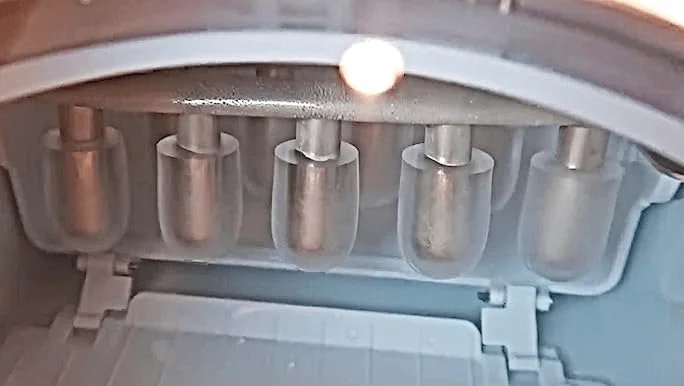
Troubleshooting depends on identifying which stage of the cycle is interrupted. If your ice is small or cloudy, the water inlet valve may be partially blocked or the water pressure is too low, which prevents the mold from filling completely. If the ice maker doesn’t cycle at all, the thermostat might be faulty, meaning the unit never receives the signal that the previous batch is frozen. Conversely, if the machine makes ice but fails to eject it, the heating element that loosens the cubes has likely failed, leaving the ice locked in the mold. If the water supply lines are frozen, the entire system stops because it can’t initiate the fill step, regardless of how well the cooling coils work.
What you can change, and what you cannot
Things you control
- Clean the water filter regularly to keep flow steady.
- Adjust the freezer temperature to zero degrees Fahrenheit for best results.
- Clear ice jams in the bin manually to prevent the shut-off arm from sticking.
- Check the water supply valve behind the unit if the flow stops.
Things fixed by design
- The cycle duration is set by the internal thermostat and heating timing.
- The physical size and shape of the ice cubes are permanent mold features.
- The cooling capacity depends on the sealed refrigerant system, which requires professional repair.
Getting more out of it
Keep the ice bin clear of obstructions so the shut-off arm can move freely to detect when the bin is full. If you notice a strange taste, replace the water filter; this usually fixes issues caused by mineral buildup or old carbon. Avoid putting warm items near the ice maker, as the extra heat forces the cooling coils to work harder and extends the freezing cycle. If you go away for more than one week, turn off the water supply to the ice maker to prevent stagnant water from sitting in the lines. This keeps the internal mechanism clean and ready for immediate use upon your return.
Frequently asked questions
Can I fix a broken ice maker myself?
Yes, you can safely clear ice jams or replace a clogged water filter yourself. Anything involving the electrical system, the sealed refrigerant lines, or internal motor components should be handled by a qualified appliance technician to avoid damage.
How long does it take to make a full bin?
About 24 hours is standard for a residential unit to fill an empty bin. This varies by model; check your user manual for the specific production rate, as it depends on your home’s water pressure and temperature.
Is it safe to eat ice if the maker is dirty?
No, it isn’t safe if you see mold or sediment in the tray. You should clean the bin and mold with a mild soap solution and rinse thoroughly to ensure the ice remains sanitary for your drinks.
What happens if the water pressure is too low?
Small, hollow, or misshapen ice cubes are the typical result of low water pressure. If the valve doesn’t receive enough water during the fill cycle, the mold won’t produce full, solid cubes.
Why is the ice maker leaking water?
A leaking unit often points to a faulty water inlet valve that doesn’t close fully. Check the connection hoses first; if the hoses are tight and dry, the valve itself likely needs a professional replacement.
Does it matter if the freezer is too warm?
Yes, a warm freezer prevents the ice maker from reaching the necessary temperature to trigger the harvest cycle. Ensure your freezer stays at or below zero degrees Fahrenheit to keep the ice production consistent.
Final Thoughts
Keeping your machine clean is the best way to ensure it stays in top shape for years. You shouldn’t ignore the filter, as it’s essential for keeping your cubes tasting fresh. Check your manual today to see how often you’ll need to swap it out for a new one.
Related guides
Pingback: How Much Is an Ice Maker Machine: Price Ranges Explained