
To understand how does countertop ice maker work, consider that it pumps water from a reservoir over cold metal prongs, where layers of ice build up until they drop into a basket; this cycle turns liquid water into solid cubes through a continuous process of freezing and harvesting.
How the countertop maker does its work
| Part or input | What it does | What you notice when it goes wrong |
|---|---|---|
| Water reservoir | Holds the liquid | Leaks or low water warning |
| Water pump | Moves water upward | No water flow to tray |
| Evaporator prongs | Freeze the water | Thin ice or no ice |
| Harvest sensor | Detects ice fullness | Machine stops prematurely |
| Cooling fan | Removes excess heat | Overheating or noisy operation |
| Compressor | Circulates refrigerant | Machine runs but stays warm |
What happens, step by step
- You pour cold water into the reservoir up to the fill line, which typically holds about 2 to 3 liters depending on the machine size.
- The internal pump pushes water into the tray, where it flows over the metal evaporator prongs that are cooled by the compressor.
- Over the next 6 to 12 minutes, ice forms as thin layers around the metal prongs, with the thickness depending on your chosen ice size setting.
- Once the ice reaches the set thickness, the machine reverses the cooling cycle to warm the prongs slightly, allowing the ice to slide off.
- A plastic shovel pushes the loose ice into the storage basket, and the cycle repeats automatically until the basket sensor detects the bin is full.
- The machine pauses when the basket is full; it resumes once you remove ice, provided the water level remains sufficient for another batch.
Why this matters when something goes wrong
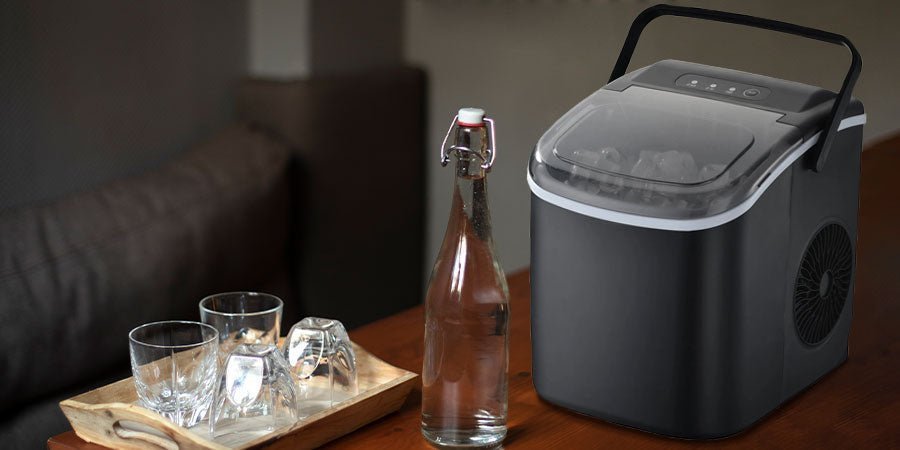
Knowing the cycle helps you identify if a problem is electrical or mechanical. If your machine runs but produces no ice, the issue is often the refrigerant or the compressor, which requires professional repair because the system is sealed. If the machine stops after one batch, check the optical sensor near the ice bin; if it’s blocked by dust or a stray ice cube, the machine mistakenly thinks the bin is full. You should always verify that the unit is on a level surface, as a tilt prevents water from covering the prongs evenly, leading to thin or lopsided ice. For food safety, always use potable water and clean the unit according to the manufacturer’s manual to prevent bacteria growth, as noted in the FoodSafety.gov guide on appliance maintenance. If the machine makes loud grinding noises, stop it immediately and check for ice buildup or a jammed shovel, as forcing it can break the plastic gears.
What you can change, and what you cannot
Things you can change
- The size of the ice cubes using the control panel settings.
- The frequency of cleaning cycles to remove mineral scale buildup.
- The location of the machine to ensure proper airflow for the fan.
- The quality of the water used to reduce scale inside the pump.
Things you can’t change
- The cooling capacity of the compressor, which is fixed by the internal design.
- The speed of the freezing cycle, which varies by ambient room temperature.
- The internal logic of the sensors, which can’t be adjusted by the user.
Getting more out of it
To keep your machine efficient, always use water that’s at room temperature or cooler; using warm water forces the compressor to work longer to reach freezing, which increases wear. If you live in an area with hard water, use filtered or distilled water to stop white mineral deposits from clogging the pump. Clean the interior regularly using a mixture of water and vinegar to ensure the sensors stay clear. If you aren’t using the unit for more than 48 hours, drain the reservoir completely to stop stagnant water from affecting the taste of future ice batches.
Frequently asked questions
How long does it take to make the first batch?
The first batch usually takes about 15 to 20 minutes because the compressor needs time to chill the evaporator prongs from room temperature. Subsequent batches are faster, typically taking 8 to 12 minutes.
Is it safe to leave the machine running all day?
Yes, the machine is designed to cycle on and off automatically based on the ice bin sensor. It will stop producing ice once the basket is full and restart when you remove some.
Why is my ice maker making thin ice?
Thin ice often happens if the water is too warm or the ambient room temperature is above 90 degrees Fahrenheit. Check your manual for the recommended operating temperature range for your specific model.
Can I use tap water in the machine?
Yes, you can use tap water, but it may leave mineral deposits inside the pump and on the prongs. If your tap water is hard, using filtered water will extend the life of the machine.
Does it matter where I place the ice maker?
Yes, the machine needs at least 6 inches of clearance on all sides to allow the cooling fan to vent hot air. Placing it in a tight cupboard will cause the compressor to overheat.
What happens if I lose power during a cycle?
The machine will stop immediately and the ice currently on the prongs will melt into the reservoir. Once power returns, you must restart the cycle manually using the power button.
Final Thoughts
Keeping your machine clean is the best way to ensure every batch tastes fresh and stays clear. You’ll want to run a simple vinegar rinse every few months to prevent mineral buildup. Once you’ve set it up, you won’t have to worry about running to the store for bags again.
Related guides
Pingback: What Is the Smallest Ice Maker