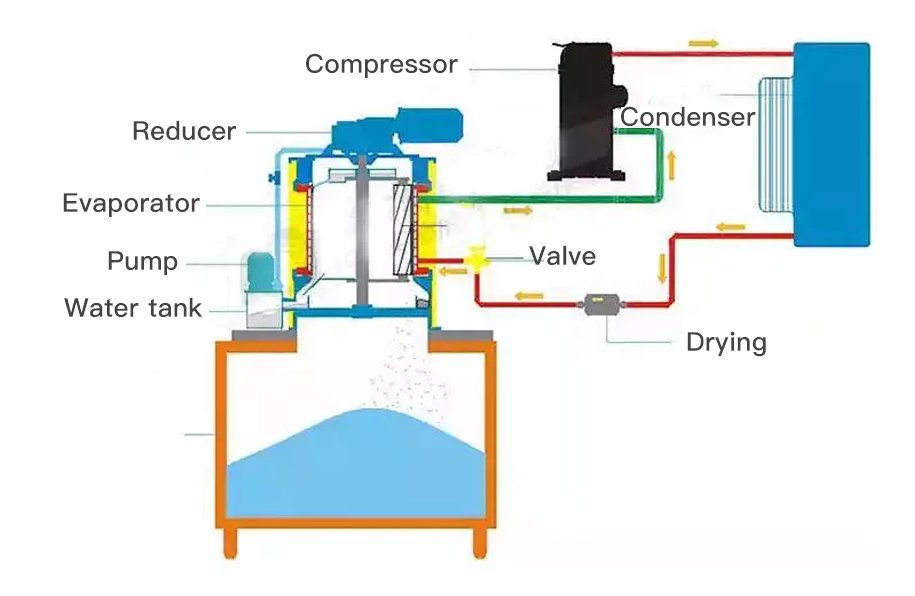
Flake ice is made by spraying water onto the surface of a freezing, rotating cylinder, where it turns into a thin sheet of ice that a metal blade scrapes off. This process happens continuously, and commercial ice machine standards ensure this ice remains safe for consumption.
How flake ice is made
| Part or input | What it does | What you notice when it goes wrong |
|---|---|---|
| Water supply | Feeds the freezing surface | Ice production stops or becomes thin |
| Evaporator drum | Freezes water into ice | Ice is wet or doesn’t form |
| Auger or blade | Scrapes ice off the drum | Loud grinding noise or no ice |
| Gear motor | Turns the drum or auger | The machine hums but stays still |
| Refrigeration system | Removes heat from water | Ice is soft, slushy, or melting |
| Control board | Manages the cycle timing | Machine doesn’t start or stop |
The Freezing and Scraping Process
- Water enters the machine through a valve and flows into the basin at the base of the freezing cylinder.
- The refrigeration system cools the inner wall of the vertical cylinder to temperatures well below zero degrees Fahrenheit.
- A pump moves water to the top of the cylinder, where it flows down the freezing, cold interior wall.
- As the water contacts the metal, it instantly turns into a layer of ice about one-eighth inch thick.
- A rotating auger or a stationary blade scrapes this thin ice sheet off the cold metal wall surface.
- The scraped ice moves upward and is broken into small, irregular flakes before falling into the storage bin.
- This entire cycle repeats every few seconds, ensuring a steady, continuous supply of fresh ice for your needs.
Why Technical Failures Disrupt Output
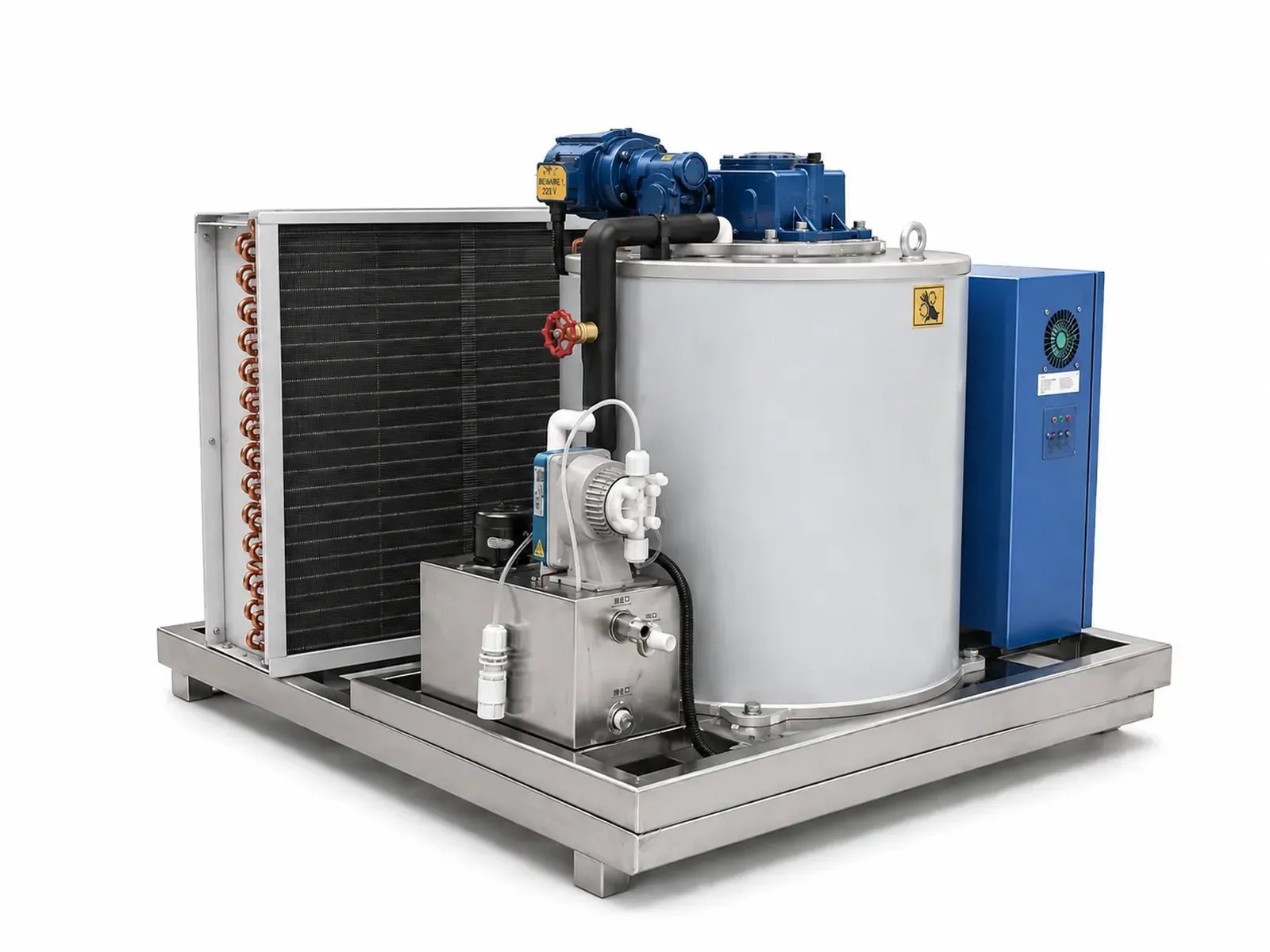
The mechanism depends on a precise balance between water flow and surface temperature. When the refrigeration system fails to reach the required sub-zero temperature, the water doesn’t freeze into a solid sheet. Instead, you get slushy, wet ice that clumps together, which indicates a potential leak in the refrigerant lines. Conversely, if the water supply is restricted by a clogged filter, the machine creates thin, brittle flakes that shatter too easily. The scraping blade requires a perfect fit against the cylinder wall; if it wears down, it leaves a layer of ice behind that eventually builds up and jams the entire mechanism. You’ll notice this as a loud, mechanical grinding sound, which serves as a warning that the auger is struggling against an ice buildup. Ignoring this noise often leads to motor failure, costing significantly more than a simple blade replacement.
Adjustments and Operational Limits
User-controlled settings
- Water pressure levels ensure consistent flow to the evaporator.
- Cleaning cycles remove scale buildup that ruins ice clarity.
- Bin thermostats dictate when the machine stops making ice.
- Air filter maintenance prevents the compressor from overheating.
Design-fixed limitations
- The freezing surface area determines the maximum daily output.
- Refrigerant type is locked to the specific model’s design.
- Motor power limits the thickness of the ice sheet.
If you notice signs of electrical issues or refrigerant leaks, stop using the machine immediately. These parts carry high-voltage risks and pressurized chemicals that require a certified technician to handle safely. Attempting these repairs yourself usually voids the manufacturer warranty and can lead to serious injury or permanent equipment damage.
Optimizing Ice Machine Performance
Keep the area around the air intake clear of dust to help the compressor run efficiently. If the room temperature rises above 90 degrees Fahrenheit, expect the production rate to drop by about 10 to 15 percent. Use a water softener if your local supply is hard, as If the machine runs constantly without filling the bin, the thermostat likely needs recalibration to match your current ambient room temperature.
How long does it take to make a full bin of ice?
Most machines fill a standard bin in 12 to 24 hours, depending on the ambient air temperature and the cooling capacity of the specific model. Check your manual for the exact daily production rating.
Is it safe to eat flake ice?
Yes, it’s safe to eat as long as you use a clean scoop and follow the manufacturer’s recommended schedule for sanitizing the water lines and the storage bin to prevent bacterial buildup.
Why is my ice coming out as a solid block?
The machine is likely failing to scrape the ice effectively, which usually happens when the auger blade is dull or the motor isn’t rotating at the correct speed to clear the drum.
Does the water quality affect the ice?
Yes, high mineral content in the water causes scale buildup on the freezing surface, which acts as an insulator and prevents the water from freezing quickly, leading to soft or slushy ice.
What happens if the water pressure is too low?
Low pressure causes the machine to starve during the freezing cycle, which results in thin, incomplete flakes that may clog the discharge chute because they lack the proper structure to slide down.
Can I change the size of the flakes?
No, the flake size is determined by the physical design of the evaporator drum and the blade configuration, which are fixed parts that can’t be adjusted to change the ice texture.
Flake ice, in short
Whether you’re cooling fresh seafood or keeping drinks chilled at a party, this ice is a versatile tool for your kitchen. It’s perfect for molding around items that need to stay cold quickly. You shouldn’t hesitate to check your local appliance store if you’re ready to bring this convenience home.
Related guides