
Commercial ice machines work by cycling pressurized refrigerant through a closed system to freeze water on a chilled metal surface until it drops into a bin. This process relies on a continuous loop of evaporation and condensation, which is how commercial ice machines work to provide a steady supply of ice.
How commercial machines create ice
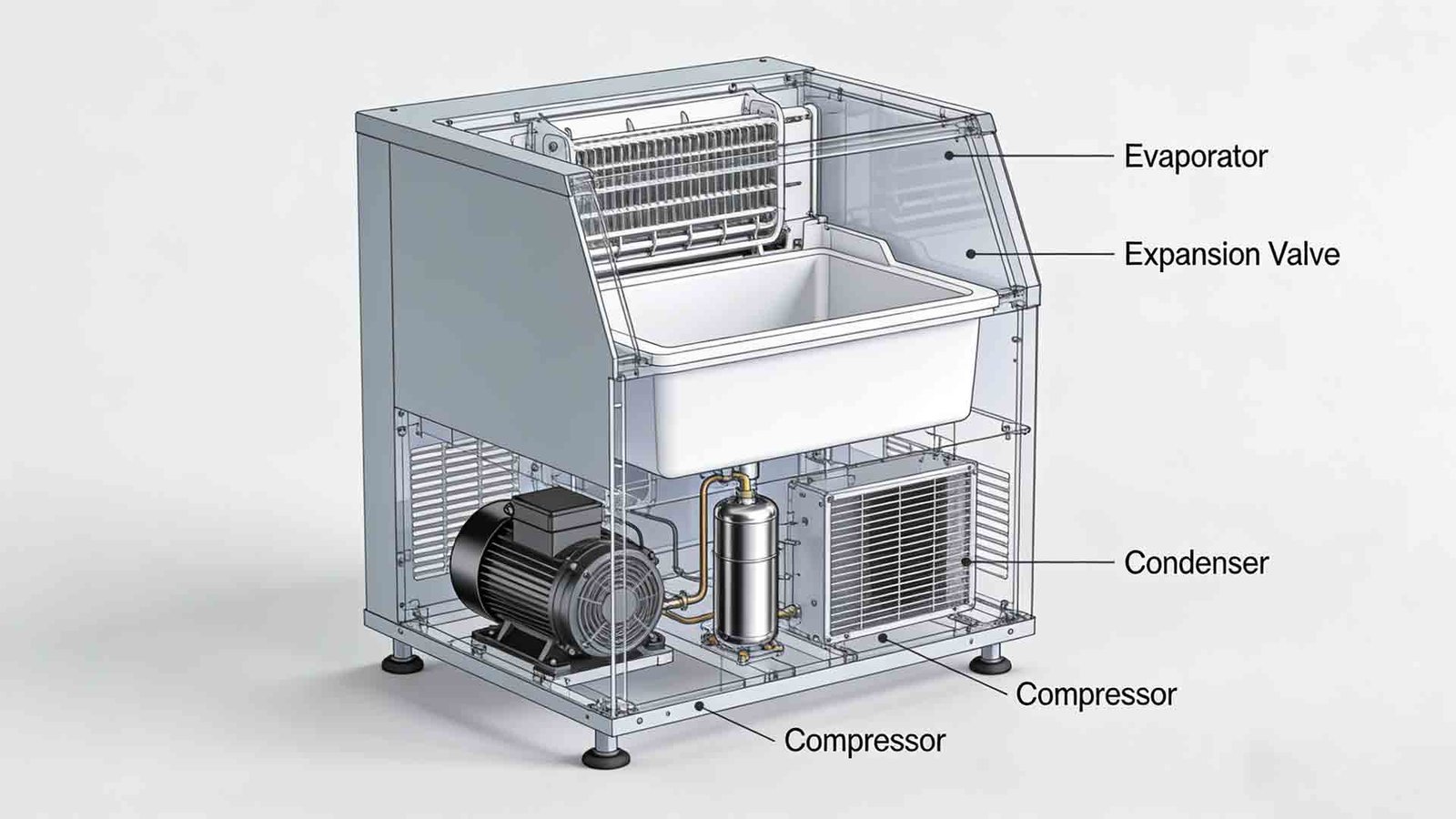
| Part or input | What it does | What you notice when it goes wrong |
|---|---|---|
| Compressor | Moves refrigerant gas | Unit runs but never freezes |
| Evaporator | Freezes water into ice | Thin or cloudy ice cubes |
| Water pump | Circulates water over plate | No ice forms on plate |
| Expansion valve | Controls refrigerant pressure | Frost builds on suction line |
| Harvest probe | Senses ice thickness | Machine stays in freeze cycle |
| Bin thermostat | Detects ice level | Machine stops filling too early |
If you’re unsure if a part is failing, consult the specific manual provided by the manufacturer for your model, as wiring and sensor locations vary by brand.
The Ice Making Cycle
- The water pump starts and pushes water over the evaporator plate, which is being cooled by refrigerant flowing through the internal coils.
- The water freezes in layers on the plate; this usually takes 15 to 30 minutes, depending on the ambient air and water temperature.
- Once the ice reaches the correct thickness, the harvest probe or timer signals the system to end the freeze cycle and start harvesting.
- A hot gas valve opens, sending warm refrigerant vapor directly from the compressor into the evaporator to loosen the ice slabs.
- The ice slides off the plate into the storage bin below, which typically takes 2 to 5 minutes once the warming starts.
- The machine resets the water pump and cooling cycle to begin the process again, provided the bin thermostat doesn’t detect a full bin.
Why Technical Failures Happen
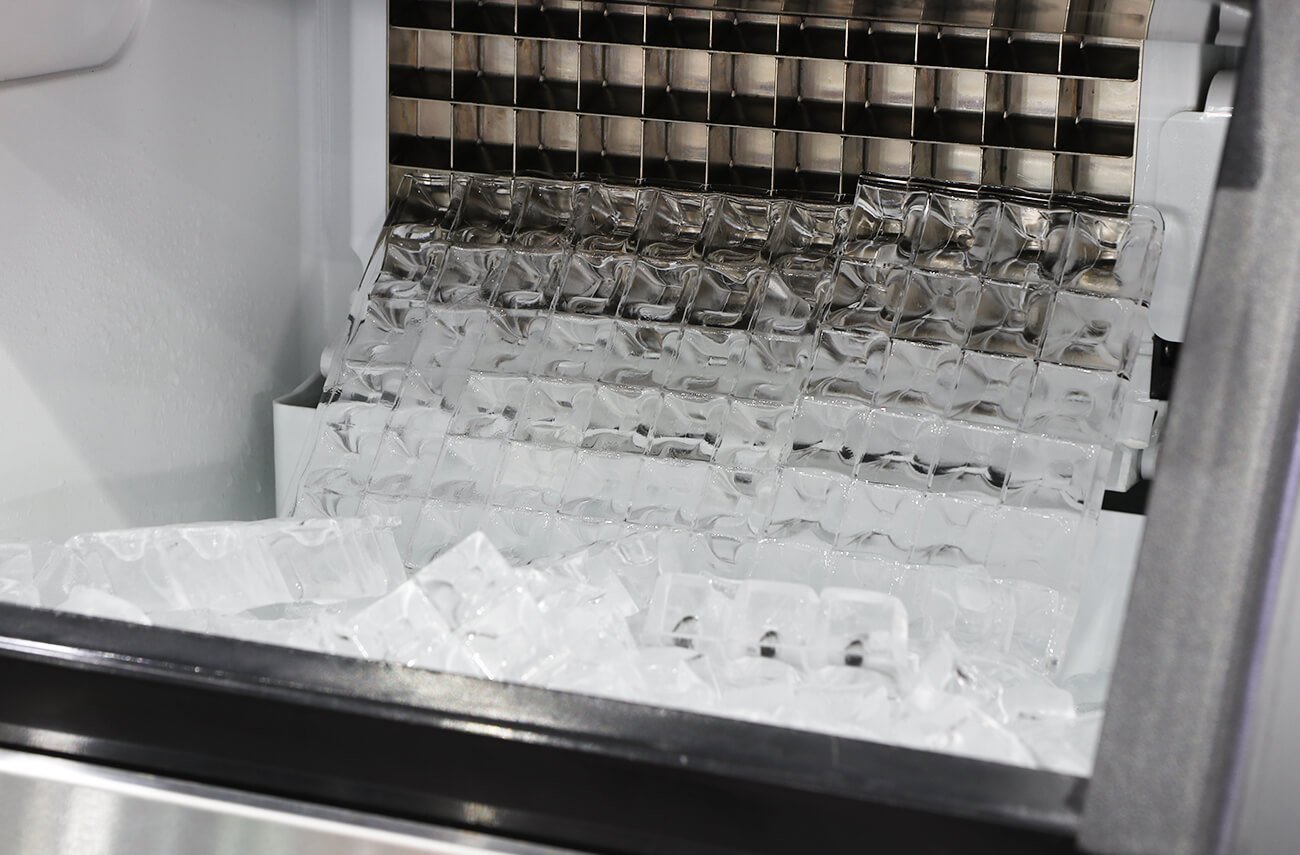
Identifying the mechanism helps you pinpoint why a machine stops producing ice. The most common mistake is failing to clean the water system, which leads to scale buildup. Scale acts as an insulator on the evaporator plate, preventing the heat transfer required to freeze water quickly. This forces the compressor to work longer, increasing energy consumption and potentially causing the motor to overheat. When the harvest probe is covered in mineral deposits, it can’t detect the ice thickness, causing the machine to either harvest too early or freeze solid. According to NSF International food equipment standards, regular sanitation is required to prevent biological growth and mineral accumulation that compromise safety. If your ice tastes strange or the cubes are misshapen, the issue may be a lack of internal cleaning or a mechanical component failure.
Factors You Control and Fixed Design
Things you can change
- Water filter replacement schedule to prevent scale.
- Cleaning the air filter to ensure proper airflow.
- Adjusting the ice thickness setting via the control board.
- Clearing space around the unit for ventilation.
Things fixed by design
- The cooling capacity of the compressor motor.
- The physical dimensions of the evaporator plate.
- The internal refrigerant charge and piping layout.
Any work involving the sealed refrigeration system requires a certified technician with an EPA license, as improper handling of refrigerant is illegal and dangerous. Don’t attempt to open the lines yourself, as this will void your warranty and risks chemical exposure.
Habits for Better Ice Quality
Keep the area surrounding the intake vents free of dust and grease to maintain airflow. If the air temperature around the machine exceeds 90 degrees Fahrenheit, production will drop significantly because the condenser can’t reject heat. Aim to replace your water filtration cartridges regularly to prevent mineral buildup on the evaporator. Finally, check the bin thermostat if the machine stops running while the bin is empty, as a faulty sensor can prevent the cycle from restarting. Following these steps helps the system run within its rated efficiency range for years.
Frequently asked questions
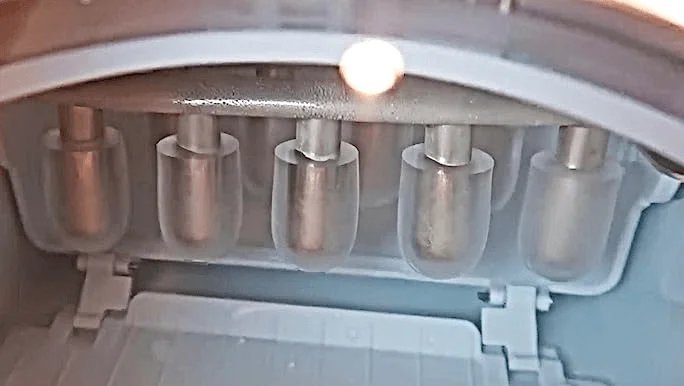
How long does one cycle take?
A full cycle typically lasts between 20 and 40 minutes, depending on your water temperature and the room’s ambient heat. Check your specific model label for the manufacturer’s expected cycle time under standard conditions.
Is it safe to use ice from a machine that hasn’t been cleaned?
No, it isn’t safe because mold and slime can grow in the water distribution tubes and storage bin if they aren’t sanitized. Always follow the cleaning schedule found in your owner’s manual to avoid bacterial contamination.
Why is my ice machine making thin ice?
Thin ice usually happens because the water pump is failing or the evaporator plate is covered in scale. If the plate is clean, the issue is likely a low refrigerant charge, which requires a professional technician to diagnose and repair.
What happens if the air filter is blocked?
The machine will overheat and stop producing ice because it can’t release the heat extracted from the water. You should clean or replace the air filter regularly to keep the system running efficiently.
How often should I clean the machine?
You should perform a deep cleaning as part of your usual maintenance to remove scale and slime buildup. Machines in areas with hard water often require cleaning whenever you notice buildup to prevent damage to the water pump and sensors.
Does the water supply pressure matter?
Yes, the machine requires a steady supply of water at the pressure specified in your manual to fill the reservoir correctly. If the pressure is too low, the pump will run dry and fail, leading to expensive repairs.
Commercial ice, in short
Proper maintenance is the most effective way to ensure your machine lasts its full lifespan, as most mechanical failures stem from neglected cleaning or poor ventilation. If you encounter errors on the display, note the code and consult the manufacturer’s troubleshooting guide before calling for service.
Related guides
Pingback: How Much Do Ice Machines Cost? Pricing Factors Explained
Pingback: How Does a Commercial Ice Machine Work: The Cooling Cycle