Countertop ice machines work by circulating water from a reservoir over a refrigerated metal evaporator, where it gradually freezes into layers before dropping into a collection bin. These compact appliances represent a marriage of plumbing and refrigeration technology designed to produce small quantities of ice consistently without requiring a permanent water line connection. Whether you’re looking for bullet-shaped ice or clear cubes, the machine cycles through freezing, harvesting, and sensing stages to maintain a steady supply for your beverages.
Key Takeaways
- Use filtered water to prevent mineral buildup and extend the lifespan of your internal components.
- Always allow the machine to sit upright for at least 24 hours after transport to let refrigerant settle.
- Clean the reservoir and ice tray monthly using a mixture of vinegar and warm water.
- Ensure the unit has at least six inches of clearance on all sides for proper heat dissipation.
- Empty the ice bin frequently, as the sensor may stop production if it detects a full basket.
How Countertop Ice Machines Work
The process begins when the water pump draws liquid from the bottom reservoir up to the evaporator assembly. This assembly consists of several metal fingers that are cooled by refrigerant circulating through coils. As water flows over these fingers, it freezes into the characteristic bullet shape.
Once the ice reaches the desired thickness, the machine triggers a harvest cycle. During this phase, hot refrigerant gas is diverted to the evaporator, warming the metal fingers slightly so the ice slides off and falls into the storage basket.
The Role of Refrigeration
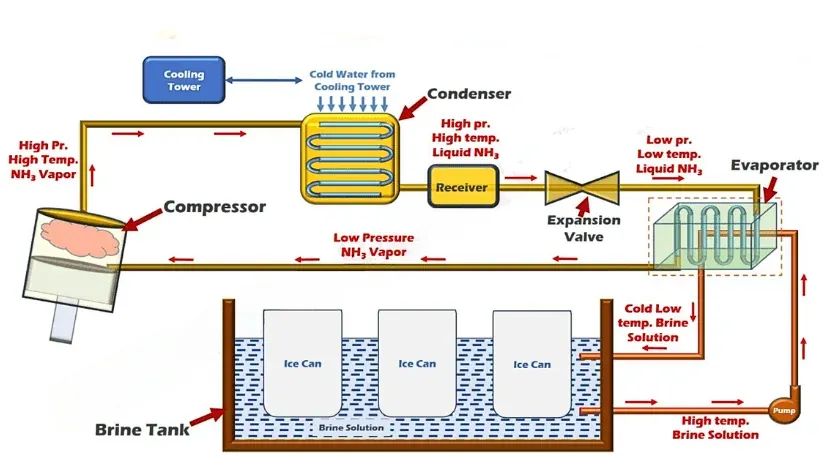
Most countertop units use a compressor-based system similar to a standard kitchen refrigerator. A compressor pushes refrigerant through a condenser, where it releases heat, and then through an expansion valve, where it cools rapidly. This cold refrigerant travels to the evaporator to freeze your water. Because these units generate significant heat while running, they require adequate ventilation. Warning: Blocking the side vents will cause the compressor to overheat, drastically reducing the machine’s efficiency and potentially damaging the internal motor.
Key Components of the System
| Component | Primary Function |
|---|---|
| Water Reservoir | Holds the supply of water for ice production |
| Evaporator Fingers | Metal rods where water freezes into ice |
| Compressor | Circulates refrigerant to achieve freezing temperatures |
| Infrared Sensors | Detect when the ice basket is full |
| Water Pump | Moves water from the reservoir to the trays |
How to Maintain Your Machine
Regular maintenance keeps your ice tasting fresh and prevents the buildup of scale. Minerals found in tap water can harden on the evaporator, causing the machine to work harder than necessary. You should perform a deep clean every three months.
Use a solution of one part white vinegar to ten parts water to flush the system, running the cycle twice before rinsing with clean water. According to the Food and Drug Administration, maintaining clean equipment is vital for preventing the growth of bacteria and other contaminants in food and beverage systems.
Troubleshooting Common Issues
If your machine stops producing ice, check the reservoir level first. Many models include a “Low Water” indicator light that triggers when the intake pump can no longer find water. If the machine is running but not creating ice, the ambient temperature might be too high. These machines perform best in rooms between 50 and 90 degrees Fahrenheit. If the room is too hot, the condenser can’t effectively dissipate heat, and the ice will melt as soon as it’s produced.
Troubleshooting Table
| Problem | Likely Cause | Solution |
|---|---|---|
| No ice production | Low water level | Refill the reservoir |
| Soft, slushy ice | High ambient heat | Move unit to cooler area |
| Loud grinding noise | Mineral scale buildup | Perform a vinegar flush |
| Unit won’t turn on | Blown fuse or loose cord | Check power outlet |
How Much Does It Cost?
Purchasing a countertop ice machine involves an initial investment followed by minor operational costs. Entry-level models typically range from $100 to $180, while premium units with self-cleaning features and clear-ice technology often cost between $250 and $500. Beyond the retail price, you should factor in the cost of distilled or filtered water. Using tap water is inexpensive but may increase the frequency of required descaling, adding to your long-term maintenance expenses.
Selecting the Right Model
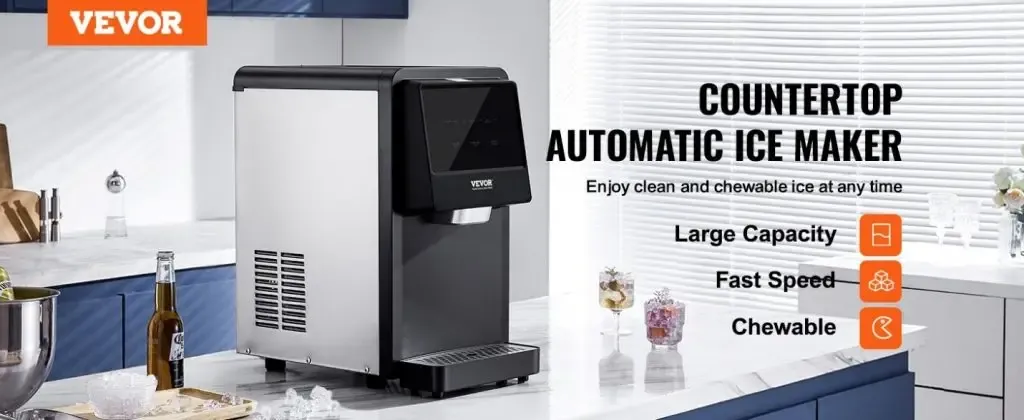
When choosing a machine, consider the daily output capacity. Most home units produce between 20 and 30 pounds of ice every 24 hours. Brands like GE Profile, Frigidaire, and NewAir dominate the market with various sizes and ice textures. If you prefer chewable, nugget-style ice, look for models specifically labeled as “nugget” or “sonic” ice machines, as these utilize a different mechanical process than the standard bullet-style machines.
Understanding the Harvest Cycle
The harvest cycle is the most critical part of the machine’s operation. If the cycle is too short, the ice will be thin and hollow. If it’s too long, the ice becomes too thick and may jam the harvest mechanism. Modern machines use thermistor sensors to monitor the temperature of the evaporator fingers, ensuring the harvest cycle begins at the exact moment the ice reaches the ideal density.
Related guides
Frequently Asked Questions
Why is my ice machine noisy?
A certain amount of hum from the compressor is normal. However, if you hear rattling or grinding, it usually indicates mineral deposits on the pump or a loose internal fan. Try descaling the machine with a vinegar solution. If the noise persists, check that the unit is on a perfectly level surface, as vibrations are amplified when the machine is tilted or resting on an uneven countertop.
Can I use distilled water?
Yes, using distilled water is highly recommended. It contains fewer minerals than tap water, which significantly slows the accumulation of scale on your evaporator fingers. This keeps your ice tasting clean and prevents the internal sensors from getting coated in calcium deposits. Avoid using softened water, as the high salt content can sometimes interfere with the freezing process and damage metal components over time.
How do I know when to clean?
You should clean your machine if you notice the ice coming out cloudy or if it develops an unusual taste. Most machines also have a “Clean” indicator light that triggers after a set number of operating hours. If your machine doesn’t have an indicator, mark your calendar for a deep cleaning every 90 days to ensure the internal water lines remain sanitary and free of sediment.
Why is my ice melting quickly?
Countertop ice machines don’t have insulated freezer bins. They’re designed for immediate use, not long-term storage. If you leave ice in the bin, it will eventually melt back into the reservoir. To keep ice frozen for longer periods, transfer the batch to a traditional freezer bag or container and place it in your main kitchen freezer as soon as the collection basket is full.
Can I leave it plugged in?
You can safely leave the unit plugged in as long as there’s water in the reservoir. Most modern machines have a standby mode that pauses production when the basket is full or the water is empty. However, if you plan to be away for more than a few days, it’s best to unplug the device, drain the reservoir completely, and leave the lid open to prevent mold growth.
Conclusion
Regularly checking the water reservoir and performing simple descaling tasks will ensure your machine provides a steady supply of ice for years. To get started, locate a flat, stable surface in a cool area of your kitchen and run one full cycle of water through the system to rinse out any factory residue before your first batch of ice.