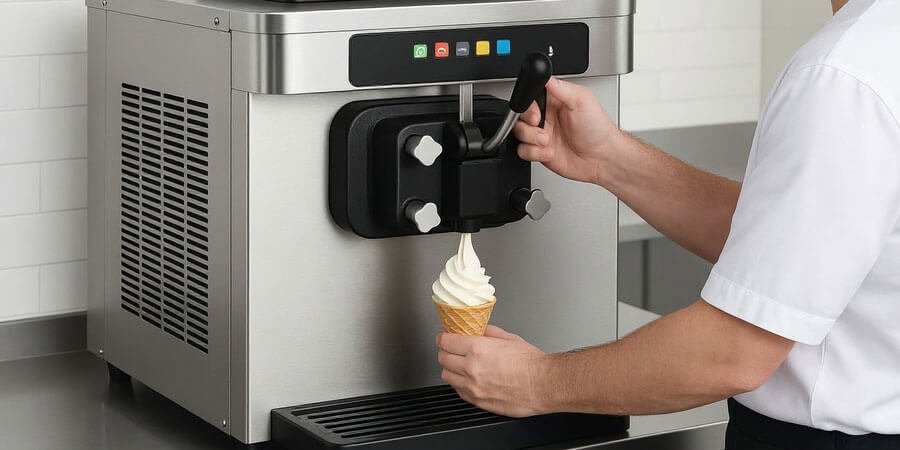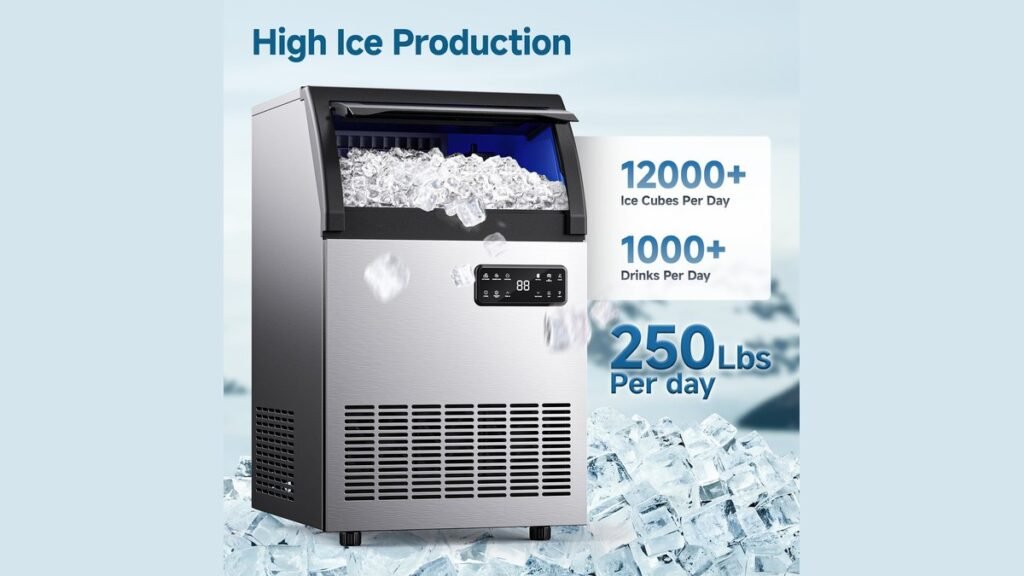
An ice machine makes ice by pumping a refrigerant through a system that pulls heat away from water until it turns into solid cubes or flakes. The process happens inside a sealed loop where the change of state from liquid to gas creates the cooling effect needed for freezing.
Parts that make the machine work
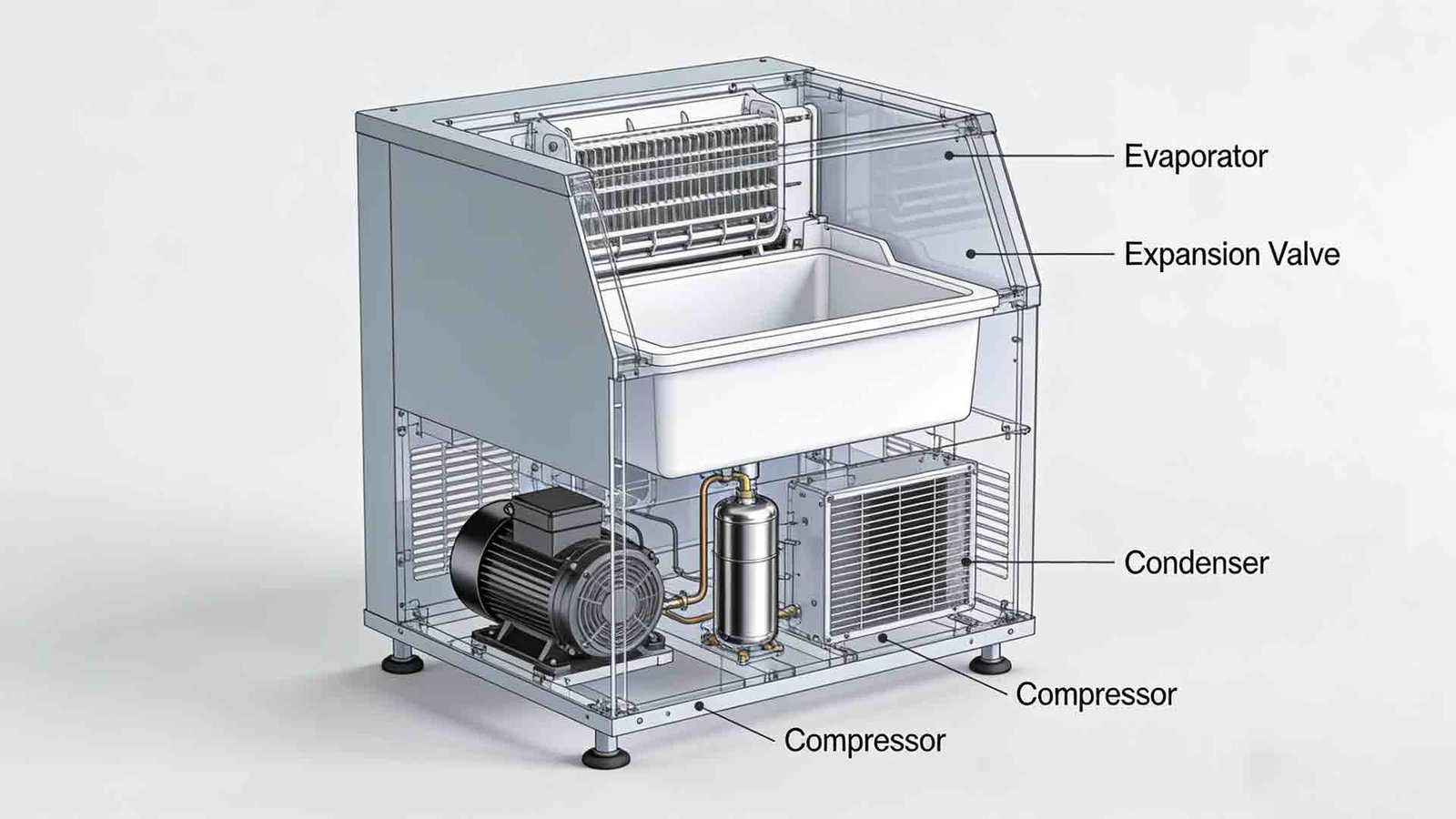
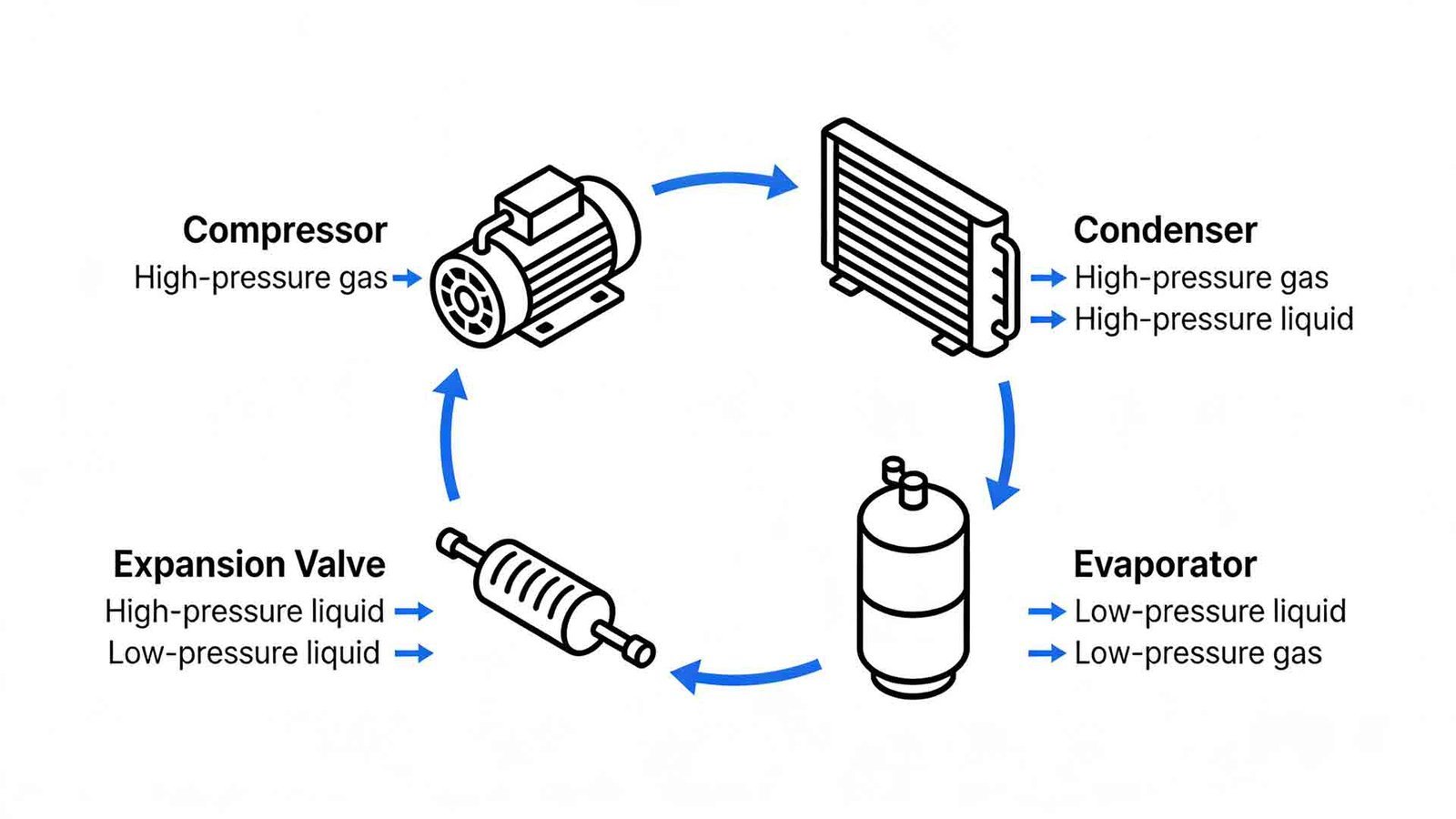
The system relies on several parts working together to move heat from the water to the outside air. If the machine is in a hot room, it must work harder to dump that heat, which often leads to slower ice production. You can check your specific model’s output in the ENERGY STAR commercial ice machine guide to see how your unit compares to standard efficiency ratings.
| Part or input | What it does | What you notice when it goes wrong |
|---|---|---|
| Compressor | Moves refrigerant gas | Loud rattling or machine won’t start |
| Evaporator | Freezes water into ice | Thin or cloudy ice cubes |
| Condenser | Releases heat outside | Machine runs but never freezes |
| Water pump | Moves water to tray | No water flow over evaporator |
| Expansion valve | Controls refrigerant flow | Frost buildup on copper lines |
| Thermostat | Senses bin temperature or harvest cycle | Machine fails to cycle or bin overflows |
How the freezing process works
The machine follows a set cycle to turn liquid water into solid ice and then release it into the storage bin. This cycle repeats automatically as long as the bin isn’t full.
- The water pump sprays water over the cold evaporator plate, which is cooled by the refrigerant running behind it.
- The water flows in a thin layer over the plate, gradually losing heat until it turns into solid ice layers.
- This process takes 15 to 30 minutes, depending on the ambient air temperature and the incoming water temperature of your supply.
- Once the ice reaches the correct thickness, the control board triggers a hot gas valve to warm the evaporator plate slightly.
- The ice sheet slides off the plate and falls into the storage bin below, which usually takes about 2 minutes to complete.
- The machine then resets its valves and restarts the water flow to begin the next batch of ice immediately.
Why cycle timing and temperature matter
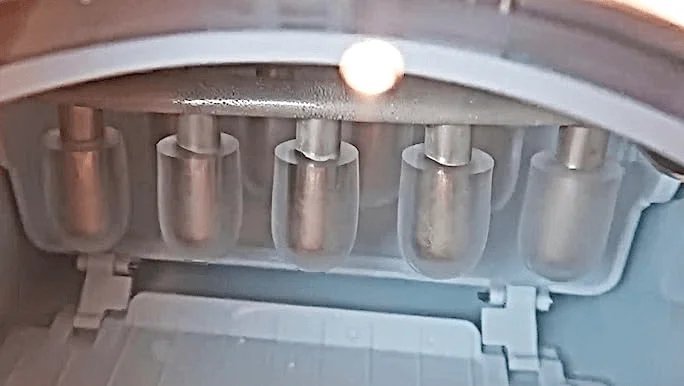
The efficiency of the freezing cycle depends heavily on the temperature of the water and the surrounding air. If the air in the room is above 90°F, the condenser can’t release heat efficiently, which causes the machine to take much longer to produce each batch. A common mistake people make is placing these machines in small, unventilated closets; this traps heat, forces the compressor to run constantly, and eventually causes the motor to fail. If your ice is coming out soft or mushy, it’s often a sign of improper water flow or a faulty harvest cycle. A machine that struggles to shed heat will also consume significantly more electricity than the manufacturer’s rated capacity. You must ensure the intake and exhaust vents have at least 6 inches of clearance to prevent this heat buildup.
Controls and design limits
Things you can control
- Clean the air filter monthly to allow proper airflow.
- Keep the water pressure within the range listed in your manual.
- Ensure the machine sits on a level floor for even freezing.
- Reset the control board if the machine stops mid-cycle.
Fixed design limits
- The evaporator plate size determines the maximum batch weight.
- Compressor capacity limits how fast heat can be removed.
- Internal sensors dictate the final thickness of the ice cubes.
If the machine requires internal repair, such as replacing a compressor or refilling refrigerant, you must contact a certified HVAC technician. A capacitor can hold a lethal charge even when the unit is unplugged, so never attempt to open the electrical housing or touch internal wiring yourself.
Getting more out of your unit
To keep your machine running well, perform a deep clean to remove mineral scale that slows down heat transfer, as the frequency depends on your usage and the owner’s manual. If your area has hard water, install a water filter to prevent calcium buildup on the evaporator plate, which acts as an insulator and makes the machine work harder. Always verify the bin sensor is clear of debris so the machine knows when to stop. If you notice the ice production rate dropping, check the condenser coils for dust; cleaning them with a soft brush can restore efficiency immediately.
Frequently asked questions
How long does an ice machine take to make a batch?
Most machines take 15 to 30 minutes per batch, but this time varies based on the ambient air temperature and the temperature of your incoming water supply.
Is it safe to drink the ice if the machine is old?
Yes, it’s safe as long as you follow the manufacturer’s recommended cleaning schedule to prevent mold and bacteria buildup inside the water lines and the storage bin.
What happens if the ice bin is full?
The machine automatically stops production when the bin sensor detects that the ice level has reached the top, preventing the unit from overflowing or jamming the mechanism.
How often should I clean the machine?
You should perform a deep cleaning periodically, as the frequency depends on your usage and the owner’s manual, or more often if you live in an area with hard water that causes quick mineral buildup on the evaporator plate.
Why is my ice machine making thin ice?
Thin ice usually happens because the water flow is restricted or the refrigerant level is low, which prevents the evaporator from reaching the necessary temperature to freeze a full cube.
Does it matter where I place the ice machine?
Yes, placement matters because the machine requires clear airflow around its vents to release heat. Blocking these vents in a cramped or hot space will significantly reduce the unit’s total output. Ensure you provide adequate clearance to maintain optimal performance and prevent overheating.
Conclusion
Keeping your machine clean is the best way to ensure your ice stays fresh and tastes great. You shouldn’t forget to descale the internal components every few months to prevent mineral buildup. If you follow this simple maintenance routine, you’ll enjoy a steady supply of cold cubes for years to come.