
Charging a commercial ice machine requires recovering remaining gas, pulling a deep vacuum, and weighing virgin refrigerant into the system’s high side as a liquid according to the manufacturer data plate. Ice makers are critical-charge appliances, meaning even an ounce of error disrupts ice production, freezes the evaporator, or damages the compressor.
Key Takeaways
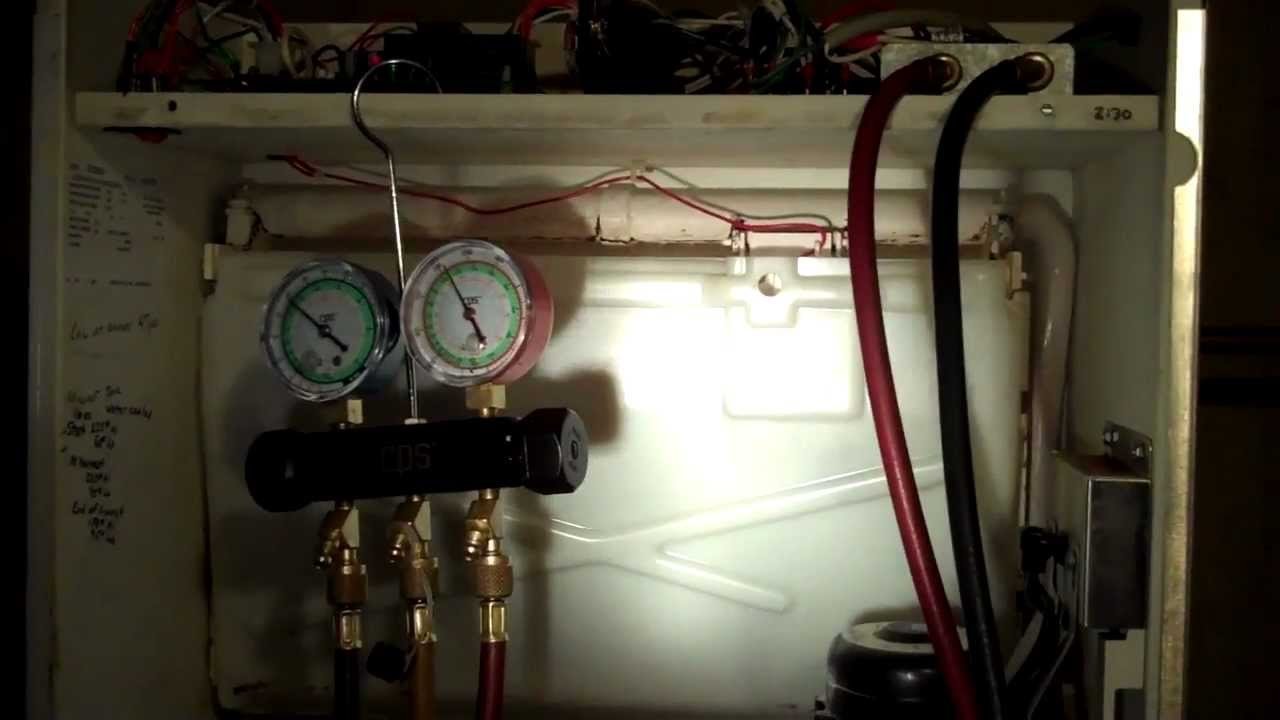
- Ice makers require weighing refrigerant to the exact ounce rather than charging by pressure or sight glass.
- Federal regulations mandate Section 608 certification before purchasing or handling regulated refrigerants.
- Always charge liquid refrigerant into the high side while the machine is powered completely off.
- Identifying and repairing the physical leak point must always happen before introducing a new charge.
- Evacuating the system below 500 microns ensures moisture and non-condensables won’t freeze inside the expansion valve.
Legal Rules for Handling Refrigerant
Handling fluorocarbon refrigerants requires adherence to strict environmental statutes. Under Clean Air Act regulations enforced by the EPA Section 608 guidelines, technicians must hold proper certification to purchase refrigerants, connect manifold gauges, or vent controlled substances.
Warning: Releasing refrigerant directly into the atmosphere is illegal. You must recover existing gas using a recovery machine and an AHRI-certified cylinder.
Critical Charge vs Comfort Cooling
Unlike residential air conditioners that tolerate slight refrigerant variances, commercial ice makers utilize a critical charge system. These appliances meter refrigerant using precise TXVs or capillary tubes.
Adding just half an ounce too much R-404A or R-134a causes high head pressure, thick ice bridges, and motor overheating. Undercharging leaves the freeze plate starved, generating hollow cubes or thin slabs.
| Metric | Ice Machine System | Central Air Conditioner |
|---|---|---|
| Charge Tolerance | ± 0.25 to 0.50 ounces | ± several ounces to 1 pound |
| Metering Method | High-precision TXV or cap tube | TXV or fixed orifice piston |
| Primary Charge Indicator | Factory data plate weight | Superheat and subcooling calculations |
| Operating Pressures | Highly dynamic (freeze vs harvest) | Relatively stable during runtime |
Tools Needed for the Job
Accurate charging demands precision refrigeration instruments. Standard automotive gauges lack the accuracy required for commercial machinery.
- Digital refrigerant scale with resolution down to 0.1 ounces (such as Fieldpiece or Robinair).
- Four-port manifold gauge with low-loss safety fittings.
- Two-stage vacuum pump capable of reaching deep vacuum levels.
- Digital micron gauge to measure system dehydration.
- Recovery unit and DOT-certified recovery tank.
- Electronic halogen leak detector or ultrasonic sniffer.
- Brand-specific virgin refrigerant cylinder.
Preparing the Machine for Service

Disconnect power to the ice maker before attaching tools. Remove the front panel to inspect the data plate.
Locate the factory data plate to find the factory refrigerant charge and the correct refrigerant type. Connect your recovery machine to the ports and capture residual vapor.
Pro Tip: If your ice maker only features sealed process tubes without service ports, install bolt-on piercing valves solely for recovery, then braze permanent copper access fittings before evacuation.
How to Charge Ice Machine Systems
Follow an exact sequence to ensure system purity and protect internal components.
Step 1: Repair Leaks and Pressure Test
Never charge a leaking machine. Pressurize lines with nitrogen to 150 PSI. Check joints and valves with bubble solution or a detector. Verify repairs with a pressure-decay test.
Step 2: Evacuate the Refrigeration Circuit
Connect your pump and gauge to service ports. Run the pump until the gauge reads below 500 microns.
The system must hold under 500 microns for ten minutes. A rise to atmospheric pressure denotes a leak, while a slow rise that levels off indicates moisture inside the system.
Step 3: Weigh the Virgin Liquid Charge
Place the tank on your digital scale according to its dip tube requirements. Blended refrigerants like R-404A, R-448A, or R-449A must always leave the cylinder as a liquid to prevent fractionation.
Close the manifold valve precisely when the scale display indicates the exact weight noted on the factory data label.
Verifying Machine Performance
Power the ice maker on and initiate a standard ice-making cycle.
Observe the evaporator freeze pattern. Once the machine initiates the harvest cycle, the hot gas valve will energize, dropping the ice sheet into the storage bin.
Diagnostic Troubleshooting Guide
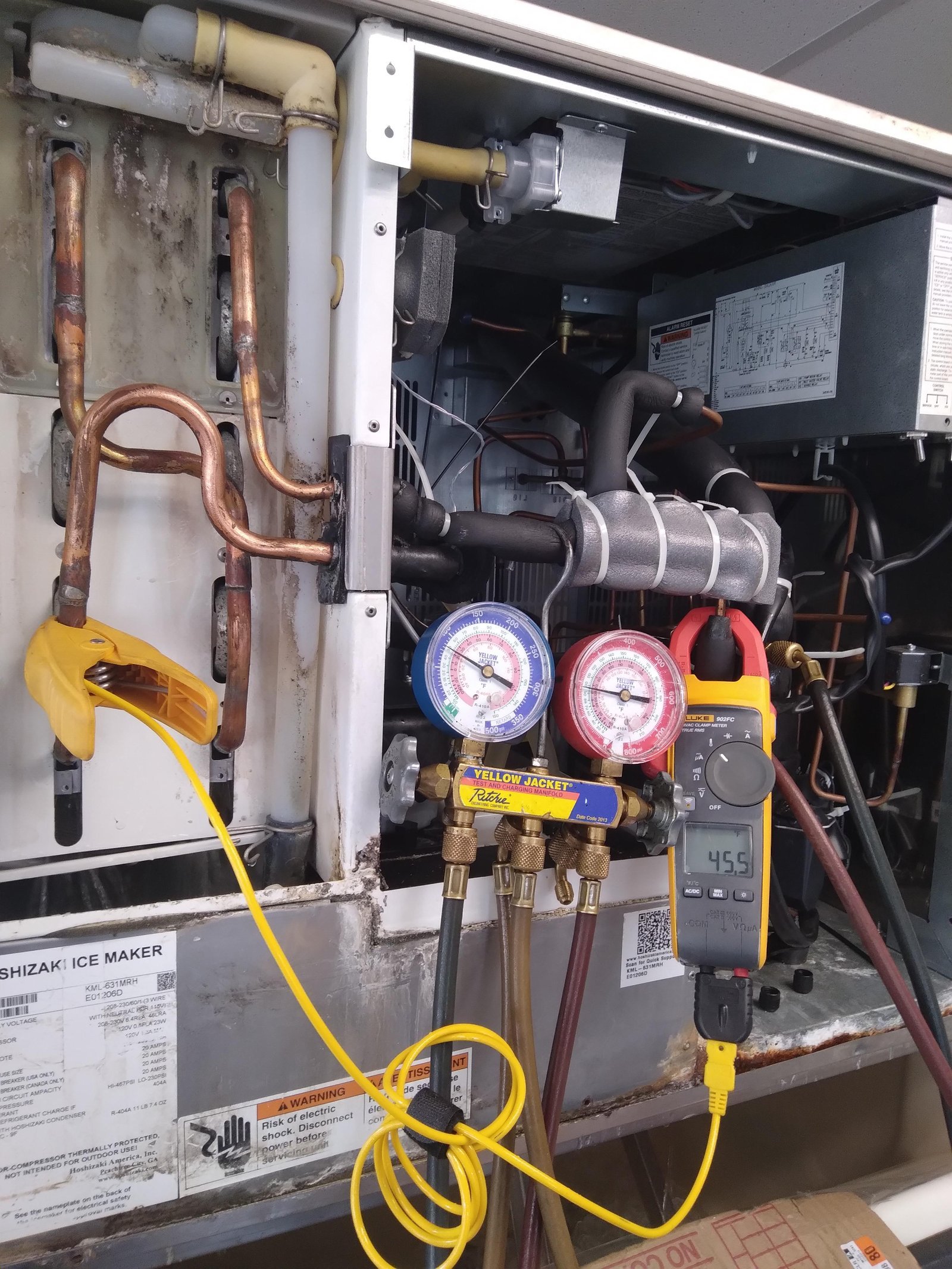
When ice production fails following a recharge, pressure and physical symptoms help identify underlying mechanical errors.
| Symptom | Probable Cause | Corrective Action |
|---|---|---|
| High discharge pressure, small cubes | Overcharged system | Recover all gas and weigh in exact charge |
| Evaporator freezes only at the inlet | Severe undercharge | Find leak, patch copper, re-weigh charge |
| Long freeze times, wet slushy ice | Non-condensables in lines | Evacuate to < 500 microns, recharge virgin gas |
| Compressor clicks on thermal overload | Liquid floodback or overcharge | Clear overcharge; inspect expansion valve bulb |
Related guides
- Where Can I Buy Ice Maker Machines: Retailer Guide
- How Much Are Commercial Ice Machines: Pricing Guide
- How Much for a Commercial Ice Machine: Cost Breakdown
Frequently Asked Questions
Can you charge an ice machine by suction pressure?
No, you can’t charge an ice machine by suction pressure. Commercial ice makers experience constantly shifting pressures as the evaporator cools water and switches to the harvest cycle. You must evacuate the circuit and weigh virgin refrigerant into the high side using an accurate digital scale.
Why must blended refrigerants be charged as liquid?
Blended refrigerants such as R-404A or R-448A consist of different chemical compounds with distinct boiling points. Charging these blends as a vapor causes fractionation, where the lighter chemicals boil off first, altering the cylinder’s chemical composition. Liquid charging ensures the compounds enter the ice maker in their correct, balanced proportions.
How do I know if my ice maker is low on refrigerant?
An ice maker low on refrigerant typically exhibits long freeze cycles, thin or hollow ice cubes, and uneven frost across the evaporator plate. You may also observe the compressor running hot while the suction line remains warm.
Can I top off an ice machine with refrigerant?
You should never top off an ice machine running on blended refrigerants. To restore operation, a technician must locate the leak, braze the tubing, pull a vacuum, and weigh in fresh refrigerant.
How much does it cost to charge an ice maker?
Hiring a certified refrigeration technician to recharge an ice machine typically costs between $300 and $850. This price includes system recovery, leak detection, pulling a deep vacuum, and introducing virgin refrigerant. Costs rise if technicians must rebuild valve assemblies, patch hidden evaporator leaks, or replace heavily contaminated filter driers.
Check your unit’s data plate now, clear any dust from the condenser fins, and ensure you have an accurate digital scale ready before recovering the existing system charge.
Pingback: How Does an Ice Machine Work: The Step-by-Step Process