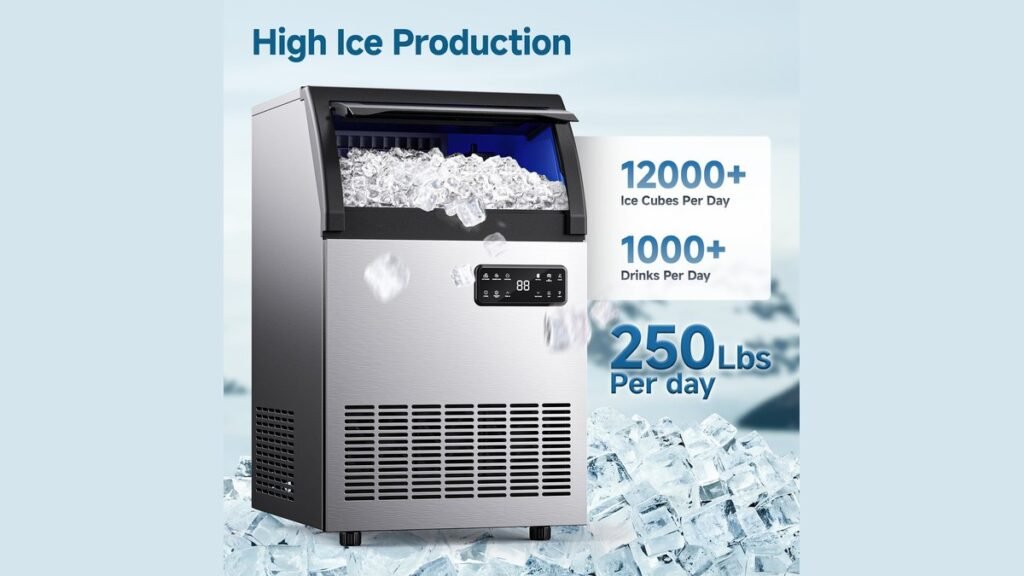
A standard commercial ice machine uses between 15 and 25 gallons of water to produce 100 pounds of ice, though the exact amount of water a commercial ice machine uses depends heavily on the cooling system and the age of the unit. Efficiency varies by brand, but newer Energy Star-certified models typically sit at the lower end of that range.
How much water commercial machines use
- Air-cooled machines generally use less water than water-cooled systems because they don’t require extra water flow for cooling the condenser.
- Check your machine’s data plate or Energy Star’s product finder to see the specific gallon-per-100-pound rating for your model.
- Water-cooled units consume significantly more water to regulate the machine’s temperature, often using several times the total volume of an air-cooled equivalent.
- High-efficiency models may drop usage to 12 gallons per 100 pounds, while older, unmaintained units often exceed 30 gallons.
- Always ensure the water pressure matches the manufacturer’s requirements, as incorrect pressure can lead to excessive water waste during the harvest cycle.
- If you notice the ice bin filling with water or the drain running constantly, the water inlet valve may need a professional inspection.
Why Water Consumption Varies Between Units
The primary driver behind water consumption is the method used to cool the condenser, which is the internal part responsible for removing heat from the refrigeration cycle. Air-cooled machines use a fan to blow ambient air over the condenser coils, requiring water only for the actual ice production process. In contrast, water-cooled machines use a continuous flow of water to pull heat away from the system, which significantly increases the total volume of water passing through the unit.
Another factor is the quality of the water supply and the presence of scale buildup. As minerals accumulate on the evaporator plate, the machine must run longer cycles to reach the freezing point, which consumes more water and electricity. If you’re unsure of your machine’s exact consumption rate, check the manufacturer’s manual or the label on the back of the unit. These documents provide the specific water usage metrics under standard testing conditions.
Situations Affecting Water Usage
| Situation | What changes | What to do instead |
|---|---|---|
| Water-cooled condenser | Higher heat load | Switch to air-cooled |
| High mineral content | Scale buildup rate | Install water filtration |
| Warm ambient air | Cooling cycle length | Improve room ventilation |
| Low water pressure | Valve performance | Check supply lines |
| Aging equipment | Efficiency rating | Replace worn components |
How to Manage Your Ice Machine
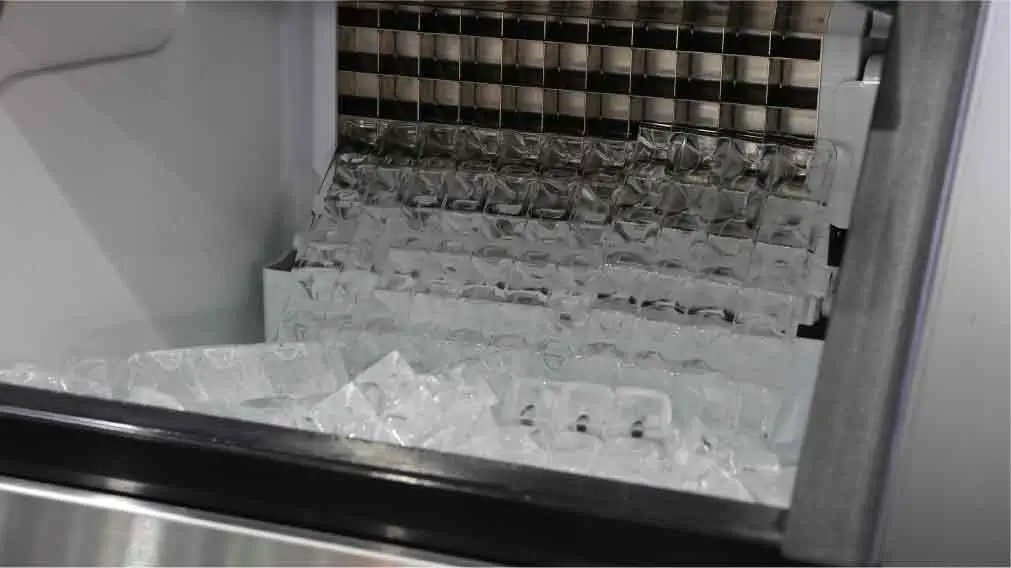
- Inspect the water inlet valve for leaks or clogs that cause the machine to run longer than necessary during the freeze cycle.
- Clean the air filters according to the manufacturer’s recommended schedule to ensure the condenser receives proper airflow.
- Test your water hardness using a basic kit and install a scale-inhibitor system if levels are high to keep the evaporator surface efficient.
- Verify that the drain line is clear and free of debris, as a slow drain can lead to water backup and inconsistent ice harvest.
- Adjust the bin thermostat to stop production once the bin is full, preventing the machine from cycling unnecessarily and wasting water and power.
- Schedule a technician to check the refrigerant levels and evaporator plate condition if the ice harvest time exceeds the manufacturer’s stated cycle length.
- Replace the water filter cartridge based on the manufacturer’s guidelines or when pressure drops indicate the filter is exhausted.
The Mistakes That Ruin Efficiency
- Ignoring blocked air vents forces the machine to run longer, which wastes water and increases the risk of premature motor failure.
- Using untreated hard water leads to rapid scale buildup, which creates an insulating layer that forces the machine to use more water for every pound of ice.
- Installing a machine in a hot, cramped closet restricts airflow, causing the condenser to overheat and drastically increasing water consumption in water-cooled models.
- Failing to level the machine properly causes uneven ice distribution, which can interfere with the harvest sensor and lead to wasted water cycles.
How much water does an ice machine waste if it isn’t leveled?
An uneven machine causes the water to pool on one side, which triggers the sensor incorrectly and can lead to excessive water dumping. This varies by model, so check the manufacturer’s manual for the required leveling tolerance, usually within a few degrees.
Does a water filter reduce the amount of water used?
Yes, a clean filter prevents scale buildup on the evaporator plate, allowing the machine to freeze ice at its peak efficiency. If the filter is clogged, the machine must run longer to produce the same amount of ice, increasing water use.
Is it safe to use a water-cooled machine in a small room?
It isn’t recommended because the heat load requires excessive water flow to keep the machine cool. If your room lacks ventilation, an air-cooled model with a remote condenser is a better choice for efficiency and safety.
How often should I check for water leaks?
Check for leaks periodically during routine maintenance. If you see water pooling under the unit or hear the water valve hissing when the machine is idle, call a technician to prevent water waste and potential floor damage.
Can I adjust the water flow manually?
No, the water flow is factory-set to ensure the correct ice thickness and cycle time. If you suspect the flow is too high or low, you must consult the manufacturer’s documentation to verify the settings before making any adjustments.
Why does my ice machine run more water in the summer?
Higher ambient temperatures make the cooling process less efficient, forcing the machine to run longer or use more water to dissipate heat. If the room temperature is consistently above 90 degrees Fahrenheit, the water usage will naturally increase compared to cooler months.
Proper maintenance is the best way to ensure your equipment runs as intended. By keeping the unit clean and the airflow clear, you keep water consumption at the levels stated by the manufacturer. If you suspect a mechanical fault, stop using the unit and contact a qualified service technician to avoid further damage or water loss.
Related guides