A working ice maker fills its mold with water, freezes it solid, and drops cubes into the bin within a 24-hour cycle. It’s safe to keep using your fridge while you check it. The fastest way to find out if your ice maker is working is to look inside the freezer and see if the metal feeler arm moves freely.
Tell if ice maker is working by signs
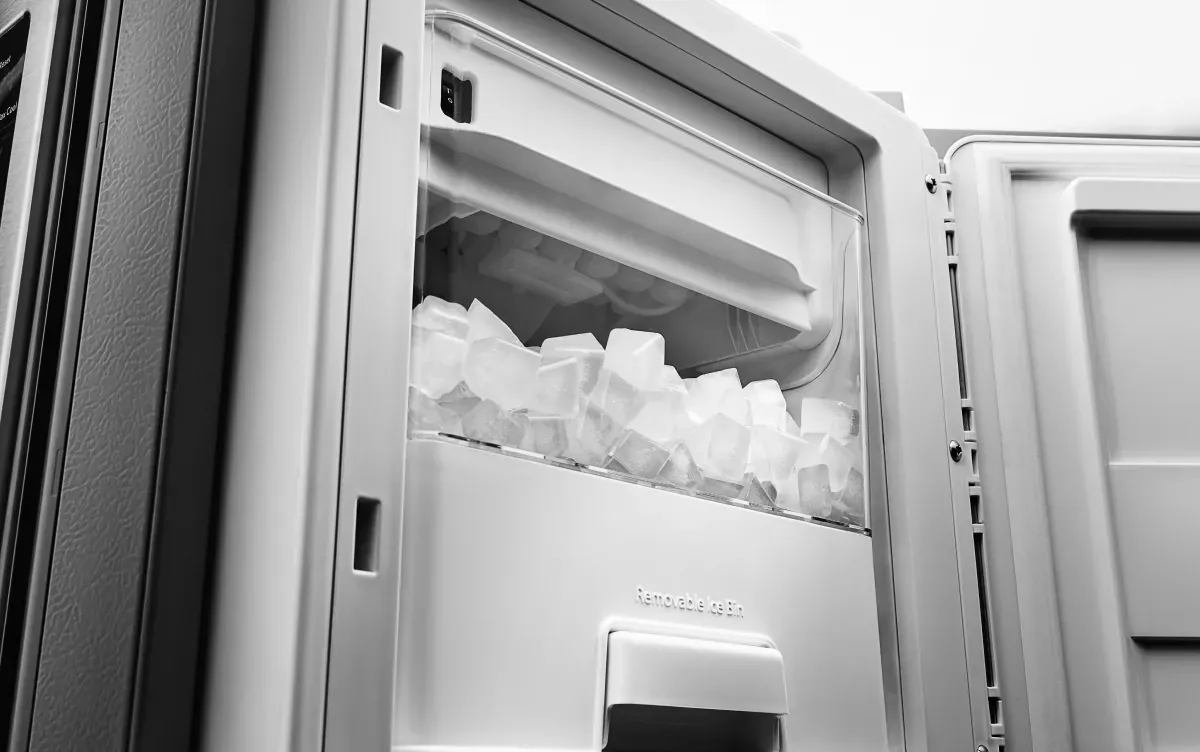
The clues are all inside the freezer compartment. Match what you see to the table below.
| What you notice | What it usually means | What to do first |
|---|---|---|
| Bin stays empty after 24 hours | Cycle isn’t running | Check the power switch |
| Ice stuck in the tray | Heater didn’t run | Feel the tray bottom |
| Cubes are tiny or hollow | Water flow is too low | Replace the water filter |
| No water reaches the mold | Valve or line is blocked | Check the supply valve |
| Loud clicking every few minutes | Motor keeps trying to turn | Turn the unit off now |
| Frost covers everything inside | Warm air leaks in constantly | Inspect the door seal |
| Arm won’t move down at all | Switch thinks bin is full | Push the arm gently down |
The power switch got bumped off
The shutoff switch sits right on the front of the ice maker assembly.
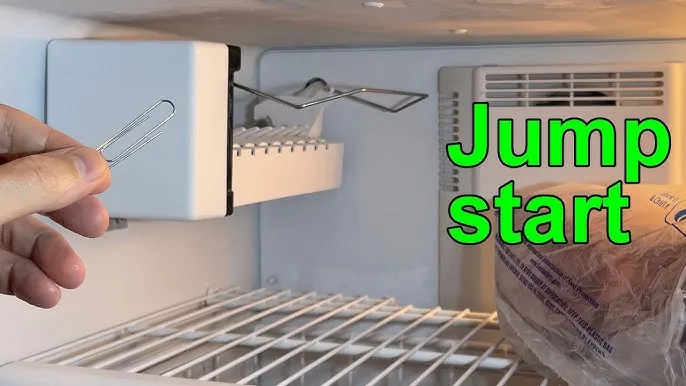
Look for a small wire arm or a plastic toggle on the front face. Push it down until it clicks into place.
If the arm is already down but nothing happens, press the reset button on the motor module. You’ll hear the gears start turning again.
Don’t leave the bin packed tight against that arm.
A clogged filter starves the mold
Water needs steady pressure to fill the mold completely before freezing starts. A dirty filter slows that flow down, leaving you with half-sized or hollow cubes instead of solid ones.
Swap in a new filter made for your exact fridge model. Run two gallons of water through the dispenser afterward to clear trapped air from the lines. Full, solid cubes will appear in the next batch.
Whirlpool recommends replacing the water filter every six months to keep water flowing properly.
The fill tube froze shut
Cold air leaking near the back wall turns the last drops of water inside the fill tube into solid ice. That plug blocks fresh water from reaching the mold entirely.
Unplug the refrigerator before touching anything near the water line. Pull the ice maker out just far enough to see the white rubber tube pointing down into it.
Squeeze the tube between your fingers. If it feels like hard plastic instead of soft rubber, ice is blocking it. Pour warm tap water slowly over the outside of the tube until it bends easily again.
This differs from a clogged filter because the dispenser outside still flows normally. Only the path going up to the freezer gets blocked. Once the tube thaws, the mold fills on the very next cycle.
When to call a repair tech for your ice maker
Stop checking things yourself if you hit any of these limits:
- Water pools under the fridge, since a cracked supply line risks floor damage.
- The motor hums loudly but never turns, meaning internal gears have stripped.
- You smell burning plastic, which points to an electrical short inside the module.
- The control board shows error codes you can’t clear by unplugging the fridge.
- Your fridge is under warranty, because unauthorized repairs may void coverage.
Replacing the water inlet valve or the motor module requires handling live wiring and pressurized plumbing. A licensed appliance technician handles those parts safely.
Frequently asked questions
How long does it take for an ice maker to make ice?
It takes about 90 minutes for one batch of cubes once the freezer hits 15°F (-9°C). A brand-new install needs 24 hours to chill fully and produce its first complete bin.
Can I pour water directly into the ice maker?
Yes, pour exactly 4 ounces of water into the mold to test if the freezing and ejection cycles work. This bypasses the water valve, proving whether the motor itself is still good.
Why is my ice maker making noise but no ice?
Loud clicking without ice means the motor tries to turn but the ejector blades are frozen in place. Thaw the unit completely with a hair dryer on low heat before restarting it.
Is it safe to leave a broken ice maker turned on?
No. A jammed motor draws continuous current and overheats if left running. Flip the shutoff arm up or unplug the fridge until you fix the jammed part.
Does the freezer temperature affect ice production?
Yes. The mold won’t release cubes unless the surrounding air stays below 15°F (-9°C). Check your freezer display; raising the setting even five degrees slows production significantly.
What happens if I don’t change the water filter?
Flow slows down too much to fill the mold completely. You’ll get hollow, cloudy cubes, and eventually the valve clicks without pushing any water through.
Can a full bin stop the ice maker?
Yes. Piled-up cubes push the metal feeler arm upward. That triggers the shutoff switch intentionally, pausing production until you scoop some ice out.
Do I need to clean the ice maker itself?
Wipe the mold and bin with warm soapy water as needed based on use, following your owner’s manual for guidance. Mineral scale builds up on the tray surface, making cubes stick and forcing the heater to work harder.
Conclusion
Every fridge cools differently, so the time between batches changes based on how often you open the door and how much food is inside. Check your specific model’s spec sheet to see how much ice it should actually produce. Leave the shutoff arm clear, swap the filter according to your usage and owner’s manual, and the bin stays full.