
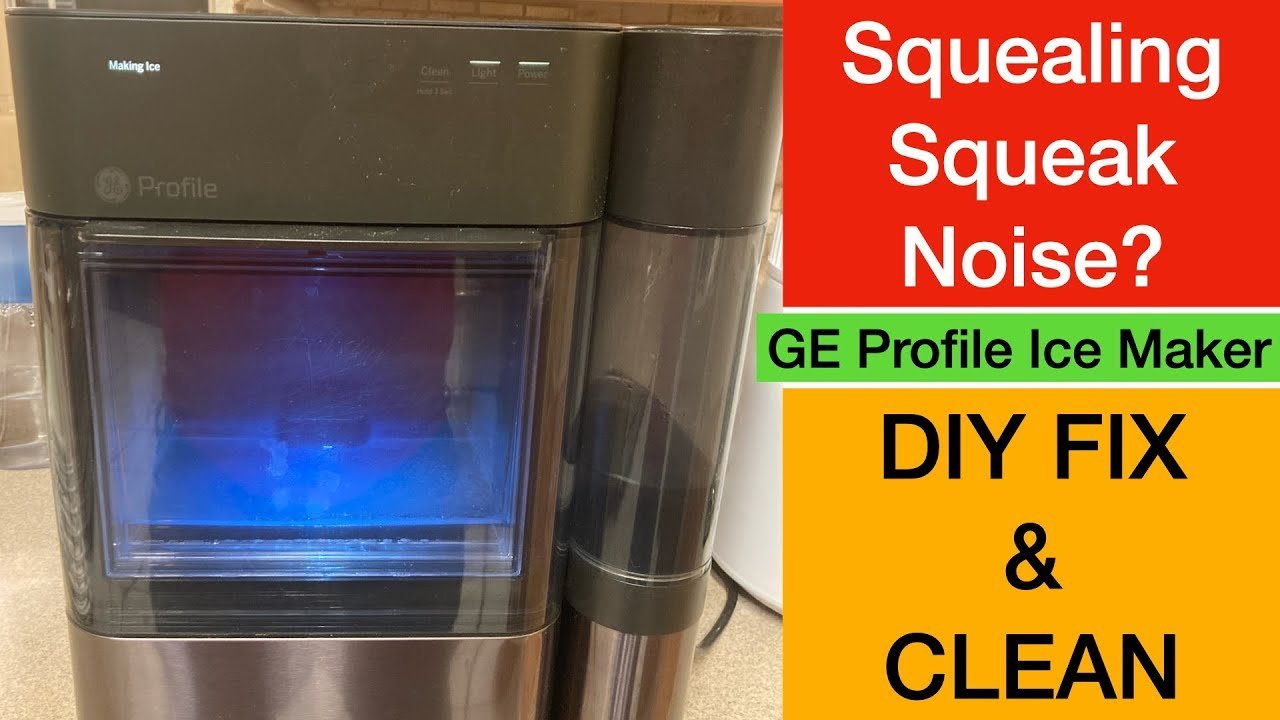
If you are asking why is my ge nugget ice maker making noise, mineral scale on the auger is a common cause. Running a cleaning cycle with descaling solution confirms this; if the squeak stops, hard water minerals caused the sound.
Why your nugget ice maker is making noise
| Cause | How common | How to confirm it | Fix it yourself? |
|---|---|---|---|
| Mineral scale on auger | Most common | Squeal stops right after descaling | Yes |
| Air trapped in lines | Common | Gurgling sounds with low ice output | Yes |
| Low water level | Common | Whining pump with an empty reservoir | Yes |
| Unit resting off-level | Occasional | Rattling stops when pressing the top | Yes |
| Hard ice jamming chute | Occasional | Grinding noise with no ice dropping | Yes with care |
| Failed gearbox or motor | Rare | Screeching persists after full descaling | No |
Mineral buildup scraping the internal auger
Hard tap water leaves calcium deposits inside the freezing cylinder as the machine chills water into soft nuggets. The rotating metal auger continuously scrapes ice shavings up the chute, and when lime builds up, the tight clearance vanishes. The metal auger then grinds against these hard mineral crystals, creating a sharp, high-pitched squeak or scraping noise. You can confirm this problem if the screech happens during active ice production but stays silent when the unit merely rests in standby mode.
To fix this, mix food-grade citric acid powder or vinegar with fresh water according to the manufacturer’s cleaning guide, or follow the GE Appliances cleaning recommendations for Opal ice makers. Run the built-in clean cycle for about 30 to 45 minutes, then drain and rinse the system twice. Citric acid descaling costs very little, and clearing the scale restores smooth, quiet rotation.
Trapped air pockets in the internal pump
Air bubbles circulating through the water lines cause a hollow gurgling, fluttering, or sputtering noise rather than the sharp metallic squeal produced by scale. Nugget ice machines pump water from the bottom reservoir up into the chilling compartment continuously. If the reservoir runs dry or refills too quickly, the pump draws in air pockets that rattle through the tubes. You can confirm this issue if the sound resembles a drinking straw sucking the bottom of an empty cup.
Fixing it requires purging the lines. Fill the reservoir to the max line, power the machine off, wait about 5 minutes, and restart it. If air stays trapped, switch the back toggle to clean mode for 3 minutes to circulate water without freezing, then switch back to ice mode.
Unlevel surface vibrating against the counter
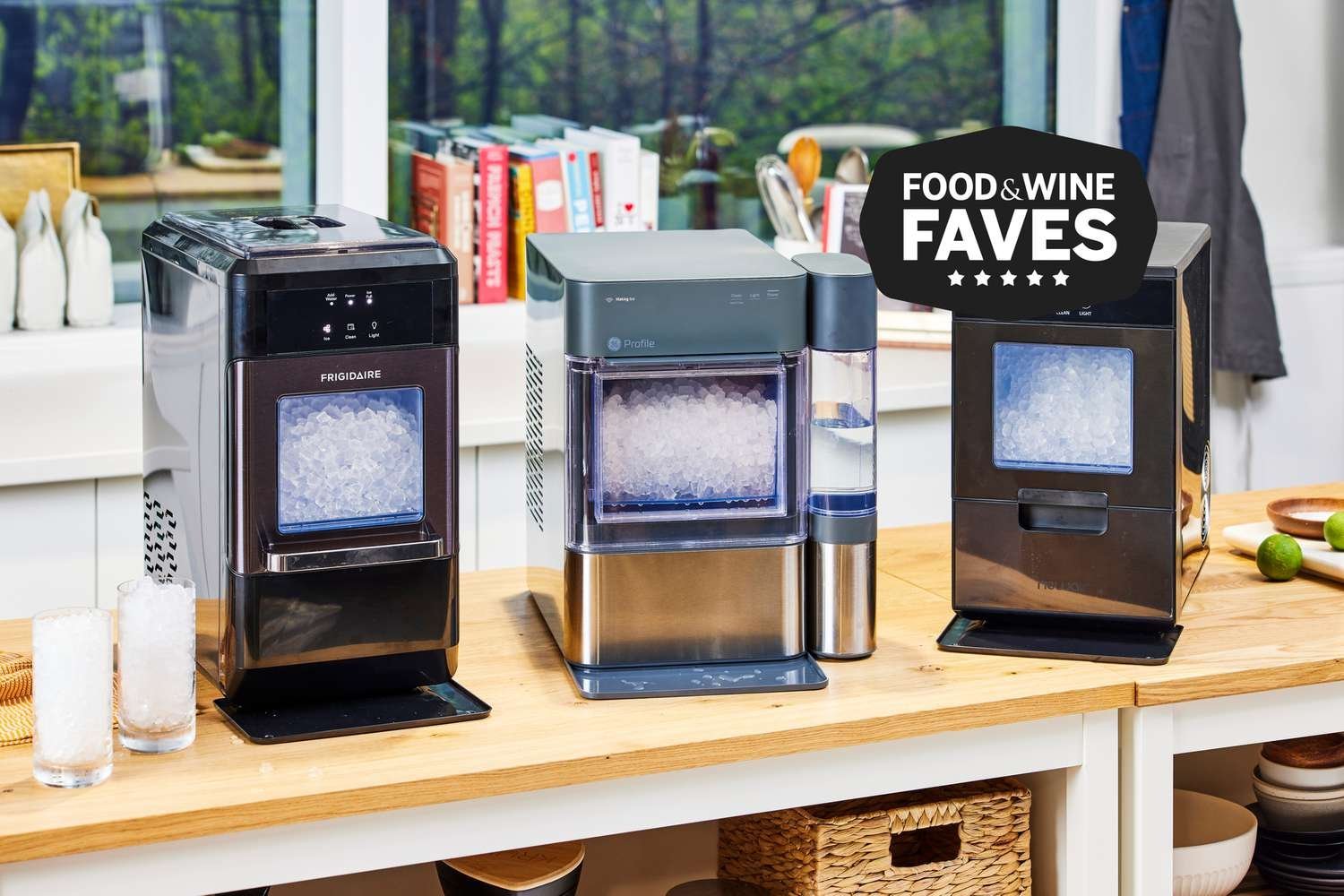
A machine sitting unevenly causes the internal compressor and condenser fan to vibrate heavily against the outer plastic shell. Unlike internal scraping or fluid gurgling, this defect produces a continuous buzzing or low humming sound that transfers straight into your countertop. If you press your hand firmly onto the top lid and the buzzing immediately softens, the unit is vibrating against its base.
Level the counter by adjusting the rubber feet or sliding a silicone mat under the housing. The machine requires at least 3 inches of clearance on all sides to allow proper ventilation. Without that space, the cooling fan spins at maximum speed and vibrates louder against nearby cabinets. Setting it level takes under 5 minutes and costs nothing.
The less likely causes
- Ice chunks jamming the top chute cause an aggressive clicking or snapping sound as the auger struggles to push flakes past the exit opening.
- A failing auger motor gearbox creates an unbearable screeching metal-on-metal sound that doesn’t improve after deep descaling cycles.
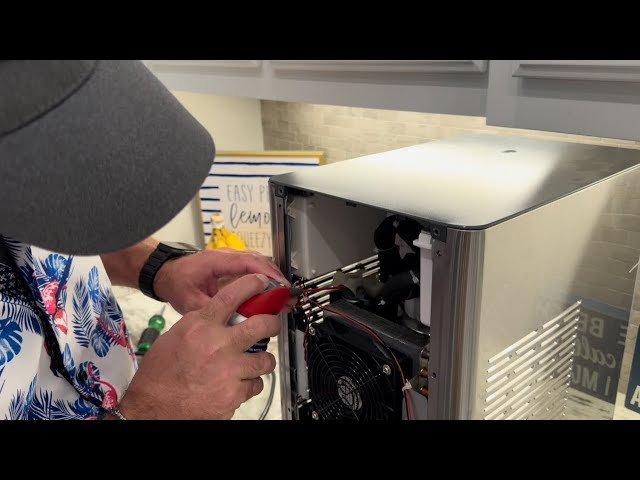
- Worn bearings in the condenser fan produce a loud, dry rattling whenever the cooling cycle runs, which requires taking the housing apart.
- An internal coolant leak leads to a continuous hissing tone paired with a complete stop in nugget production.
If you hear mechanical grinding inside the motor housing after descaling, stop running the machine. Opening sealed internal electrical cabinets risks electric shock and voids your warranty, so contact an appliance repair technician or GE support.
What a fix usually involves
Fixing this problem usually demands 30 to 60 minutes of time and simple household supplies like white vinegar, citric acid, or a leveling mat. If descaling and leveling don’t silence the machine, the issue stems from internal motor components. A replacement water pump or side reservoir represents a small expense, but a broken auger gearbox costs most of the price of a new one. Check your model number on the back label to get an accurate parts quote online.
Frequently asked questions
Can I run vinegar through my ice maker?
Yes, diluted white vinegar works well. Use only the manufacturer-recommended descaling solution or a mixture of water and food-grade citric acid, as vinegar can damage the internal components.
Why does my ice maker make a high pitched squeal?
Mineral scale on the auger causes this noise. Hard water creates lime deposits along the walls of the freezing cylinder, which grind against the spinning metal auger during ice production until you clear them with a descaler.
How long does a descaling cycle take?
About 45 minutes from start to finish. The clean cycle runs for roughly 30 minutes, and flushing the machine twice with fresh water takes another 15 minutes before you can safely freeze clean ice again.
Is it safe to use a squeaking ice maker?
No, you should clean it before continuing. Operating an auger covered in hard mineral scale forces the drive motor to work harder, which can strip internal gears and permanently burn out the motor mechanism.
What happens if I use tap water instead of distilled?
Tap water leaves behind calcium deposits very quickly. This buildup forces you to descale the machine regularly, and it speeds up friction noises inside the freezing chamber.
Does it matter if the ice maker isn’t level?
Yes, it matters for both noise and water flow. An unlevel machine rattles against the counter, prevents water from draining evenly across the freezing cylinder, and causes the pump to draw in unwanted air pockets.
Final Thoughts
If the rattling persists after a thorough cleaning, it’s likely time to reach out to a professional technician for an inspection. They’ll be able to check the internal motor or fan for wear. Don’t wait too long to call, as addressing these minor issues early won’t just save your machine—it’ll save you money.
Related guides
Pingback: How Much Is an Ice Maker: Pricing for Portable and Built-in
Pingback: Ice Maker How Does It Work: The Step by Step Process