
A commercial ice machine works by circulating water over a chilled metal evaporator plate, where it freezes into layers until a harvest cycle releases the ice into a bin using a refrigeration system to lower temperatures rapidly.
Components of Ice Production
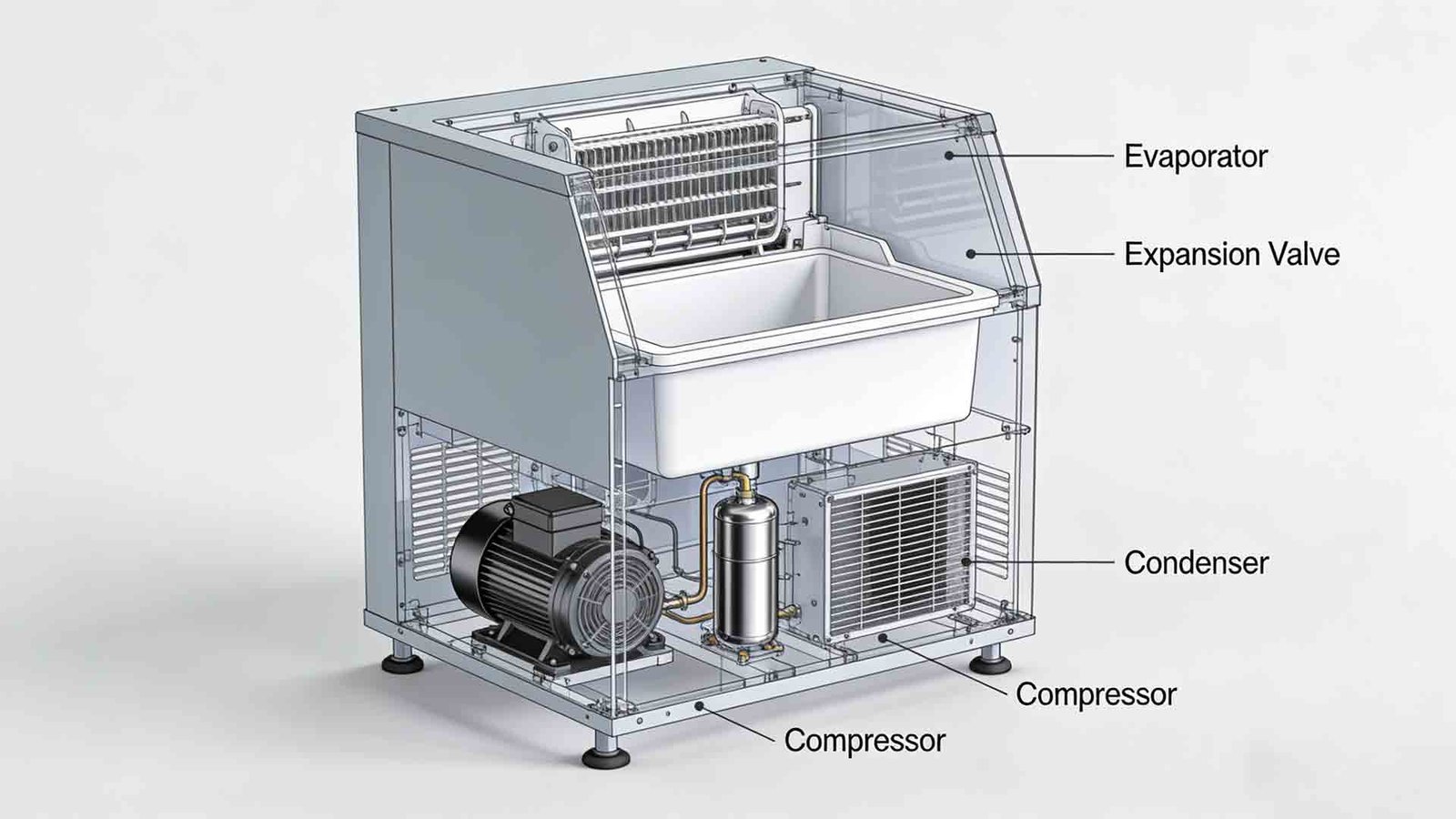
| Part or input | What it does | What you notice when it goes wrong |
|---|---|---|
| Water pump | Moves water to evaporator | Ice forms slowly or unevenly |
| Evaporator plate | Chills water into ice | Ice cubes are thin or misshapen |
| Compressor | Circulates refrigerant gas | The unit runs but stays warm |
| Harvest probe | Senses full ice thickness | Machine doesn’t drop ice cycles |
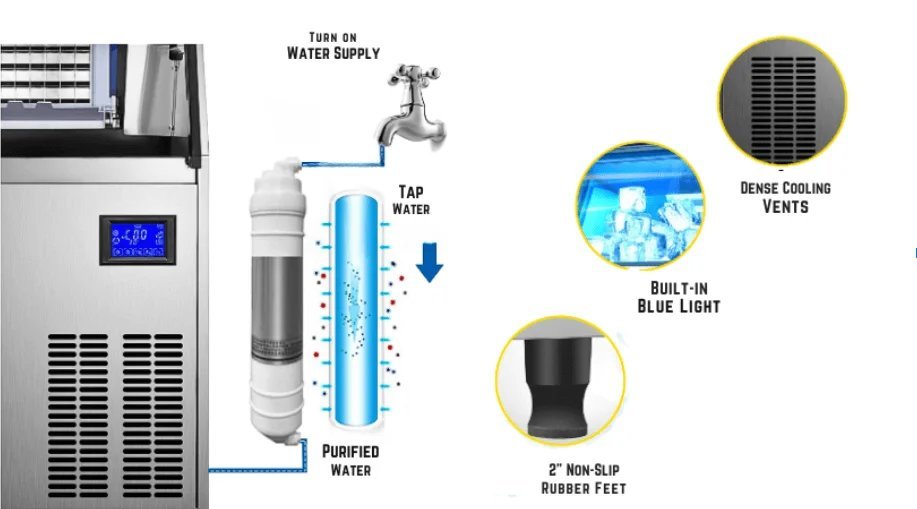
| Water filter | Removes minerals and dirt | Scale buildup or bad tasting ice |
Check your specific equipment documentation or the official manufacturer page for exact part names, as locations vary by model.
How Does a Commercial Ice Machine Work: The Cycle
- The controller board starts the cycle by opening the water inlet valve to fill the reservoir to the required level.
- The water pump begins circulating water across the evaporator grid, which the refrigeration system has already cooled to freezing temperatures.
- As the water flows over the chilled surface, it gradually freezes into layers, building the ice cubes over 15 to 30 minutes.
- A sensor detects when the ice reaches the set thickness, signaling the machine to switch from the freeze to the harvest cycle.
- Hot gas from the compressor enters the evaporator to warm the plate briefly, allowing the ice sheet to slide off the grid.
- The ice falls into the storage bin, and the machine resets to begin the next cycle automatically if the bin is empty.
Why Technical Failures Happen
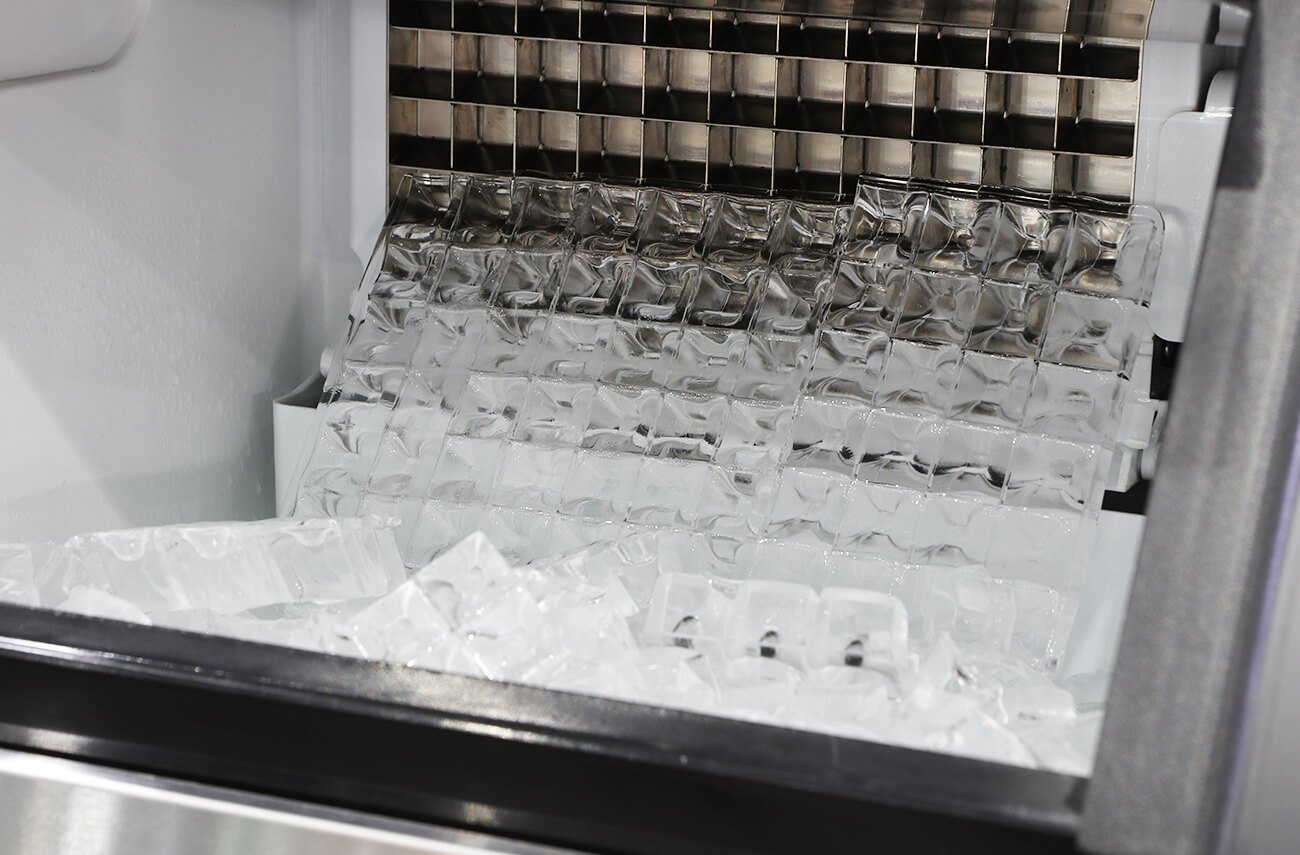
The mechanism relies on a precise balance between water flow and refrigerant temperature. If the evaporator plate develops mineral scale, the ice can’t freeze evenly, leading to thin or “bridged” cubes that fail to fall during the harvest cycle. This is a common issue in areas with hard water, and NSF International’s equipment standards provide guidance on why sanitation and clean surfaces are vital for consistent performance. When the harvest probe is dirty, it can’t sense the ice thickness correctly, causing the machine to either harvest too early or freeze until the water supply runs dry. If you see the machine running but no ice appears, the issue is often a failed compressor or a refrigerant leak, which requires a certified technician to resolve safely.
Operational Limits and Maintenance
Things you can control
- Replace the water filter regularly to prevent mineral buildup.
- Keep the air intake vents clear of dust to allow proper cooling.
- Sanitize the food zone per the manufacturer’s schedule to prevent slime growth.
Things fixed by design
- The refrigerant type is sealed inside the system and can’t be changed.
- Electrical components like capacitors hold dangerous charges and require professional service.
If you aren’t trained in refrigeration repair, don’t attempt to open the machine housing or test electrical parts, as a capacitor can hold a lethal charge even when the power is unplugged.
Habits for Better Performance
Consistent ice quality depends on how well you manage the environment surrounding the unit. First, keep the ambient air temperature below 90 degrees Fahrenheit, as higher heat forces the compressor to work harder and lowers the daily ice yield. Second, inspect the water pressure to ensure it meets the manufacturer’s minimum requirement, usually 20 to 80 PSI, to prevent cycle interruptions. Third, wipe down the ice bin weekly with a food-safe cleaner to stop bacteria from settling in the corners. Finally, if your machine has a remote condenser, verify the fan spins freely during the summer months to avoid overheating the system.
Frequently asked questions
How long does a cycle take?
Most machines complete a full cycle in 15 to 30 minutes, but this depends on the ambient air temperature and the water temperature. If the room is very hot, the machine will take longer to freeze each batch of ice.
How often should I clean the machine?
Check your specific manual for the correct cleaning solution.
Is it safe to use ice if the machine is dirty?
No, you should stop using the ice if you see mold or slime, as these can contaminate the food supply. You must sanitize the unit according to the manufacturer’s instructions before resuming normal use.
Why is my ice machine making thin ice?
Thin ice usually happens because the water flow is too high or the evaporator plate is dirty. Inspect the water distribution tubes for clogs or mineral buildup that might be blocking the flow of water across the cooling grid.
What happens if the power goes out?
The machine will stop immediately and reset its cycle once the power returns to the unit. You may need to clear the existing ice from the evaporator plate if the power failure occurred during the harvest cycle.
Does the ice machine need a drain?
Yes, every machine requires a gravity drain or a pump to remove rinse water during the harvest cycle. Without a proper drain, the reservoir will overflow and cause water damage to the surrounding floor area.
Commercial ice, in short
Keeping your equipment clean is the best way to ensure it stays reliable for years. You shouldn’t wait for a breakdown to schedule a professional inspection. Reach out to a local technician today to check your filters and coils; they’ll help you avoid costly repairs and keep your ice crystal clear.
Pingback: How Much Is an Ice Machine Business: Total Startup Costs
Pingback: How Much Are Ice Machines: Pricing for Portable
Pingback: How Much for a Ice Machine: Price Ranges and Cost Factors