
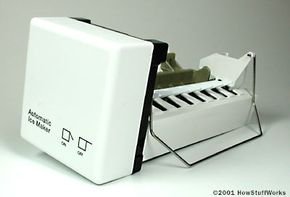
To understand how do ice makers in freezers work, consider their mechanical cycle: an electric valve fills a mold with water, the freezer chills it, a heater loosens the cubes, and a sweep arm pushes them into a bin. The machine repeats this process automatically until the bin is full.
How do ice makers in freezers work?
| Part or input | What it does | What you notice when it goes wrong |
|---|---|---|
| Water inlet valve | Sends tap water into the mold | No ice, or water puddles inside freezer |
| Thermostat sensor | Measures mold temperature to trigger harvest | Harvest cycle never starts or runs early |
| Mold heater | Warms the tray to loosen ice | Ejector arm stalls against stuck cubes |
| Ejector blades | Pushes loosened ice into the bin | Ice stays trapped inside the tray |
| Shut-off bail arm | Stops the cycle when bin is full | Ice overflows the bucket completely |
| Fill tube | Guides water from valve into mold | Frozen spout blocks fresh water flow |
What happens, step by step
- A solenoid valve opens for about 7 seconds, letting household water pressure send roughly 4 ounces of water into the mold.
- Cold freezer air circulates around the aluminum tray, freezing the water solid over roughly 60 to 90 minutes at 0°F.
- An internal thermostat reads the tray temperature; once it drops to about 10°F, it triggers the small electric drive motor.
- A low-wattage heating coil underneath the mold turns on for roughly 1 to 2 minutes, melting the outer edges of the ice.
- The motor rotates a shaft with ejector blades, sweeping the loosened crescent cubes up and out of the tray cavities.
- The ejector sweeps the cubes forward onto a plastic stripper plate, which drops them directly down into the collection bin below.
- As the motor finishes its turn, the wire bail arm lifts and falls to measure the ice level in the bucket.
- If the arm drops fully, the switch triggers the water valve again to start another cycle; if blocked, it stops.
Why this matters when something goes wrong
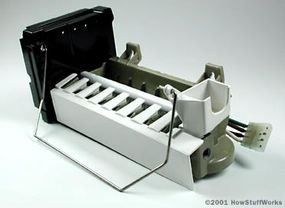
The harvest sequence depends entirely on temperature before mechanical movement begins. If the freezer runs too warm, the harvest never starts. A common mistake people make is replacing a working ice maker when their freezer runs at 15°F instead of 0°F, wasting money on unneeded parts. According to the FDA refrigerator temperature guide, freezers should stay at 0°F (-18°C) to keep food safe and appliances running properly.
A symptom points straight to a specific part. If cubes are small or hollow, low water pressure or a partially clogged filter starved the fill tube. If the ice maker hums and stops, the mold heater failed to loosen the ice, trapping the blades. Here is a clear decision rule: if the tray stays dry, inspect the fill valve and supply line; if the tray holds solid ice that never dumps, check the mold thermostat or motor.
What you can change, and what you cannot
What you can adjust
- Bin capacity control: raise the wire arm manually to pause all ice production during vacations.
- Freezer compartment temperature: adjust your main thermostat between -2°F and 0°F to control freeze speed.
- Cube size dial: adjust the small plastic screw on the module head to change water fill time by seconds.
- Water filtration: replace the inline cartridge regularly to maintain steady water pressure.
Fixed factory design limits
- Motor rotation speed: the internal harvest gear moves at one set speed driven by its synchronous motor.
- Tray freezing pattern: cubes freeze from the outside in, which naturally traps tiny air bubbles in the core.
- Water line heating: the small fill tube lacks internal defrost wires and can freeze if water seeps slowly.
This appliance isn’t for people seeking completely clear, cocktail-grade ice spheres, because residential trays freeze water quickly from all sides. A trade-off of this compact design is noise: the clicking gears and dropping ice are completely normal. Don’t attempt electrical testing on live harness plugs without an insulated multimeter and basic appliance training; call a certified technician if you detect scorching or electrical burning smells.
Getting more out of it
Set your freezer to 0°F, because warmer air extends the freeze time beyond 90 minutes. Level your refrigerator carefully with a spirit level; an uneven tilt causes slanted, irregular cubes and water spillage. Dump old cubes if they sit unused for over 3 weeks, as bin ice shrinks and absorbs food odors over time. Inspect the plastic water supply tubing behind the unit periodically; swap brittle plastic lines for braided stainless steel hoses to prevent sudden leaks. Note that exact fill times and valve fittings vary by model, so check your cabinet label for the correct schematic.
Frequently asked questions
Why does my ice maker produce hollow cubes?
The fill time was insufficient or the water flow was restricted. If the mold receives only half its normal 4 ounces of water, the liquid freezes along the edges before the center can fill.
How long does an ice maker take to make one batch?
About 90 minutes under ideal conditions. A normal cycle runs between 75 and 120 minutes when the freezer stays at 0°F, but warmer compartment air will stretch that time significantly.
Can a clogged water filter stop the ice maker from working?
Yes, restricted water flow stops the tray from filling properly. A clogged filter restricts flow, which can result in undersized or hollow cubes because the mold doesn’t fill completely during the timed cycle.
Is it safe to leave an ice maker running while away from home?
No, shut off the ice maker arm and supply valve before traveling. If a plastic line cracks or the fill valve sticks open while you’re away, continuous water flow can flood your kitchen.
What happens if the shut-off arm gets stuck in the up position?
The unit stops cycling entirely. The internal switch thinks the collection bin is completely full of cubes, so it won’t open the water valve or spin the harvest ejector blades.
Does low home water pressure affect cube quality?
Yes, Low household water pressure can result in undersized cubes because the flow rate is insufficient to fill the mold during the fixed fill time. The timed fill valve expects steady pressure, so low flow delivers too little water during its standard 7-second window.
Final Thoughts
If you notice your cubes are tasting a bit stale, it’s usually time to replace the water filter. Keeping that filter fresh ensures your ice stays crisp and clean. You’ll find that a quick swap every six months keeps everything running smoothly, so you won’t have to worry about any funny flavors.
Pingback: How to Manually Cycle Ice Maker: Simple Reset Instructions
Pingback: How to Operate Ice Maker Systems: Step-by-Step Guide
Pingback: How to Turn on Ice Maker in Freezer: Easy Step-by-Step Guide