A refrigerator ice maker fills a mold with water, freezes it into cubes, and pushes them into a bin.
Parts that make the refrigerator ice maker work
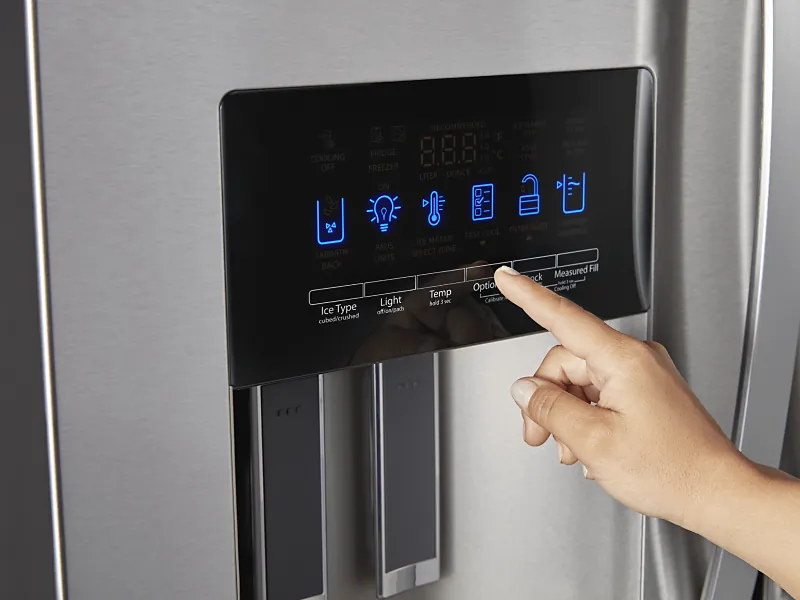
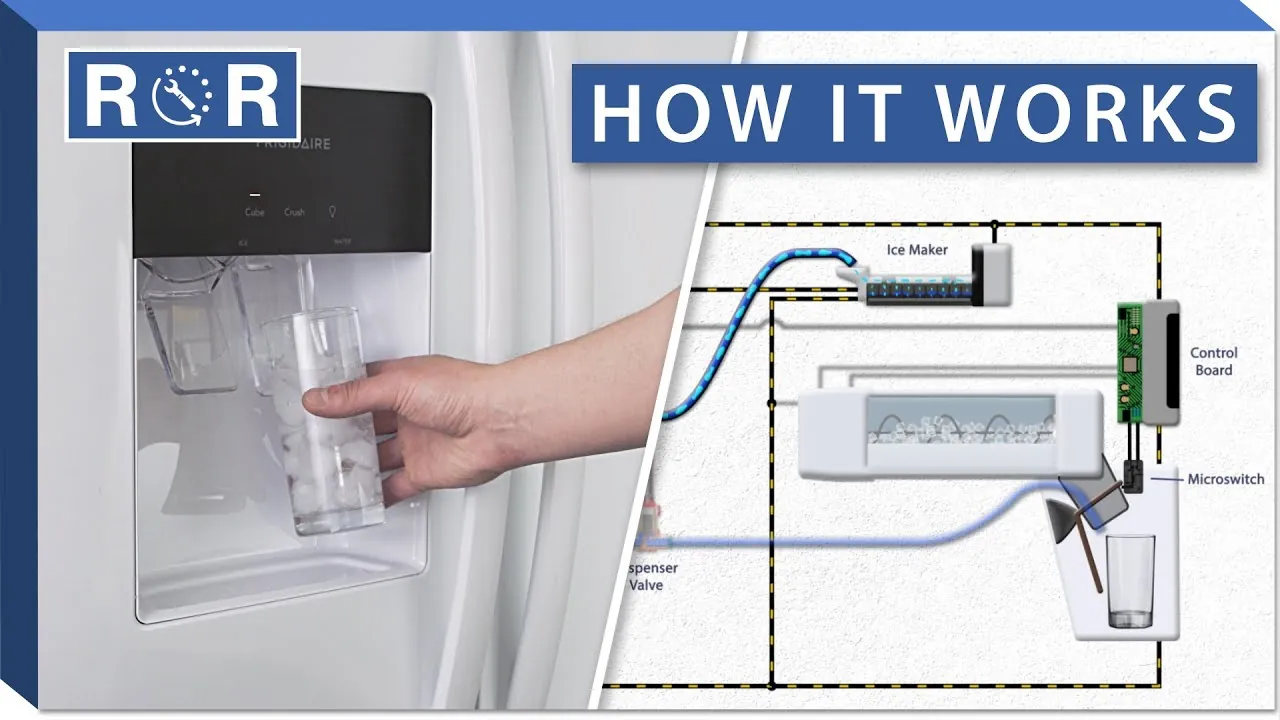
Every cycle needs five working pieces. The water valve opens for a set time, the mold holds the shape, and the thermostat watches the temperature drop. A small motor turns the ejector arms when the ice is hard enough, and the shutoff arm stops the whole thing once the bin gets full.
| Part or input | What it does | What you notice when it goes wrong |
|---|---|---|
| Water inlet valve | Opens to let water flow into the mold | No ice forms, or cubes are too small |
| Ice mold | Holds the water while it freezes solid | Cubes stick together or leak underneath |
| Thermostat or sensor | Checks if the water has frozen completely | Motor tries to eject soft slush too early |
| Ejector motor and arms | Pushes the finished cubes out of the mold | Ice stays stuck, bin remains empty |
| Shutoff arm or sensor | Stops the cycle when the bin is full | Bin overflows, cubes spill into the freezer |
You can check your specific model’s part numbers in its user manual or on the manufacturer’s official support page instead of guessing from a diagram.
Steps of one ice making cycle
- Water flows through the fill tube into the ice mold, filling each cube cavity evenly within a few seconds.
- The freezer air cools the water until the mold’s thermostat reads roughly 9°F, which takes about two hours.
- A small heater under the mold warms up for a few seconds so the frozen cubes release easily.
- The ejector motor turns the arms, sweeping the loose cubes out of the mold and into the storage bin below.
- The shutoff arm drops back down; if it hits a pile of ice, the machine stops until you use some.
- The control board waits a few minutes, then opens the water valve again to start the next batch.
These times assume a freezer set to 0°F. Check your freezer’s built-in thermometer rather than guessing the air temperature by feel.
Why a broken ice maker points to one part
Ice that never drops usually means the heater failed or the motor burned out. The thermostat tells the board the ice is ready, but without heat to loosen the grip, the arms just push against a solid block. You’ll hear the motor humming, then clicking off as its safety switch trips.
If the bin stays completely empty and you hear nothing at all, the fault is earlier in the loop. The water valve may lack power or have a clogged screen. You can test this by pouring half a cup of water directly into the mold yourself. If it freezes and ejects normally, the issue is purely the water feed.
What you control and what the design fixes
Things you can change
- The freezer temperature dial, which sets how fast the water freezes.
- The water filter, which you should swap as use dictates and your owner’s manual specifies to keep flow steady.
- The shutoff arm position, letting you pause production when you go on vacation.
- The bin itself, since pulling it out resets the shutoff sensor on most models.
- The water line connection behind the fridge, ensuring it isn’t kinked or pinched.
Things fixed by the manufacturer
- The mold shape and size, which decide exactly how big your cubes will be.
- The heater wattage, meaning you can’t speed up the release phase yourself.
- The motor torque, limiting how much ice weight the arms can push through.
- The fill time programmed into the control board for your specific water pressure.
Leave those checks to a qualified appliance technician who has the right insulated tools.
Getting more out of your ice maker
Keep the freezer at 0°F, because warmer air stretches the two-hour cycle into three or four.
According to Whirlpool’s ice maker troubleshooting guide, keeping the water filter fresh prevents low water pressure from making hollow or undersized cubes.
Frequently asked questions
How long does it take to make a batch of ice?
About 90 to 120 minutes per batch, assuming your freezer is set to 0°F. Warmer freezers stretch that time out, while a heavily packed freezer blocks airflow and slows the process down further.
Why is my ice maker not dropping ice?
The mold heater usually fails, leaving the cubes frozen tight to the tray. If the motor hums but nothing drops, the heater element likely needs replacing.
Can I pour water into the ice maker manually?
Yes, you can pour about half a cup directly into the mold to test the freezing cycle.
Is it safe to leave the ice maker on all the time?
It’s perfectly safe, because the shutoff arm stops the cycle automatically when the bin fills up.
Does the water filter affect ice production?
A clogged filter reduces water pressure, giving you thin, hollow cubes or none at all. Replace it as use dictates and your owner’s manual specifies, or sooner if you notice the cubes shrinking in size.
What happens if the freezer is too warm?
The thermostat won’t trigger the ejector motor because the water never reaches 9°F. Set the dial to 0°F and wait a few hours before deciding the machine is actually broken.
How do I turn off the ice maker?
Lift the metal shutoff arm until it clicks into the upright position. On newer models with optical sensors, press the power button on the front panel instead of forcing the plastic arm.
Do all refrigerators use the same ice maker parts?
No, mold shapes, motor sizes, and valve types vary by brand and year. Check your model number sticker inside the fridge wall, then look up the exact part list on the manufacturer’s website.
Conclusion
That single loop of filling, freezing, and ejecting runs quietly behind your food all day. Keep the airflow clear, the filter fresh, and the temperature at zero, and the machine handles the rest without needing your attention.