A standard refrigerator ice maker uses about 3 to 4 quarts of water per day when producing a typical daily yield of ice.
Ice maker water use at a glance
- A typical home fridge ice maker needs 3 to 4 quarts of water every 24 hours for a full batch.
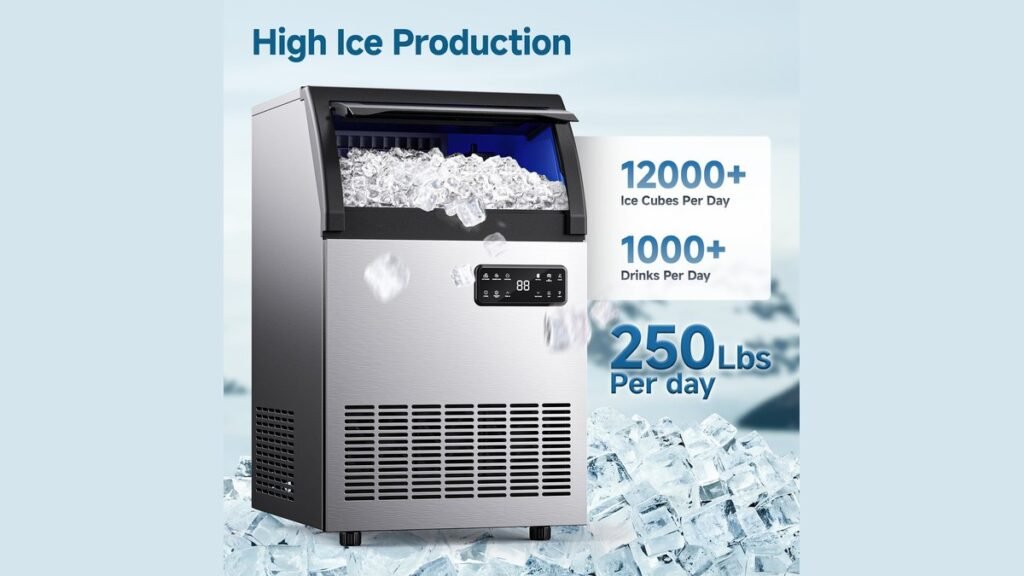
- Countertop machines hold 2 to 3 quarts in their reservoir and recycle melted ice back into it.
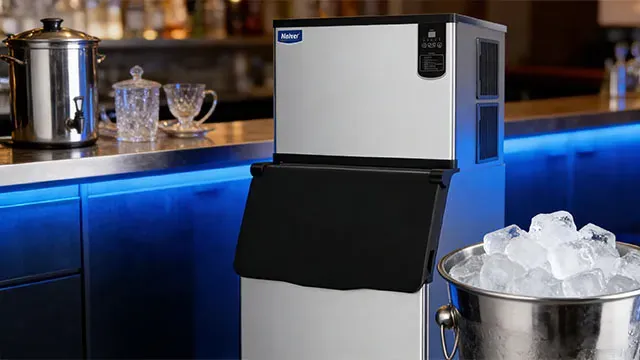
- Commercial units with air cooling often consume 100 to 150 gallons daily depending on their rated capacity.
- Water-cooled commercial machines can use up to five times more water than air-cooled models of the same size.
- Check your owner’s manual or the manufacturer’s spec sheet for the exact gallons-per-day rating of your specific model.
- If your ice bin stays full, the machine stops calling for water until you scoop some out.
Why ice makers need so much water
The water doesn’t just freeze into cubes. A large share of it cools the machine’s condenser or flushes minerals away. In a water-cooled commercial unit, fresh water flows over the condenser constantly to pull heat out. That water goes straight down the drain after one pass. Air-cooled machines skip this step, which is why they waste far less.
When ice makers use more water
| Situation | What changes | What to do instead |
|---|---|---|
| Water-cooled commercial unit | Uses 100+ extra gallons daily | Switch to an air-cooled model |
| Hard water supply | More frequent purge cycles | Install a water softener first |
| Warm room above 90°F | Longer freeze times, more cooling water | Move the unit to a cooler space |
| Oversized machine for home | Runs partial batches, wastes purge water | Buy a smaller countertop unit |
| Broken fill valve | Leaks continuously into the tray | Replace the valve immediately |
| Clogged water filter | Low pressure causes longer fill times | Change the filter every six months |
If your kitchen stays below 80°F, a standard fridge unit works fine. If you run a small cafe in a hot climate, you’ll need an air-cooled commercial machine to keep water bills from climbing.
Setting up your ice maker correctly
- Connect the 1/4-inch supply line to a cold water pipe, not the hot line, to speed up freezing time.
- Flush 2 gallons of water through the new line before attaching it to clear out metal shavings or dust.
- Turn the water valve on slowly and check every fitting for drips over the next ten minutes.
- Slide a water filter onto the line if your tap water leaves white mineral spots on your glasses.
- Throw away the first two batches of ice because they carry carbon dust from the new filter and lines.
- Time one full cycle; a standard fridge takes about 90 minutes to drop a batch of eight cubes.
- Check the drain pan after 24 hours to confirm no water is pooling under the unit.
Mistakes that waste water and ruin ice
- Hooking up the hot water line by accident. The machine struggles to freeze the warm water, runs longer cycles, and dumps extra purge water down the drain.
- Skipping the inline filter in hard-water areas. Calcium builds up on the freezing plate within weeks, forcing the heater to work harder and triggering constant rinse cycles.
- Leaving a commercial unit running overnight with an empty bin. It produces hundreds of cubes nobody needs while pushing cooling water through the condenser all night.
- Ignoring a slow drip at the fill valve. A leak that drops once per second wastes over 5 gallons a day and eventually floods the freezer floor.
- Using a countertop machine as a storage bin. The ice melts and refreezes constantly, making cloudy cubes while the pump runs nonstop.
ENERGY STAR rates efficient commercial ice machines by water use per 100 pounds of ice; compare certified models on the ENERGY STAR product finder.
Frequently asked questions
Can I run an ice maker without a water line?
Yes, but only with a countertop model. These have a built-in reservoir you fill by hand with 2 to 3 quarts of water. Standard fridge and commercial units require a permanent connection to a pressurized cold water pipe.
How long does it take to make one batch of ice?
A home refrigerator makes a batch of 8 to 10 cubes in about 90 minutes. Commercial machines drop a larger harvest every 15 to 20 minutes. Warmer rooms push these times higher because the compressor works harder.
Is it safe to drink water from an ice maker?
Yes, if your incoming tap water is safe to drink. The machine doesn’t purify water; it only freezes it. Change the inline filter every six months to stop sediment and chlorine from affecting the taste.
Why is my ice maker using more water than usual?
A worn fill valve often lets water trickle past its seal even when the cycle ends. Hard water also forces extra purge cycles to clear mineral buildup. Check the valve first, then test your water hardness.
Does the ice shape change how much water is used?
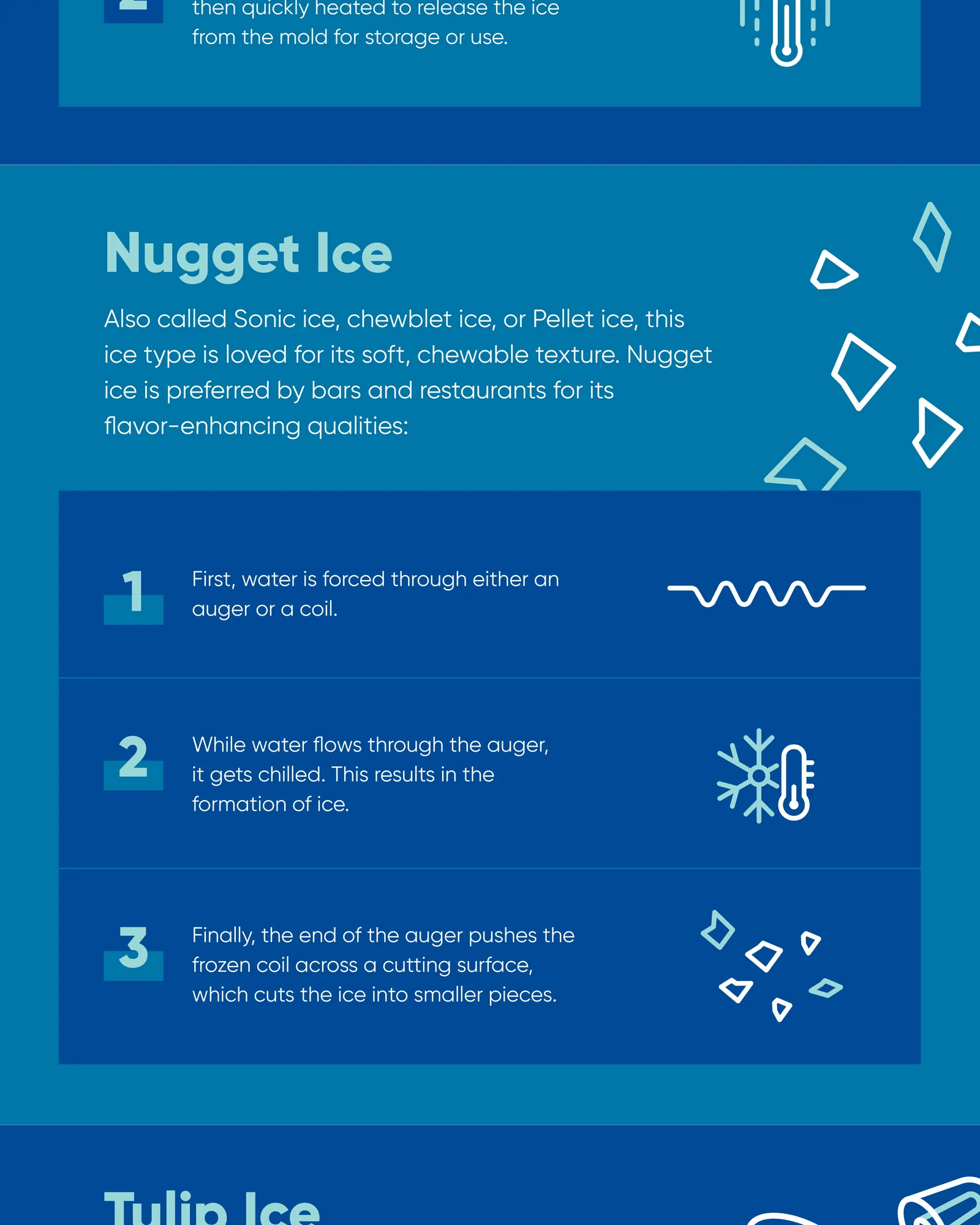
Slightly. Nugget ice machines freeze water into a cylinder and then extrude and cut it into nuggets. Standard half-moon or square cubes use the baseline amount listed in your manual.
What happens if the water pressure is too low?
The tray won’t fill completely before the valve closes. You get thin, hollow cubes, and the machine might run extra cycles trying to fill the bin. Home units need at least 20 psi to operate correctly.
How often should I clean the water lines?
Sanitize the lines and the ice bin every six months. Bacteria and mold grow in the dark, wet tubing. Run a solution made for ice machine cleaning through one full cycle, then flush it with plain water.
Do portable ice makers waste water?
No, they recycle it. Melted ice drips back into the reservoir for the next batch. You only lose the small amount left in the tank when you drain it for cleaning at the end of the week.
Conclusion
The amount of water your machine pulls from the pipes depends entirely on its cooling method, its daily pound rating, and the mineral content of your local supply.