
Understanding how an ice maker works helps you fix supply problems, improve water quality, and maintain peak cooling performance. While designs vary between residential freezers, commercial ice machines, and portable appliances, all automatic ice makers rely on the exact same core thermodynamic principles to turn liquid tap water into solid cubes.
Key Takeaways
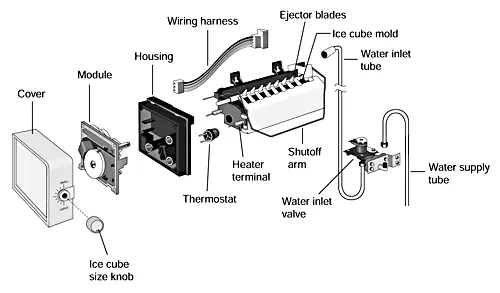
- Most domestic machines use an electromechanical cycle consisting of water filling, freezing, gentle heating, and mechanical ejection.
- Countertop units freeze water around chilled metal prongs rather than filling a stationary mold.
- Water pressure between 20 psi and 120 psi is necessary to open the supply valve correctly.
- Commercial machines utilize continuous water cascades over vertical plates to produce crystal-clear cubes.
- Routine descaling with white vinegar prevents mineral scale buildup on ejector blades and evaporator surfaces.
Core Parts of an Ice Maker
Standard ice machines contain these components:
- Solenoid water valve: A dual-coil electromagnetic valve connected to your domestic water line. When energized, it opens for roughly five to nine seconds.
- Mold assembly: An aluminum casting with a non-stick coating where water rests during the freezing phase.
- Thermostat switch: A bimetallic sensor attached directly to the mold that triggers the harvesting sequence once temperatures drop low enough.
- Heater element: A low-wattage resistance loop beneath the mold that loosens the cubes.
- Ejector blades: A motorized drive shaft equipped with plastic or metal sweeps that shovel ice into the collection bucket.
- Shut-off shut arm: A wire bail or optical sensor that halts ice production when the bin fills.
Step-by-Step: The Freezing Cycle
Understanding the mechanical cycle makes diagnosing malfunctions straightforward.
| Stage | Mechanism Active | Typical Duration |
|---|---|---|
| 1. Water Fill | Solenoid valve opens | 5–10 seconds |
| 2. Freezing | Freezer fan and compressor run | 45–90 minutes |
| 3. Harvest Heating | Mold heating element energizes | 1–2 minutes |
| 4. Cube Ejection | Drive motor rotates ejector blades | 1–3 minutes |
| 5. Reset & Level Check | Shut-off arm drops to test bin depth | 15–30 seconds |
First, the machine triggers the water fill cycle. An electrical current opens the dual water valve, sending water into the chilled aluminum mold.
Once full, the liquid sits undisturbed.
How the Harvest Cycle Operates
The harvest sequence begins as soon as the bimetal thermostat registers approximately 9°F (-13°C).
The sweeps lift the cubes into the storage bin. The shut-off arm lifts as the sweep rotates, falls back down into the bucket to gauge the ice level, and either reopens the water valve to begin a new batch or cuts electrical power if the bucket is full.
Built-In vs. Countertop Ice Makers
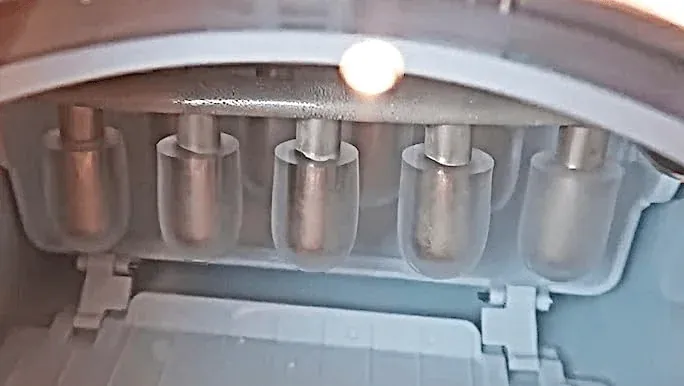
Countertop units don’t use heated molds or sweep arms.
| Feature | Standard Refrigerator Ice Maker | Countertop Portable Ice Maker |
|---|---|---|
| Water Source | Plumbed water supply line | Manual fill reservoir |
| Freezing Method | Mold tray via cold ambient air | Submerged evaporator freezing rods |
| Cube Type | Solid crescent or square ice | Hollow bullet-shaped ice |
| Batch Time | 60 to 90 minutes | 6 to 12 minutes |
| Cold Storage | Actively chilled storage bucket | Insulated, non-refrigerated bucket |
Countertop appliances pump water into an upper tray. Chilled metal fingers lower into the pool. Hollow bullet ice forms rapidly around the cold rods from the inside out. Once ice forms, hot gas drops cubes into a basket.
Pro Tip: Countertop bins are insulated but not mechanically chilled.
Why Commercial Ice Is Completely Clear
Home freezers create cloudy ice because water freezes from the outside in, trapping minerals, dissolved air, and debris in the center. Commercial machines made by brands like Scotsman, Manitowoc, and Hoshizaki rely on laminar water flow to achieve optic clarity.
A pump washes cold water over a vertical, sub-freezing evaporator plate. Pure water freezes at 32°F (0°C), while mineral-heavy water requires colder temperatures. Pure water freezes against the grids while minerals wash away into a drain.
What Causes Ice Maker Failures?
If your ice maker stops, check the water and power flow.
- Frozen fill tube: Low water pressure allows small drips to freeze inside the inlet spout, blocking incoming water.
- Faulty inlet valve: Mineral deposits prevent the internal coil from opening, leaving molds dry.
- Scale buildup: Calcium and limescale cling to the ejector combs, jamming the drive motor.
- Defective bimetal thermostat: A sensor that fails to close will never trigger the harvest motor.
- Bail arm stuck upright: A shut-off arm wedged behind an overfilled ice bin leaves the switch permanently open.
Warning: Always unplug the refrigerator or switch off the dedicated circuit breaker before unscrewing electrical wire harnesses or clearing mechanical jams with tools.
Proper Maintenance and Water Safety
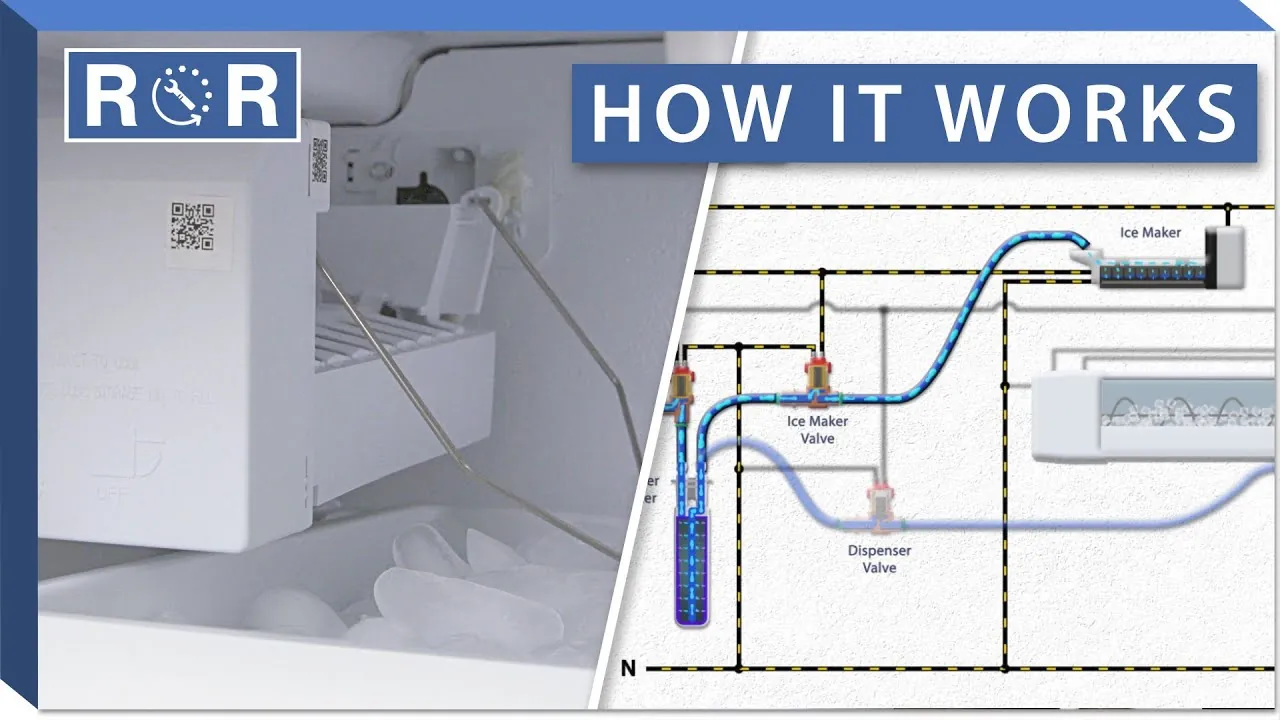
Routine maintenance prevents fouling. Replace water filters every six months.
Commercial and residential appliances alike consume electricity while running internal defrost heaters and circulation pumps. You can lower running costs by choosing models certified under the ENERGY STAR commercial ice makers standard, which run up to 15 percent more efficiently than standard configurations.
For countertop units, drain the reservoir weekly and cycle a solution of equal parts white distilled vinegar and warm water through the pump to strip away limescale.
Frequently Asked Questions
Why does my ice maker produce cloudy cubes?
Cloudy ice results from trapped microscopic air bubbles and dissolved mineral solids. As water freezes from the outside edge toward the center, pure water solidifies first, pushing dissolved air and minerals into the core. Commercial appliances avoid this by freezing moving water layer by layer over open grids, running dissolved minerals out through a waste drain.
How long does an ice maker take to make ice?
A standard residential refrigerator ice maker takes roughly 60 to 90 minutes to complete a full freezing cycle, yielding eight to ten crescent cubes per batch. Portable countertop appliances freeze ice around submerged evaporator pins much faster, completing a batch of bullet cubes in roughly 6 to 12 minutes, depending on the ambient air temperature.
Why is my ice maker leaking into the bin?
Leaking ice bins usually stem from an unlevel appliance, excessive incoming water pressure, or a cracked plastic mold assembly. If water splashes during filling, adjust the domestic water line pressure down to roughly 40 psi, verify the refrigerator is level using a bubble level, and inspect the internal mold lining for cracks or flaking teflon coating.
Can an ice maker work without a water line?
Yes, but only models designed with internal manual reservoirs can run without a line. Countertop appliances rely entirely on manual water additions to their holding tanks. Standard built-in refrigerator ice makers require a plumbed 1/4-inch copper or braided stainless steel water line supplying between 20 psi and 120 psi to function properly.
Conclusion
Regular maintenance keeps your system running smoothly for years to come. You shouldn’t wait for a breakdown to check your water lines or clean the filter. If you notice the cubes getting smaller or tasting strange, it’s time to inspect the components. Taking these small steps today will save you plenty of trouble.
Pingback: How Much Does an Ice Maker Cost: Price Ranges Explained
Pingback: How Does Ice Maker in Freezer Work: The Complete Process