
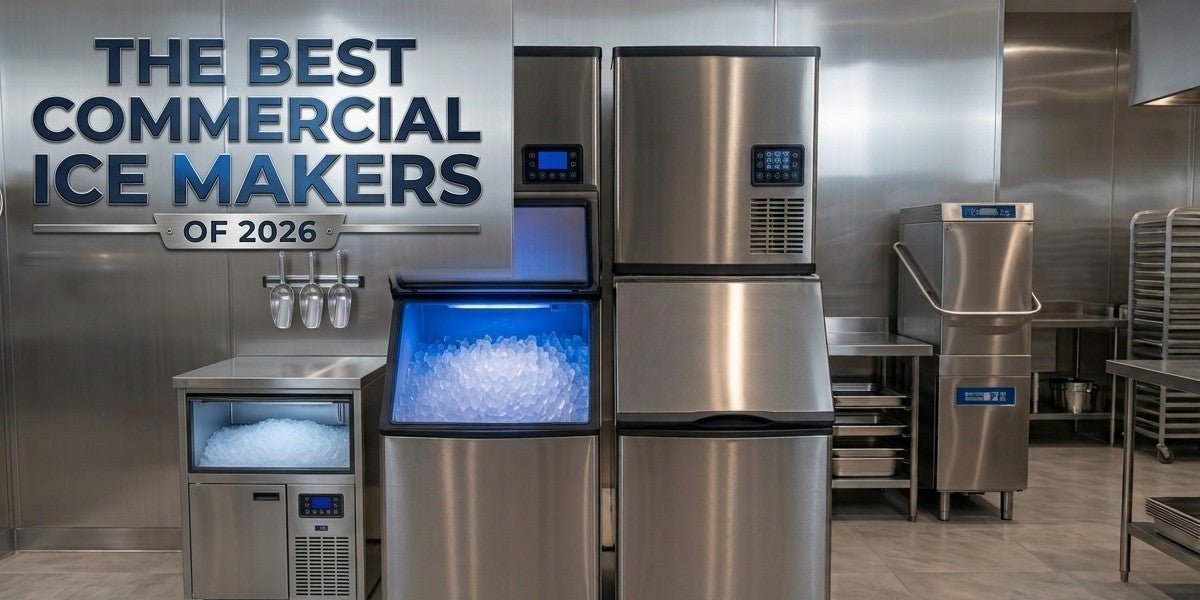
The best commercial ice machine depends directly on your daily volume needs, ice type preference, and kitchen space, with modular units from industry leaders like Manitowoc, Scotsman, and Hoshizaki setting the commercial standard. Selecting the correct model ensures your kitchen never runs dry during peak service hours while keeping utility bills manageable.
Key Takeaways
- Match your purchase to your specific daily volume: calculate roughly 1.5 pounds of ice per customer for dining and 3 pounds per seat for bars.
- Air-cooled condensers are the most cost-effective and common choice, whereas water-cooled units fit tight spaces with ambient heat above 80°F.
- Modular ice machines yield high output (300 to 2,000+ pounds daily) but require buying a separate storage bin.
- Routine sanitation every six months prevents scale buildup, bacterial slime, and expensive compressor failure.
- Certified energy-efficient equipment lowers long-term operating costs significantly over the equipment’s 7-to-10-year lifespan.
Top Commercial Ice Machine Brands
Leading foodservice operations rely heavily on three trusted manufacturers known for durability, warranty support, and parts availability.
- Manitowoc: Best known for its Indigo NXT series, offering programmable production schedules and intuitive diagnostics.
- Hoshizaki: Renowned for stainless-steel evaporators and long-lasting crescent cube systems that resist mineral fouling.
- Scotsman: The leader in chewable nugget ice, favored across healthcare facilities and quick-service drive-thrus.
Pro Tip: Choose a brand with certified service technicians located within your immediate metropolitan area to avoid extended operational downtime during repairs.
Comparing the Best Commercial Ice Machines
| Model | Ice Type | Daily Production | Best Application |
|---|---|---|---|
| Manitowoc IDT0500A | Full Dice | Up to 520 lbs | High-volume restaurants, banquets |
| Hoshizaki KM-520MAJ | Crescent Cube | Up to 489 lbs | Cocktail lounges, nightclubs |
| Scotsman Prodigy Plus C0330MA | Medium Cube | Up to 400 lbs | Cafes, small eateries, coffee shops |
| Hoshizaki F-450MAJ | Flake Ice | Up to 492 lbs | Salad bars, fish displays, healthcare |
| Scotsman UN0815A-1 | Nugget Ice | Up to 79 lbs | Break rooms, boutique clinics |
Commercial Ice Machine Machine Styles
Equipment format dictates footprint, installation costs, and total batch yield.
Modular Ice Makers
These heavy-duty heads sit atop a separate storage bin or soda dispenser. Modular systems produce between 300 and 2,500 pounds of ice every 24 hours, making them ideal for high-capacity kitchens.
Undercounter Ice Machines
Self-contained units house the ice maker and bin within a single exterior frame. They fit beneath standard 36-inch bar counters, generating 50 to 350 pounds per day for low-clearance bars.
Countertop Dispensers
Common in healthcare break rooms and cafeterias, these compact dispensers generate continuous nugget ice and dispense directly into glassware via hands-free push levers or optical sensors.
Best Ice Types for Foodservice
Different drinks call for different melting profiles and displacement characteristics.
| Ice Style | Melt Rate | Ideal Beverage or Use |
|---|---|---|
| Full Cube | Slow | Straight spirits, whiskey, high-end cocktails |
| Half Cube | Medium | Soft drinks, blended drinks, bulk banquet water |
| Crescent Cube | Slow | Bar wells, carbonated beverages (reduces splashing) |
| Nugget Ice | Fast | Fountain sodas, specialty drive-thru drinks |
| Flake Ice | Fast | Seafood displays, meat preservation, medical therapy |
Cooling Types: Air vs. Water
Selecting the right condenser mechanism influences ambient room temperature and ongoing water expenses.
- Air-Cooled Units: These draw ambient air across condensing coils. They represent 80% of commercial installations because they avoid excessive utility consumption.
- Water-Cooled Units: These run cold municipal water through a jacketed condenser to cool the refrigerant. They work best in non-air-conditioned spaces exceeding 90°F, though water utility charges can be steep.
- Remote Air-Cooled Units: These locate the condenser outside on a roof, dissipating heat and mechanical noise away from your dining floor.
Sizing Your Commercial Ice Machine
Accurate volume estimation prevents mid-shift outages during high-turnover weekends. To protect against sudden heat waves, add a 20% safety margin to your projected daily baseline.
- Full-Service Restaurants: Plan for 1.5 pounds of ice per seated meal served.
- Bars and Cocktail Lounges: Budget 3.0 pounds per customer or drink ordered.
- Quick-Service Operations: Allow 5.0 ounces per 12-ounce soda cup, scaling up to 12.0 ounces for 32-ounce fountain sodas.
- Lodging and Hotels: Allocate roughly 5.0 pounds per guest room per day.
- Healthcare and Nursing: Estimate 10.0 pounds per patient bed for hydration and cold pack treatments.
Energy Efficiency and Operating Costs
Commercial ice makers run continuously, drawing substantial power to freeze running water and reject heat. Modern units certified under the ENERGY STAR commercial ice makers program use approximately 15% less electricity and 20% less water than standard units.
Pro Tip: Program your modular ice head to run its primary production cycles overnight during off-peak power billing windows to reduce monthly electric utility rates.
Essential Maintenance and Water Filtration
Mineral scaling is the leading cause of premature compressor burnout. Incoming tap water carries dissolved calcium and magnesium that bake onto nickel-plated evaporators.
Installing Multi-Stage Filtration
Always place a dedicated scale-inhibiting water filter ahead of the machine inlet. Carbon blocks remove residual chlorine that pits internal components, while polyphosphate cartridges prevent limescale bonding.
Scheduled Sanitization Routine
Perform a comprehensive chemical descale every six months. Empty the bin, circulate nickel-safe ice machine cleaner across the evaporator plates, and hand-wipe all interior door gaskets with diluted food-grade sanitizer.
Warning: Never use standard hydrochloric or muriatic descalers inside commercial ice machines, as harsh acids strip the thin protective plating off evaporator assemblies.
Troubleshooting Common Ice Maker Problems
When mechanical or thermal issues arise, check these components before calling a service contractor:
- Shallow, hollow, or misshapen cubes: Caused by restricted water inlet valves, clogged distribution tubes, or low incoming water pressure.
- Low ice harvest volume: Often indicates dirty air filters, fouled condenser fins, or ambient room temperatures above 90°F.
- Cloudy or soft ice: Points to heavy mineral concentrations in unfiltered water or a malfunctioning purge valve.
- Unit fails to cycle into harvest: Typically triggered by a miscalibrated ice thickness probe or an unresponsive water curtain switch.
Related guides
- How Much Are Commercial Ice Machines: Pricing Guide
- How Much for a Commercial Ice Machine: Cost Breakdown
- How Much Water Does a Commercial Ice Machine Use Exactly
Frequently Asked Questions
Which ice machine brand lasts the longest?
Hoshizaki machines generally offer the longest service lifespans due to their all-stainless-steel evaporator plates, which don’t peel or corrode like traditional nickel-plated brass evaporators.
How much should I budget for a commercial ice maker?
Complete setups range between $2,000 for compact undercounter units and up to $10,000 or more for 1,000-pound modular heads paired with high-capacity storage bins and dedicated filtration.
Why does my ice machine produce cloudy cubes?
Cloudy ice results from trapped air bubbles and dissolved mineral impurities freezing rapidly inside the water stream. Installing a dual-stage carbon and phosphate water filter resolves cloudiness effectively.
Can I install an ice machine outdoors?
Most commercial warranties require controlled indoor environments. Outdoor installations require dedicated weather enclosures, high-ambient cooling fans, and cold-weather kits to prevent freeze damage to internal plumbing.
Audit your establishment’s peak hourly customer volume and available utility connections, then request a formal site quote from a certified commercial kitchen equipment dealer to install the ideal modular or undercounter system.
Pingback: What Is the Best Commercial Ice Maker for Your Business